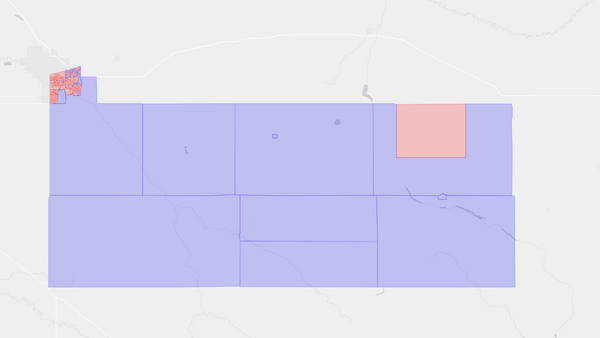
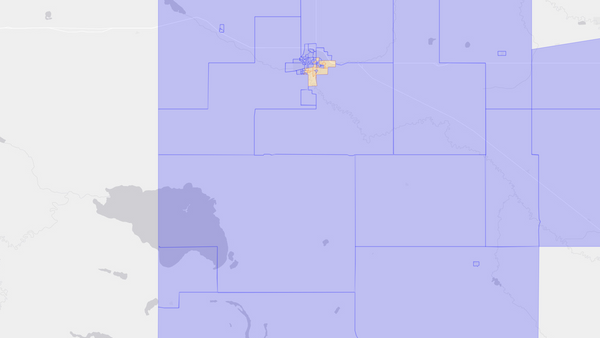
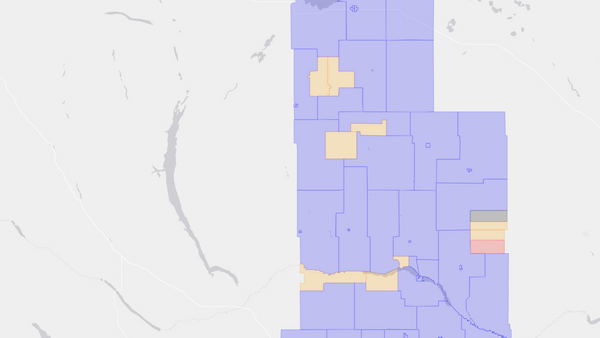
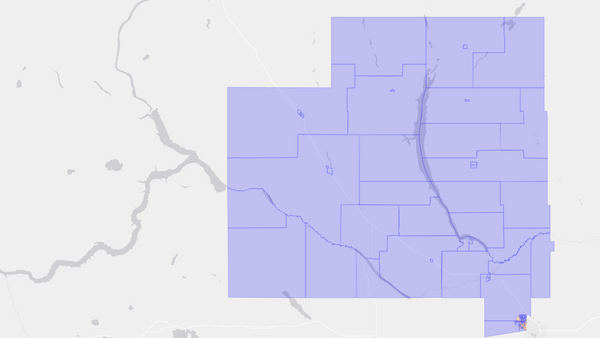
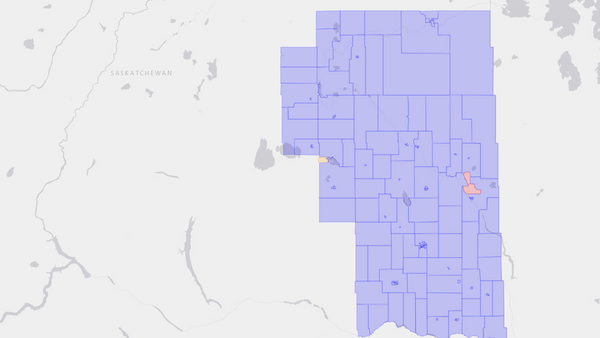
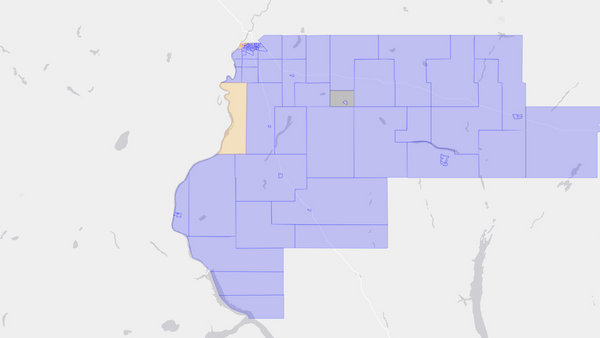
Souris—Moose Mountain, SK — 2008 Federal Election Results Map
Souris—Moose Mountain — 2008 Election Results
📌 The Canadian federal electoral district of Souris—Moose Mountain was contested in the 2008 election.
🏆 Ed Komarnicki, the Conservative candidate, won the riding with 19,293 votes (70.5% of the vote).
🥈 The runner-up was Raquel Fletcher (NDP-New Democratic Party) with 4,599 votes (16.8%), defeated by a margin of 14,694 votes.
📊 Other notable candidates: Marlin Belt (Liberal, 7%) and Bob Deptuck (Green Party, 6%).
Riding information
Auto generated. Flag an issue.Souris—Moose Mountain
The southeastern corner of Saskatchewan formed Souris—Moose Mountain, running from Radville in the west to the Manitoba boundary, and from the American border north to Grenfell and the Qu'Appelle River. Estevan and Weyburn were its two cities; Moosomin, Carlyle, Kipling, Redvers, Oxbow, Carnduff and Rocanville its principal towns. Coal, oil, potash and grain all came out of the same ground.
Candidates
Ed Komarnicki (Conservative) — Born at Cudworth in 1949, Komarnicki practised law in Estevan before winning the seat in 2004. Through the Parliament that followed the 2006 election he served as Parliamentary Secretary to the Minister of Citizenship and Immigration and sat on the Commons citizenship and immigration committee — a useful file in a riding where employers in the oil patch and the service trades were struggling to find workers and were leaning on immigration and temporary foreign worker programs to fill shifts. He was seeking a third term.
Raquel Fletcher (NDP) — A student living at White City, Fletcher ran for the New Democrats in a constituency where the party had little recent electoral history to build on.
Marlin Belt (Liberal) — A project manager based in Regina, Belt carried the Liberal platform, campaigning on rural services, pensions and opportunities for young people in the southeast.
Bob Deptuck (Green) — An environmental technician from Rocanville, Deptuck ran on the Green platform in a constituency whose prosperity rested on coal, oil and potash.
About the Riding
Estevan calls itself the Energy City and had a reasonable claim to the title. SaskPower's Boundary Dam and Shand generating stations, both burning lignite from mines nearby, produced a large share of Saskatchewan's electricity, and the surrounding countryside was drilled through with oil wells. The Bakken formation beneath the Weyburn–Estevan area was the most talked-about play in western Canada that year: Crown petroleum land sales in the province were setting records through 2008, and parcels in the southeast drew a substantial share of the bidding. Rigs, service companies and camp housing appeared in towns that had been losing people for thirty years.
Weyburn added a second energy story. The Weyburn oil field had been under carbon dioxide flood since 2000, taking CO2 by pipeline from a coal gasification plant at Beulah, North Dakota, to push out oil that conventional methods had left behind, and the associated monitoring program had made the field one of the most closely studied geological storage sites anywhere.
Potash supplied the third leg. At Rocanville, near the Manitoba boundary, PotashCorp was enlarging an expansion first announced in 2007: the 2008 version added roughly 2.7 million tonnes of annual capacity, required a new shaft and a rebuilt mill, and carried a price tag near $1.8 billion.
Agriculture had not gone anywhere. Wheat, canola, flax and pulses came off the flat land in the south and east, cattle grazed the rougher country around the Moose Mountain uplands, and the small towns kept their elevators, dealerships and co-operatives. Moose Mountain Provincial Park and Kenosee Lake drew summer traffic from across the southeast.
Energy, potash, grain and a heavily rural electorate had combined for decades to make the southeast some of the safest conservative ground anywhere in the country. The Liberal carbon tax proposal was unlikely to find purchase in a riding whose payrolls came out of coal seams and oil wells, and Premier Brad Wall's comparison of it to the National Energy Program was repeated freely on the doorstep.