Prince George-Valemount — 2024 British Columbia Provincial Election Results Map
Prince George-Valemount — 2024 Election Results
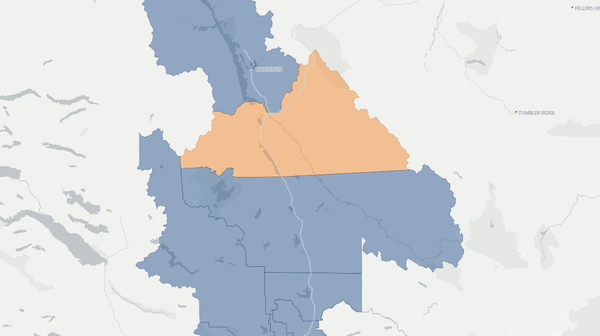
Poll-by-poll results for Prince George-Valemount in the 2024 British Columbia election. The Conservative Party candidate won this riding. Explore detailed voting data, candidate results, and turnout statistics at the poll level.
Riding information
Auto generated. Flag an issue.Prince George—Valemount
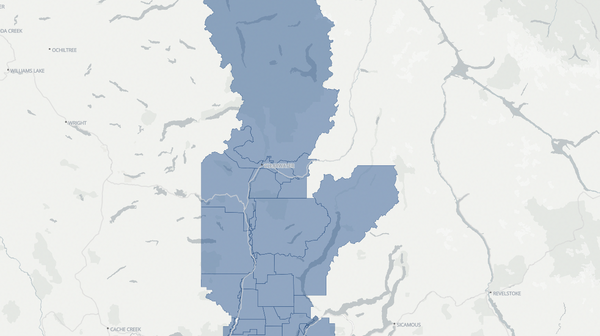
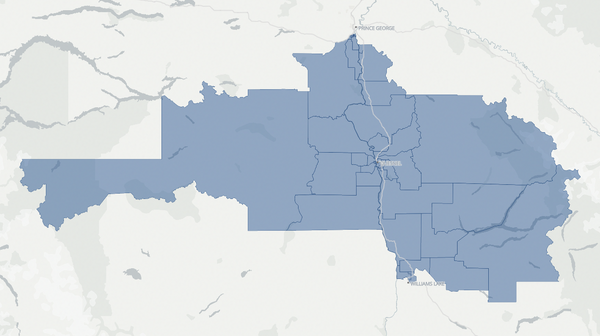
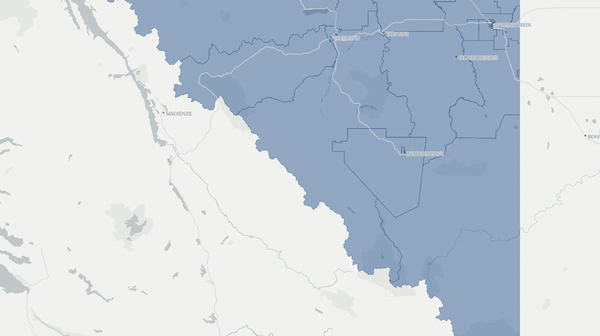
Prince George—Valemount stretches from the eastern neighbourhoods of Prince George through the Rocky Mountain Trench to the small communities of McBride and Valemount near the Alberta border. The Yellowhead Highway — Highway 16 — threads through the riding, connecting Prince George to the mountain communities and onward through the Yellowhead Pass into Alberta. The riding's eastern reaches are defined by the towering peaks of the Rocky and Cariboo Mountains, with Mount Robson Provincial Park — home to the highest point in the Canadian Rockies — drawing visitors year-round. McBride, with a population of roughly 600, and Valemount, with roughly 1,000 residents, depend on forestry, tourism, and the seasonal economies tied to nearby ski operations and parks.
Shirley Bond had held the seat continuously since 2001, accumulating more than two decades of legislative experience and serving in numerous cabinet portfolios, including as the first woman to serve as Attorney General in BC history. Her decision not to seek re-election after BC United suspended its campaign left the riding open for the first time in over twenty years.
Candidates
Rosalyn Bird (Conservative Party) — Bird had a twenty-three-year career in the Royal Canadian Navy, beginning as a boatswain before reclassifying as a resource management clerk and later being commissioned as a naval logistics officer. She deployed in support of NATO and operations in Afghanistan. Born in Toronto and raised across the country as the daughter of a research scientist, she settled in the Prince George area. The 2024 election was her first campaign for public office.
Clay Pountney (BC NDP) — Pountney was a former chief of the Lheidli T'enneh First Nation, having served one two-year term as chief before losing his re-election bid in 2021. A thirty-year resident of Prince George, he had worked in the trades and held roles in the forestry, mining, and oil and gas sectors. He campaigned on health care investment and housing as his top priorities.
Gwen Johansson (BC Green Party) — Johansson was born and raised in McBride and held a Bachelor of Education from UBC and a Master's degree from the University of Oregon. She spent twenty-two years on municipal council in Hudson's Hope, including six years as mayor, and had served on the BC Energy Council, the BC Hydro Board of Directors, and the Energy and Mines Advisory Committee.
Local Issues
Health care access dominated the campaign in a riding where the University Hospital of Northern British Columbia in Prince George served as the referral centre for a vast territory. Specialist wait times, emergency department pressures, and chronic difficulty recruiting and retaining physicians were long-standing problems that had worsened during the pandemic years. The Northern Medical Program at UNBC was producing graduates — roughly thirty per cent of whom settled into long-term practice in northern BC — but the pipeline of new physicians was not keeping pace with retirements and the expanding health needs of a dispersed population. For residents of McBride and Valemount, access to even routine medical care often required a drive of two to three hours to Prince George, and emergency services were limited to small clinics with constrained capacity.
The forestry sector's structural challenges weighed heavily on the riding's smaller communities. McBride and Valemount had long depended on logging and sawmilling, and the mountain pine beetle's devastation of the central interior's timber supply left these communities with fewer economic alternatives than their larger neighbours. Reduced allowable annual cuts and mill closures across the broader region had eroded the employment base, and diversification efforts — whether through tourism development linked to Mount Robson and the Yellowhead corridor, value-added wood products, or support for small-scale industry — proceeded slowly. The NDP government's engagement with forestry-dependent communities through worker transition programs and economic development funds had produced some results, but the pace of change was measured against the urgency of job losses.
Wildfire risk and climate adaptation were increasingly prominent concerns across the riding. The 2023 fire season devastated large areas of the BC interior, and communities along the Highway 16 corridor — surrounded by beetle-killed timber and dense forest — recognized their vulnerability. Investment in community wildfire protection planning, fuel management around populated areas, and emergency preparedness infrastructure was proceeding, but residents questioned whether the scale of investment matched the growing frequency and intensity of fire seasons. The 2021 heat dome and subsequent atmospheric rivers had demonstrated the breadth of climate-related threats facing northern and interior communities.