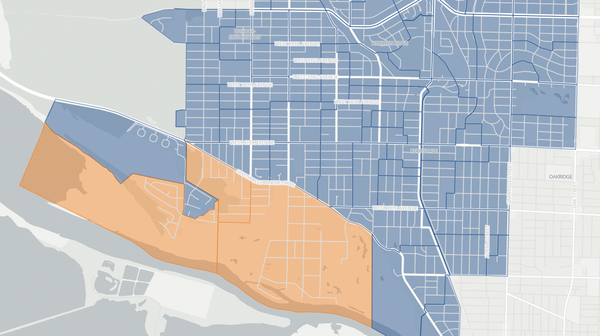
Ladysmith-Oceanside — 2024 British Columbia Provincial Election Results Map
Ladysmith-Oceanside — 2024 Election Results
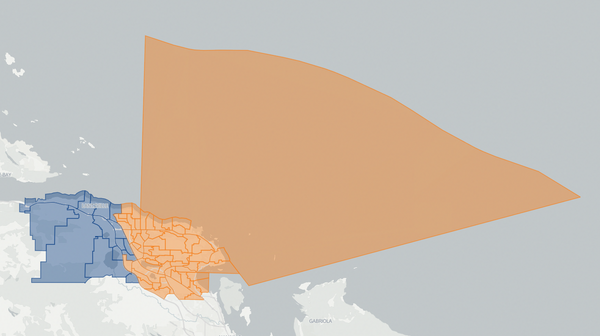
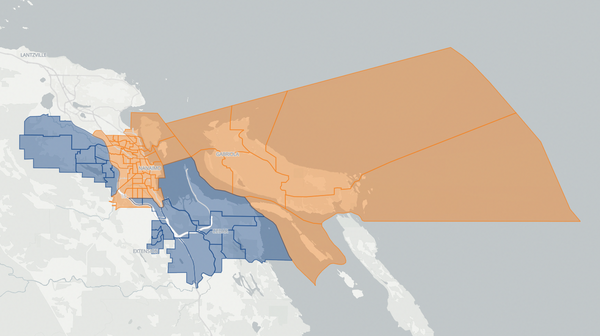
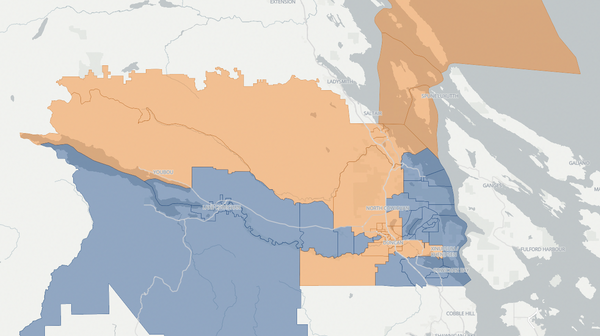
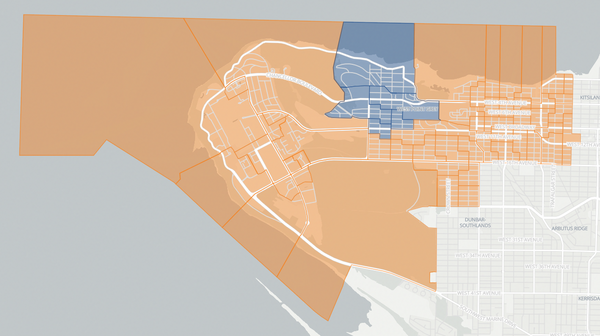
Poll-by-poll results for Ladysmith-Oceanside in the 2024 British Columbia election. The BC NDP candidate won this riding. Explore detailed voting data, candidate results, and turnout statistics at the poll level.
Riding information
Auto generated. Flag an issue.Ladysmith—Oceanside
Ladysmith—Oceanside is a new electoral district for the 2024 election, combining the town of Ladysmith and the Cedar area south of Nanaimo with the Oceanside communities of Parksville and Qualicum Beach on the eastern coast of Vancouver Island. The riding stitches together portions of the former Nanaimo—North Cowichan and Parksville—Qualicum constituencies, creating a corridor that runs along the Island Highway from Ladysmith's heritage downtown through the beach communities that draw retirees from across Western Canada. It is among the oldest ridings in British Columbia by median age, and its demographic profile—heavily weighted toward seniors—shapes its political priorities around health care, housing, and community services.
Candidates
Stephanie Higginson (BC NDP) — Higginson had served two terms on the Nanaimo—Ladysmith Board of Education, first elected in 2014, and spent three years as president of the BC School Trustees' Association. She and her family had lived in Cedar since 2010, raising two children on a small farm.
Brett Fee (Conservative Party) — Fee's family had resided in Parksville since 1994. He held a degree in political science and criminology, and had operated a martial arts business since 2006. His franchise kickboxing studio was recognized as the Kickboxing Studio of the Year in 2023, and his martial arts school was named Parksville Chamber of Commerce Business of the Year in 2019.
Adam Walker (Independent) — Walker was the incumbent MLA for the former Parksville—Qualicum riding, elected with the NDP in 2020. Born and raised on Vancouver Island, he had operated a small business in Qualicum Beach for close to 20 years. He was removed from the NDP caucus in September 2023 following a human resources complaint by a constituency office employee, and chose to run as an Independent.
Laura Ferreira (BC Green Party) — Ferreira studied political science and environmental studies at the University of Victoria and had worked on Parliament Hill and for the Green Party of Canada. She had been a member of the BC Green caucus staff since 2021 and brought experience from the clean-technology private sector.
Local Issues
Health care access was the overriding concern in a riding with one of the oldest demographic profiles in the province. In the Oceanside area alone, an estimated 12,000 people were waiting for a family doctor, with thousands more on waitlists in Ladysmith and surrounding communities. The shortage of primary care providers had created a cascading crisis: walk-in clinic waits stretched for hours, emergency departments in Nanaimo absorbed patients who could not access regular care, and seniors with chronic conditions faced delays in treatment and follow-up. Residents pressed all candidates for concrete commitments to physician recruitment, the expansion of primary care networks, and investment in seniors' services.
Homelessness was an emerging concern in communities that had traditionally seen themselves as insulated from the urban social challenges visible in nearby Nanaimo. Encampments appeared at Transfer Beach in Ladysmith and Memorial Plaza in Parksville, and more than 250 people in the Oceanside area were on waiting lists for affordable housing—most of them seniors. The lack of dedicated shelter space in the Parksville—Qualicum Beach area left people living rough or commuting to services in Nanaimo. Candidates debated the appropriate balance between supportive housing investment, shelter capacity, and enforcement.
Housing affordability had become a barrier to economic sustainability. The communities' appeal to retirees and lifestyle migrants kept property values elevated, while the hospitality, health care, and retail sectors that relied on younger workers struggled to recruit staff who could afford to live in the area. For a riding whose economy depended on service-sector workers who increasingly could not afford local rents, the affordability crisis was both a social concern and an economic threat.