Nanaimo-Lantzville — 2024 British Columbia Provincial Election Results Map
Nanaimo-Lantzville — 2024 Election Results
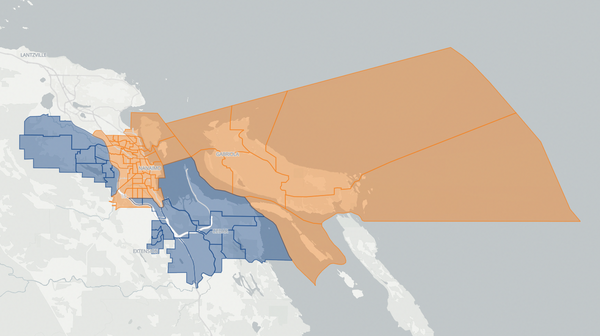
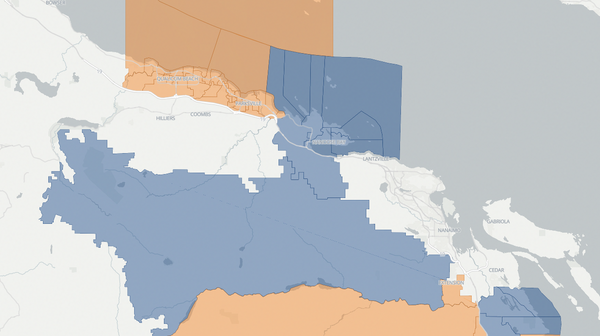
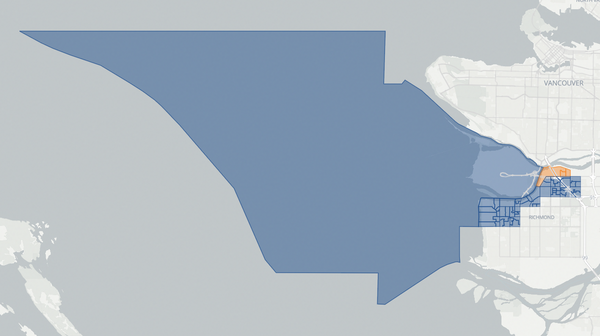
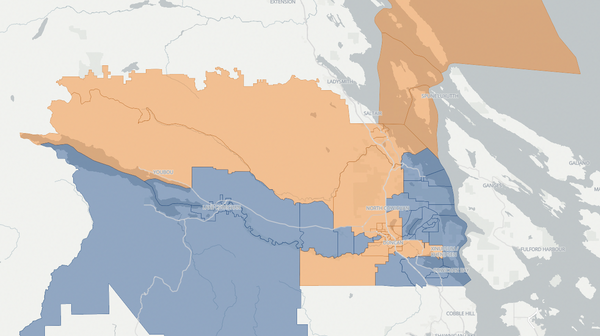
Poll-by-poll results for Nanaimo-Lantzville in the 2024 British Columbia election. The BC NDP candidate won this riding. Explore detailed voting data, candidate results, and turnout statistics at the poll level.
Riding information
Auto generated. Flag an issue.Nanaimo—Lantzville
Nanaimo—Lantzville is a new riding created by the 2024 redistribution, drawing territory from the former Nanaimo and Parksville—Qualicum electoral districts. It encompasses the northern neighbourhoods of the city of Nanaimo — including the Hammond Bay and Departure Bay areas — and extends north to include the District of Lantzville, a small seaside community of roughly four thousand residents nestled between the Island Highway and the Strait of Georgia. The riding combines Nanaimo's urban density and service-sector economy with Lantzville's quieter, semi-rural character, creating a constituency that straddles the line between the city's suburban expansion and the smaller communities that have historically looked toward Parksville and the Oceanside region.
Candidates
George Anderson (BC NDP) — Anderson was born and raised in Nanaimo and graduated from Vancouver Island University's criminology program before completing a law degree at Osgoode Hall Law School. At age twenty, he was elected to Nanaimo City Council, making him the youngest councillor in the city's history. He served one term on council, chairing the Transportation Advisory Committee and helping pass a forty-year transportation master plan. He later articled at Flaherty McCarthy in Toronto and practised as a commercial lawyer. He served as chair of the Vancouver Island University Board of Governors and received the BC Achievement Award from the Lieutenant-Governor in 2016.
Gwen O'Mahony (Conservative Party of BC) — O'Mahony is a former BC NDP MLA who represented Chilliwack—Hope from 2012 to 2013, the first NDP candidate and first woman to win that riding. She withdrew her NDP membership after the party introduced its drug decriminalization policy and joined the Conservative Party of BC.
Lia Versaevel (BC Green Party) — Versaevel spent twenty-seven years with the BC Ministry of the Attorney General in roles ranging from correctional officer to probation officer to family justice counsellor, and also worked in family court in Nevada and community corrections in Australia. She earned a bachelor's degree in sociology and a diploma in public sector management from the University of Victoria, along with a master's degree in conflict analysis and management from Royal Roads University. She had previously stood as the Green candidate in the former Nanaimo riding in the 2020 election.
Local Issues
Health care access was the dominant concern in a newly drawn riding where residents reported difficulty finding family physicians and faced long wait times for specialist referrals. The broader physician shortage afflicting Vancouver Island was particularly felt in the Lantzville area, where the small community lacked its own medical clinic and residents depended on facilities in Nanaimo. The campaign for expanded services at Nanaimo Regional General Hospital — including the cardiac catheterization lab and a new patient tower — resonated across the riding's boundary with neighbouring Nanaimo—Gabriola Island, as both constituencies shared the same regional hospital.
The drug toxicity crisis and public safety were closely linked issues that shaped the campaign. O'Mahony's decision to leave the NDP and join the Conservatives was itself rooted in opposition to the government's drug decriminalization policy, making her candidacy a direct referendum on the approach. The province's partial reversal in May 2024 — recriminalizing possession in public spaces — acknowledged the backlash that candidates encountered on the doorstep, but the underlying opioid death toll continued to rise. Candidates debated whether the path forward lay in expanded treatment and recovery programs, stricter enforcement, or a combination of both.
Housing affordability had worsened as Nanaimo and its surrounding communities absorbed demand from buyers relocating from the Lower Mainland. Lantzville's proximity to the ocean and its small-town character made it attractive to retirees and remote workers, but rising property values were pricing out younger families and long-time residents. The NDP government's suite of housing policies — including the speculation and vacancy tax, the new short-term rental restrictions, and provincial housing targets imposed on municipalities — generated debate about whether the measures were sufficient to address a supply shortage that was structural rather than speculative.
Cost of living pressures extended beyond housing. Grocery prices, fuel costs, and BC Ferries fares affected daily budgets, and the NDP government's carbon tax — which the Conservatives pledged to eliminate — became a fault line in the campaign. In a riding where many residents commuted by car and heated their homes with oil or propane, the carbon tax carried a more tangible cost than in urban centres with greater access to public transit and electric heating alternatives.