Surrey-Newton — 2020 British Columbia Provincial Election Results Map
Surrey-Newton — 2020 Election Results
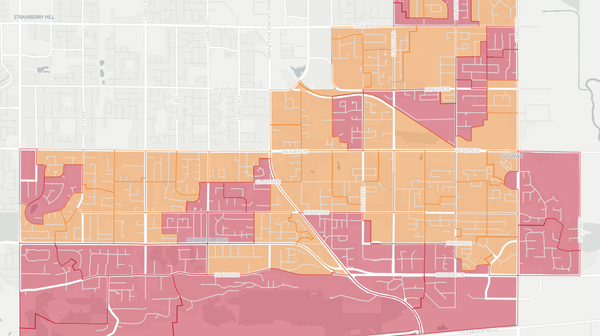
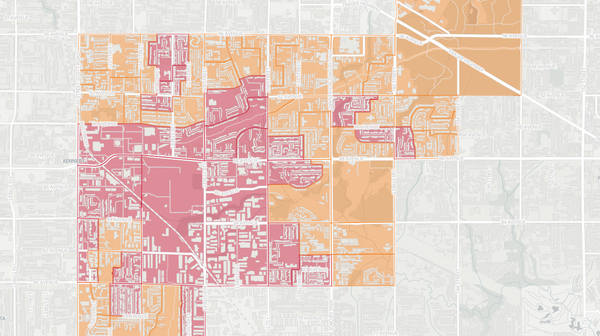
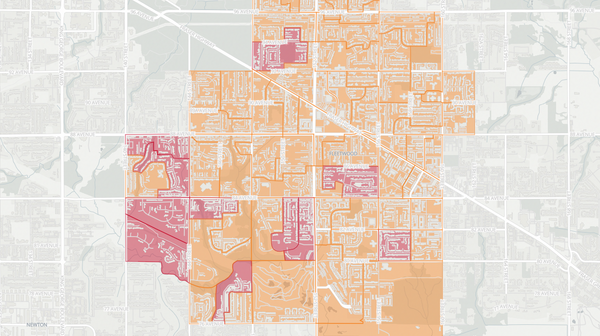
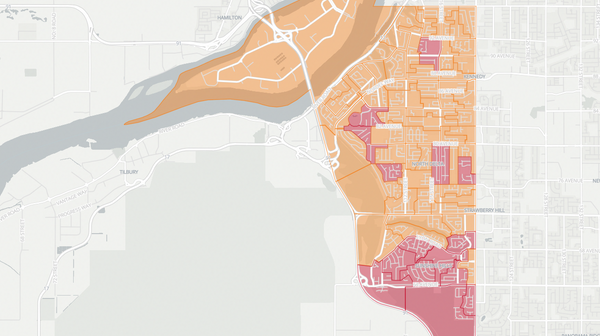
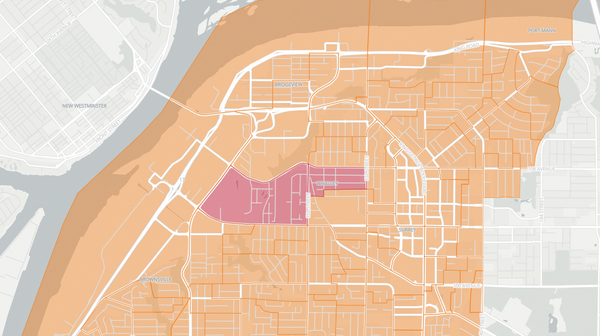
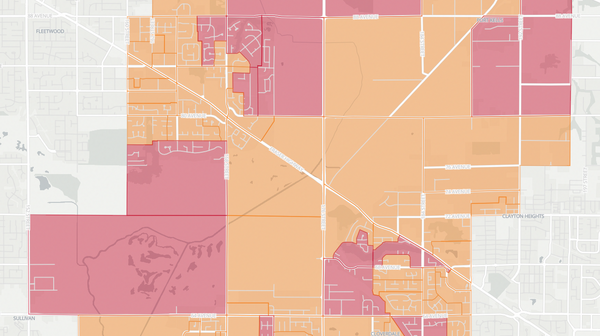
Poll-by-poll results for Surrey-Newton in the 2020 British Columbia election. The BC NDP candidate won this riding. Explore detailed voting data, candidate results, and turnout statistics at the poll level.
Riding information
Auto generated. Flag an issue.Surrey-Newton
Surrey-Newton is a compact, densely populated riding covering roughly 14 square kilometres of one of Surrey's most urbanized neighbourhoods. The constituency sits south of the Fraser Highway and west of 144th Street, centred on the Newton Town Centre along King George Boulevard. It is one of the most linguistically diverse ridings in British Columbia, with a large South Asian population — particularly Punjabi-speaking communities — and a median age well below the provincial average. The local economy is anchored by service-sector and retail employment, with many residents commuting to jobs elsewhere in Metro Vancouver.
The NDP had held Surrey-Newton in six of eight elections since the riding's creation in 1991, losing it only during the BC Liberal sweep of 2001. NDP incumbent Harry Bains sought a fifth consecutive term in 2020, making this one of the safest NDP seats in the province. The snap election, called during the COVID-19 pandemic, unfolded against a backdrop of pandemic job losses in Newton's working-class households and a worsening opioid emergency that had hit the neighbourhood hard.
Candidates
Harry Bains (BC NDP) — Bains emigrated from Punjab, India, to Canada in 1971 and spent more than fifteen years as an elected officer of Steelworkers-IWA Canada Local 2171, rising to full-time vice president. He also served on the Kwantlen University College Board of Governors from 1993 to 1999. First elected to the Legislature in 2005, Bains was appointed Minister of Labour when the NDP formed government in 2017, a portfolio he continued to hold heading into the 2020 election.
Paul Boparai (BC Liberal Party) — Boparai was a Certified Financial Planner and Chartered Life Underwriter who grew up in the Newton community and attended Tamanawis Secondary before studying marketing management at BCIT. He was involved in local organizations including the Surrey Lions Field Hockey Association, the Surrey Minor Ice Hockey League, and the South Asian Business Association.
Asad Syed (BC Green Party) — Syed ran on a platform emphasizing health care, school funding, environmental protection, and supports for renters and small businesses.
Local Issues
The opioid overdose crisis deepened catastrophically in Surrey-Newton during the NDP's term in government. SafePoint, Fraser Health's first supervised consumption site, had opened on 135A Street in June 2017, and by its first anniversary had recorded more than 55,000 visits and reversed over 620 overdoses without a single death on site. The health authority allocated approximately $1.8 million per year to operate the facility. Yet the crisis continued to escalate: Surrey recorded more than 230 fatal overdoses in 2018 alone, a sharp increase from 176 the previous year. When COVID-19 arrived in March 2020, border closures disrupted illicit drug supply chains, producing an even more toxic and unpredictable street supply. In June 2020, paramedics across the province responded to a record 131 overdoses in a single day, and monthly fatality counts shattered previous records throughout the summer.
The NDP government's labour reforms directly touched Newton's working-class population. Minister Bains oversaw a phased increase to the provincial minimum wage — from $11.35 per hour in 2017 to $14.60 as of June 2020, with a target of $15.20 by mid-2021 — benefitting an estimated 500,000 workers, more than half of them women. The elimination of Medical Services Plan premiums, completed on January 1, 2020, and replaced by the Employer Health Tax on businesses with payrolls above $500,000, removed a significant cost burden from low-income households. These changes were felt acutely in Newton, where many residents worked in service-sector and precarious employment.
Surrey's policing debate became a major source of uncertainty for Newton residents during this period. After Doug McCallum's Safe Surrey Coalition won the 2018 municipal election, council voted unanimously in November 2018 to cancel the planned Surrey-Newton-Guildford LRT and to replace the RCMP with a new municipal police force — the Surrey Police Service. The provincial government approved the transition plan in February 2020, but the debate divided the community. Residents along the 135A Street corridor, who had long contended with gang-related violence and street-level disorder, questioned whether the transition would disrupt frontline policing resources during a period when public safety concerns were already acute.
The cancellation of the LRT also reshaped Newton's transit future. The $1.65-billion light rail line — which would have provided eleven stops connecting Newton to Guildford via Surrey Centre — was shelved in favour of an Expo Line SkyTrain extension along Fraser Highway toward Langley. While a future SkyTrain extension down King George Boulevard to Newton remained a long-term aspiration, residents were left without a concrete timeline for rapid transit service. Meanwhile, the Newton Town Centre Plan, adopted by Surrey Council in July 2020 after years of community consultation, laid out a vision for higher-density mixed-use development around a future transit hub — but that vision depended on a rail connection that had no confirmed funding.