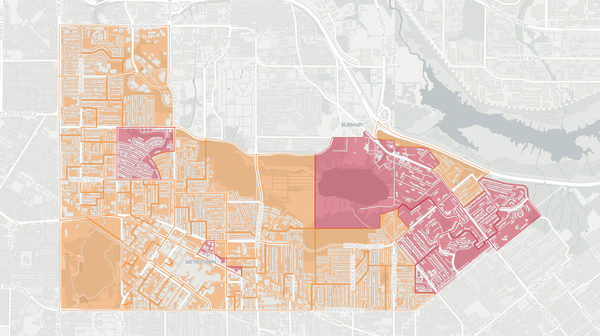
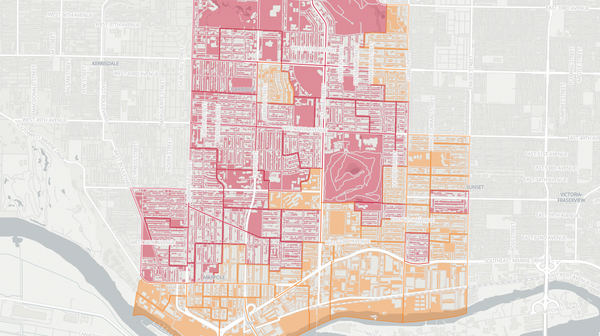
Richmond-Queensborough — 2020 British Columbia Provincial Election Results Map
Richmond-Queensborough — 2020 Election Results
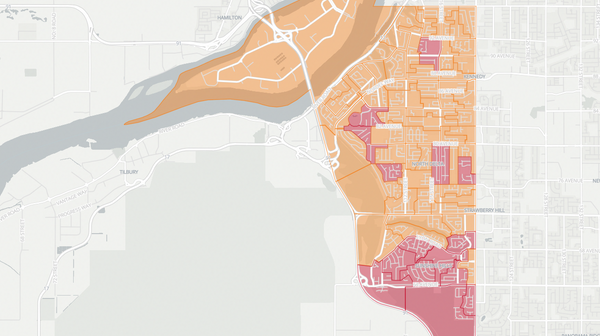
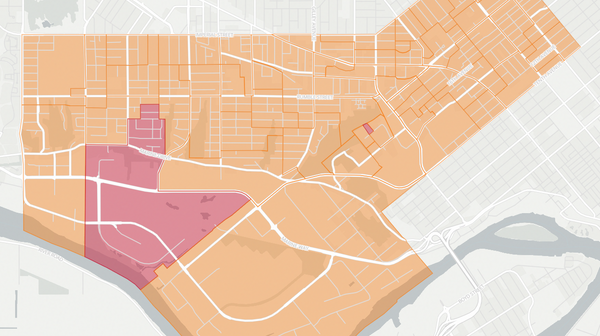
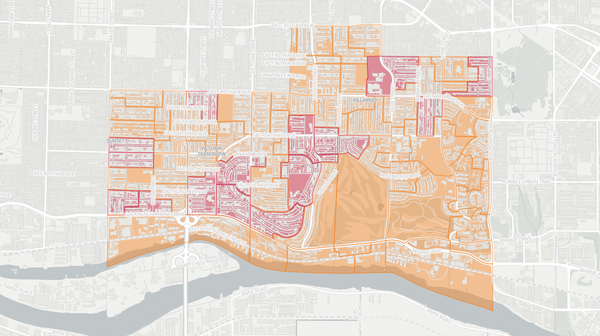
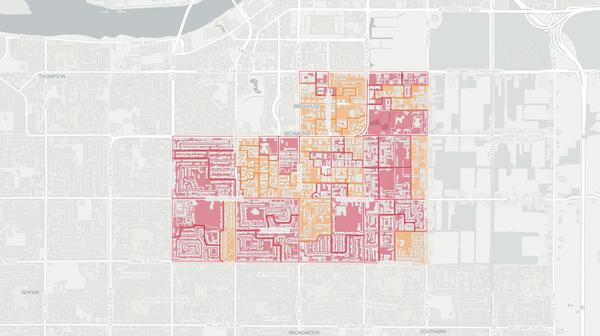
Poll-by-poll results for Richmond-Queensborough in the 2020 British Columbia election. The BC NDP candidate won this riding. Explore detailed voting data, candidate results, and turnout statistics at the poll level.
Riding information
Auto generated. Flag an issue.Richmond—Queensborough
Richmond—Queensborough combines a portion of the city of Richmond with the Queensborough neighbourhood of New Westminster, which sits on Lulu Island. The riding has a diverse electorate with significant South Asian and Chinese-Canadian communities, and its character spans established Richmond residential areas and the rapidly developing Queensborough, where new condominium and townhouse projects were transforming a once-quieter industrial-residential neighbourhood. The George Massey Tunnel replacement—stalled after the NDP scrapped the previous government's bridge proposal—remained the riding's defining infrastructure issue, while the Cullen Commission's money-laundering revelations resonated across a community that had witnessed the effects of unchecked capital flows on housing prices.
Politically, the riding was one of the tightest swing seats in the province. The BC Liberals had won it by just 134 votes in 2017, making Richmond—Queensborough one of the most closely watched contests of 2020. The outcome would help determine whether the NDP's gains in suburban Metro Vancouver were deepening or whether the Liberals could hold their traditional strength in Richmond.
Candidates
Aman Singh (BC NDP) — Singh was born in Sultanpur Lodhi, Punjab, India, and moved to Hong Kong at the age of one, living there until age eighteen. He studied physics and anthropology at the University of California, Berkeley, and earned his law degree from the University of Victoria. He operated his own law practice specializing in human and civil rights law. He spoke Cantonese, Hindi, and Punjabi in addition to English and had lived in Richmond for two decades. He served as a governor of Kwantlen Polytechnic University and held directorships with several community organizations.
Jas Johal (BC Liberal Party) — Johal was born in Jalandhar, Punjab, India, and moved to British Columbia at the age of two, growing up in Williams Lake before settling in Greater Vancouver. He graduated from the British Columbia Institute of Technology with a diploma in communications and built a distinguished journalism career spanning more than two decades, working as a senior reporter at BCTV and Global BC, as a national correspondent for Global National, and as the network's Asia bureau chief based in Beijing and New Delhi. He left journalism in 2014 to become director of communications for the BC LNG Alliance before entering politics.
Earl Einarson (BC Green Party) — Einarson was a member of the Ktunaxa Nation and worked in Indigenous innovation and development at the First Nations Technology Council. His campaign called for an ecologically sound approach to the George Massey Crossing project and greater investment in Richmond's health infrastructure.
Kay Hale ran for the BC Conservative Party with minimal support.
Local Issues
The George Massey Tunnel replacement remained the defining infrastructure issue in the riding throughout the NDP's first term. The previous BC Liberal government had planned a ten-lane bridge to replace the aging tunnel on Highway 99 connecting Richmond and Delta, but the NDP scrapped the bridge proposal in 2017 and commissioned an independent review. The resulting process saw a regional task force of Metro Vancouver mayors—including representatives from Richmond, Delta, Vancouver, and Surrey—recommend an eight-lane immersed-tube tunnel with dedicated transit lanes in October 2019. By the time of the 2020 election, however, the project remained in the planning phase with no construction timeline, and commuters continued to endure daily gridlock at the existing crossing. The years of delay since the NDP cancelled the bridge had become a potent campaign issue, with the Liberals arguing that the government had traded a shovel-ready project for an indefinite planning exercise, while the NDP maintained that the bridge had been an oversized and environmentally problematic proposal that required a more thoughtful replacement.
The Cullen Commission's revelations about money laundering resonated across Richmond, and the riding was no exception. Both Johal and Singh engaged on the commission's findings, debating the degree to which the previous Liberal government bore responsibility for the regulatory failures that had allowed suspected proceeds of crime to flow through BC casinos and into the real estate market. River Rock Casino, located in Richmond, had been identified as a significant conduit, and testimony about the scale of suspicious cash transactions at the facility—including patrons arriving with large volumes of small-denomination bills—fuelled public concern about the downstream effects on housing affordability and community safety. The issue cut both ways politically: the NDP used it to highlight the Liberals' record in government, while Johal argued that the commission's work validated the need for stronger enforcement regardless of which party was in power.
The Queensborough neighbourhood of New Westminster had experienced rapid residential development during the NDP's first term, with new condominium and townhouse projects transforming what had been a quieter, industrial-residential area on Lulu Island. Queensborough's population was growing at more than twice the rate of the rest of New Westminster, and residents questioned whether schools, roads, parks, and community amenities were keeping pace. The planned Q2Q pedestrian and cycling bridge—intended to connect the Port Royal neighbourhood to the north bank of the Fraser River and New Westminster's downtown—represented a significant infrastructure investment for the community but also highlighted the neighbourhood's relative isolation from the services and transit connections available on the mainland side of the river. School capacity was a particular concern for the young families moving into the area's new housing developments.
The riding's diverse population made issues of immigration settlement, multicultural programming, and multilingual government services locally significant in ways that extended beyond standard campaign rhetoric. Both Singh and Johal brought personal immigrant backgrounds to the contest and competed actively for support within the South Asian and Chinese-Canadian communities that formed large segments of the electorate. The NDP government's housing interventions—the speculation and vacancy tax, the foreign buyers' surcharge, and rent controls—were debated through the lens of their impact on communities with strong transnational family and economic ties. The COVID-19 pandemic's disproportionate economic impact on lower-income workers in the service and hospitality sectors, many of whom lived in the riding's more affordable rental housing, added an additional layer of urgency to affordability and employment discussions.