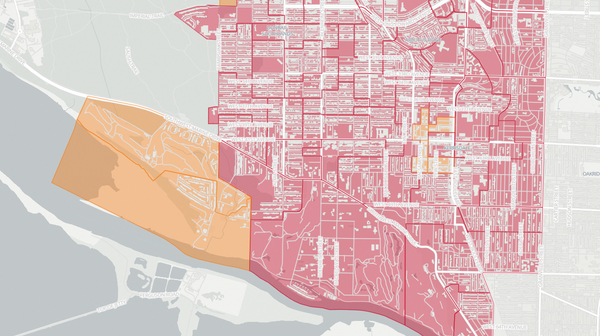
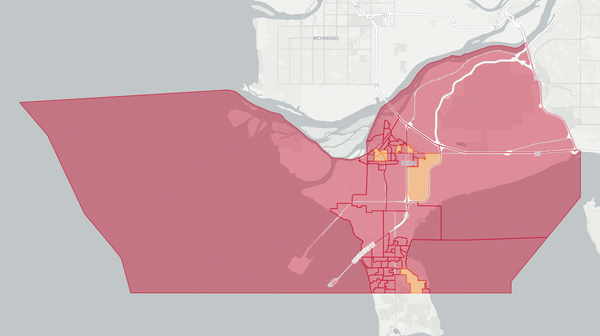
Richmond South Centre — 2020 British Columbia Provincial Election Results Map
Richmond South Centre — 2020 Election Results
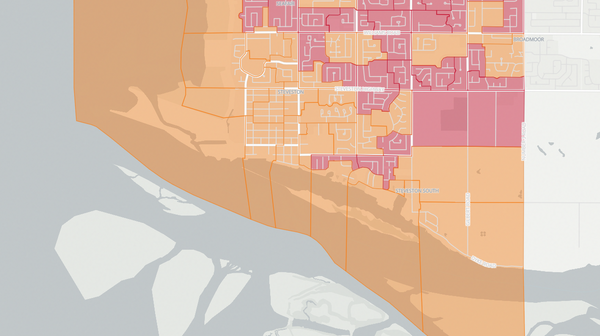
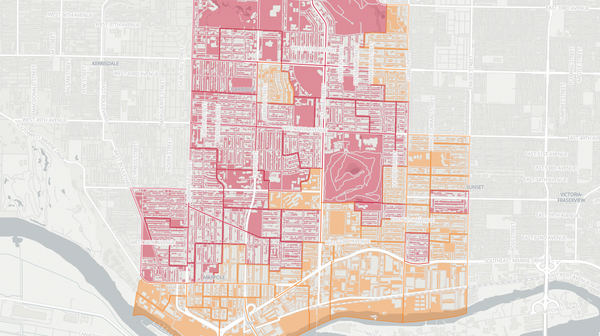
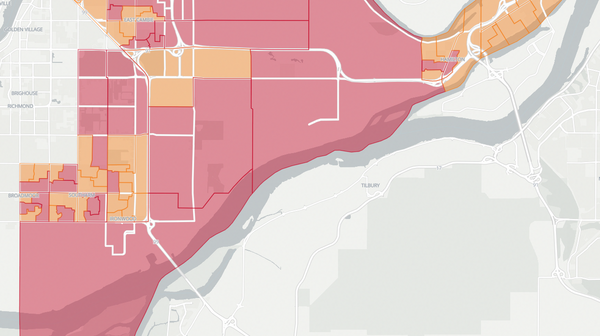
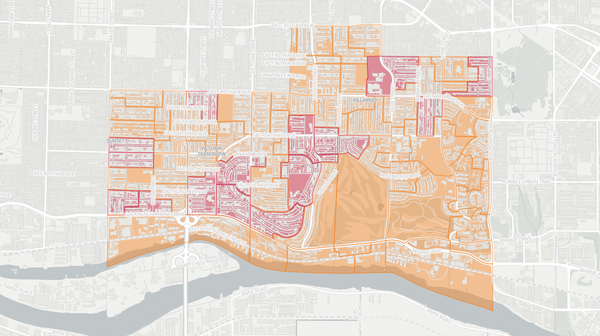
Poll-by-poll results for Richmond South Centre in the 2020 British Columbia election. The BC NDP candidate won this riding. Explore detailed voting data, candidate results, and turnout statistics at the poll level.
Riding information
Auto generated. Flag an issue.Richmond South Centre
Richmond South Centre was one of British Columbia's smallest and most densely populated ridings, covering just seven square kilometres of central Richmond along the No. 3 Road corridor. The riding consisted largely of high-rise apartments and condominiums clustered around the Canada Line's Brighouse and Aberdeen stations, giving it a distinctly urban character within the broader suburban fabric of Richmond. A large majority of residents spoke Cantonese or Mandarin as a first language, making it one of the most linguistically concentrated ridings in the province.
Created through redistribution in 2017, the riding had been held by the BC Liberals in its only previous contest. With the incumbent not seeking re-election in 2020, it became an open seat at a time when the NDP was polling strongly across Metro Vancouver, making it one of the most closely watched races in the Lower Mainland.
Candidates
Henry Yao (BC NDP) — Born in Taiwan, Yao immigrated to Richmond and attended local schools including Matthew McNair Secondary before earning a Bachelor of Arts in Psychology from the University of British Columbia. A cancer survivor who was diagnosed with two types of lymphoma in 2004, he spent years in treatment before entering remission, an experience that shaped his commitment to community service. He co-founded the Dialogue Richmond Society, a non-profit dedicated to fostering constructive conversations on difficult community issues, and served as vice-president of the Vancouver Metropolitan Lions Club and secretary of the Richmond Chinese Community Society.
Alexa Loo (BC Liberal Party) — A two-time Olympian, Loo competed for Canada in parallel giant slalom snowboarding at the 2006 Turin and 2010 Vancouver Winter Olympics, retiring as a seven-time Canadian champion in the discipline. She held a Bachelor of Commerce from the University of British Columbia and earned her Chartered Accountant designation while working at KPMG. First elected to Richmond City Council in 2014, she was serving her second term as councillor when she accepted the BC Liberal nomination to replace the retiring Linda Reid.
Local Issues
The NDP government's introduction of the Speculation and Vacancy Tax in November 2018 had a direct impact on Richmond South Centre, where a significant share of condominium units along the No. 3 Road corridor had been held vacant or used as short-term investments. The tax, which imposed a rate of two per cent on foreign owners and satellite families, was credited with returning thousands of units to the long-term rental market across Metro Vancouver, but residents debated whether it had done enough to bring rents down in one of the Lower Mainland's most expensive rental markets. Meanwhile, the provincial government's decision to launch the Cullen Commission of Inquiry in May 2019 — investigating money laundering through British Columbia's casinos, luxury car dealers, and real estate sector — resonated in a riding that included the River Rock Casino Resort, which had been identified as a significant site of suspicious cash transactions.
The Richmond Hospital redevelopment was a high-profile issue for the riding's large senior population. In March 2018, the NDP government approved a concept plan for a new acute care tower to replace the hospital's original 1966 structure, which had been assessed as being at high risk of structural failure in an earthquake. The project advanced to business planning during the 2017-2020 term, and by July 2020 the province announced an expanded plan for a larger tower with additional services. Residents in Richmond South Centre, many of whom relied on the hospital for primary and emergency care, watched the project's progress closely and pressed candidates on timelines for construction.
The rapid densification of the No. 3 Road corridor during the 2017-2020 period intensified concerns about the adequacy of community infrastructure. The City of Richmond's City Centre Area Plan had channelled thousands of new residential units into towers surrounding the Canada Line stations, but parks, childcare spaces, and community centres had not kept pace with growth. The Canada Line itself, which had consistently exceeded its original ridership projections, was operating near capacity during peak hours, and commuters in the riding faced overcrowded trains and platform congestion at the Brighouse and Aberdeen stations. The NDP government's plans to increase Canada Line service frequency by 2020 were welcomed but had not fully materialized before the pandemic disrupted transit demand.
The COVID-19 pandemic itself dominated the final weeks of the campaign. Richmond had experienced significant community transmission during the spring and summer waves, and the riding's high-density housing made social distancing and public health compliance particularly challenging. Residents questioned whether calling a snap election during a pandemic was responsible, and all-candidates forums moved to virtual formats. The riding's linguistic diversity complicated public health messaging, with community organizations stepping in to translate provincial directives into Cantonese and Mandarin for residents who could not access English-language information.