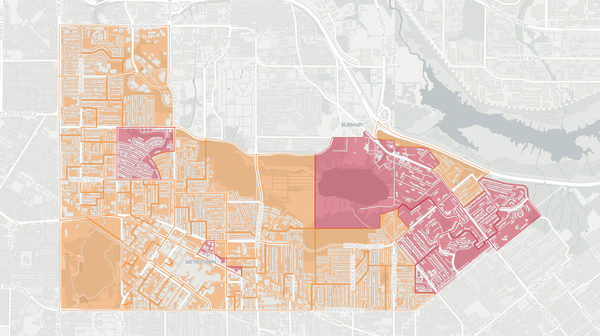
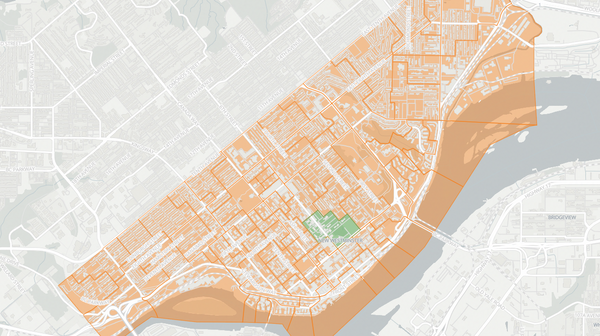
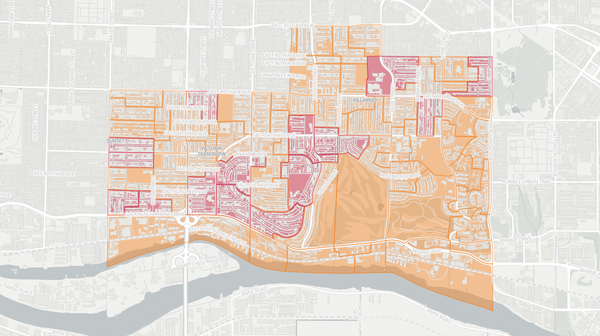
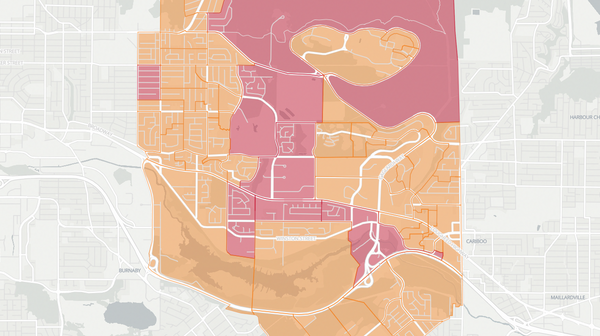
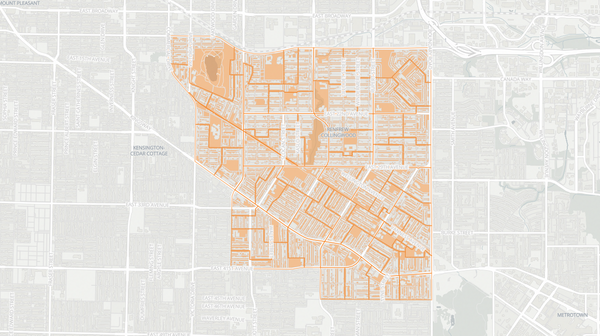
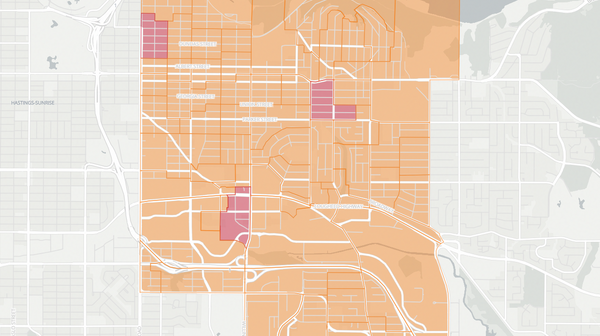
Burnaby-Edmonds — 2020 British Columbia Provincial Election Results Map
Burnaby-Edmonds — 2020 Election Results
Poll-by-poll results for Burnaby-Edmonds in the 2020 British Columbia election. The BC NDP candidate won this riding. Explore detailed voting data, candidate results, and turnout statistics at the poll level.
Riding information
Auto generated. Flag an issue.Burnaby—Edmonds
Burnaby—Edmonds covers the southern portion of Burnaby, taking in the Edmonds Town Centre around the SkyTrain station, the Big Bend industrial lands along the Fraser River, and the working-class residential corridors along Kingsway and Stride Avenue. The riding has a high concentration of immigrant families and lower-income households, with a mix of older rental apartment buildings, single-family homes, and an accelerating wave of high-rise redevelopment near the Edmonds SkyTrain station. The Trans Mountain pipeline expansion, with its terminal in neighbouring Burnaby, and the planned transformation of the Edmonds Town Centre into a major mixed-use hub were reshaping the riding's physical and political landscape.
The NDP had held the seat since 2005, and the four-term incumbent sought a fifth consecutive victory in 2020. A three-candidate race in one of the province's most reliably NDP ridings tested whether the party's working-class base would deliver another comfortable margin in a snap pandemic election.
Candidates
Raj Chouhan (BC NDP) — Chouhan was the incumbent MLA who had served as Deputy Speaker of the Legislative Assembly from 2017 to 2020. Born in Ludhiana in the Indian state of Punjab, he immigrated to Canada in 1973 and settled in Burnaby. He is the founding president of the Canadian Farmworkers Union, established to advocate for the rights of immigrant agricultural workers in British Columbia. He also served as a director of the Hospital Employees' Union. Prior to his appointment as Deputy Speaker, Chouhan served as Assistant Deputy Speaker during the 2013–2017 term.
Tripat Atwal (BC Liberal Party) — Atwal was a Surrey-based realtor who had taught high school English and social sciences in India before immigrating to Canada in 2008. Her father, Charanjit Singh Atwal, was a former speaker of the Punjab Legislative Assembly and former deputy speaker of the Lok Sabha, India's parliament. The 2020 election was her first campaign for Canadian public office.
Iqbal Parekh (BC Green Party) — Parekh had lived in the Burnaby—Edmonds area since 1991 and worked in admissions and recruitment at public post-secondary institutions and independent high schools across British Columbia. He served on the board of directors at the Edmonds Community Centre's 55+ group.
Local Issues
The NDP government's amendments to the Residential Tenancy Act had been put to the test in Burnaby—Edmonds, where older affordable rental buildings near the Edmonds Town Centre SkyTrain station faced relentless development pressure. Provincial reforms introduced between 2018 and 2019 extended the notice period for tenants facing renoviction or demoviction to four months, increased the window to dispute an eviction notice to thirty days, and imposed a penalty of twelve months' rent on landlords who used the vacate clause in bad faith. Burnaby's own tenant assistance policy — widely regarded as one of the strongest municipal protections in British Columbia — required developers demolishing buildings of five or more units to guarantee returning tenants equivalent apartments at their previous rent. Yet advocates argued that enforcement remained uneven and that many tenants in smaller buildings fell outside the policy's scope.
The Trans Mountain pipeline expansion remained a significant concern across Burnaby. The federal government had purchased the project from Kinder Morgan in 2018 for $4.5 billion, and construction had resumed in earnest after the National Energy Board reapproved the expansion in June 2019. Fourteen new storage tanks were being built at the Burnaby Terminal, and work at the Westridge Marine Terminal was advancing under a contract held by the Kiewit Ledcor Trans Mountain Partnership. For residents of Burnaby—Edmonds, the project raised ongoing concerns about environmental risk — particularly the potential for a spill along the Fraser River waterfront — as well as construction disruption on local roads and the long-term implications of increased tanker traffic through Burrard Inlet. The NDP government had exhausted its legal challenges to the federally approved project, leaving the conversation focused on managing local impacts.
COVID-19 had a direct impact on the riding's working-class residents. Many households in Burnaby—Edmonds depended on wages in food services, retail, warehousing, and hospitality — sectors that bore the brunt of pandemic restrictions. The NDP government's temporary rental supplements, eviction ban, and pandemic recovery benefits, including a proposed one-time $1,000 BC Recovery Benefit for eligible residents, were closely watched by voters who had experienced income losses during the public health emergency. The riding's concentration of lower-income households made these supports a matter of immediate material significance, and candidates debated whether the programs were generous enough and whether they would be extended beyond the initial emergency period.
The planned transformation of the Edmonds Town Centre into a major mixed-use hub was taking shape during the campaign. BC Housing and the City of Burnaby had been advancing plans for a large-scale redevelopment at the southwest corner of Kingsway and Edmonds Street, envisioning thousands of new homes — a substantial majority of them rental units — on a site adjacent to the SkyTrain station. The project held the potential to significantly expand the neighbourhood's housing stock, but also raised questions about the displacement of existing residents and businesses during construction, the adequacy of community amenities in a rapidly growing district, and whether the new rental units would be priced within reach of the working families who had long defined the riding's character.