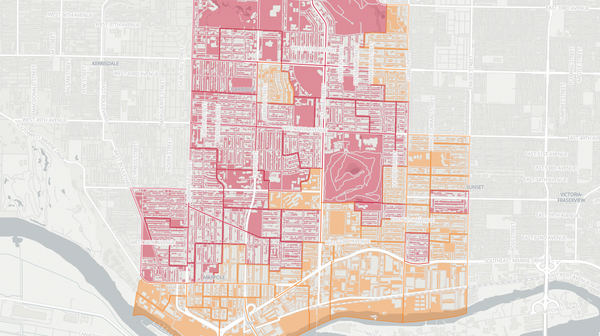
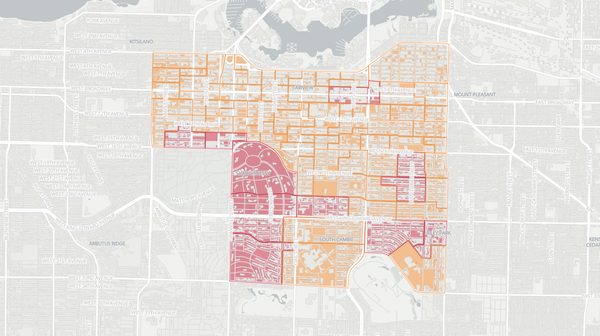
Richmond North Centre — 2020 British Columbia Provincial Election Results Map
Richmond North Centre — 2020 Election Results
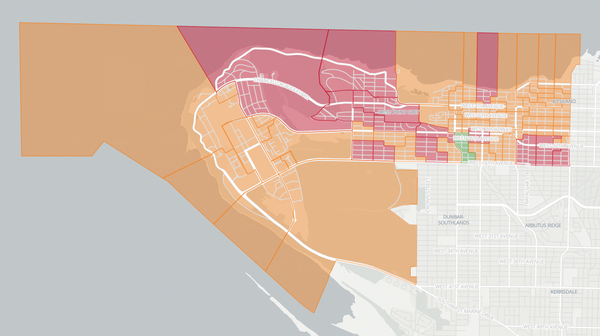
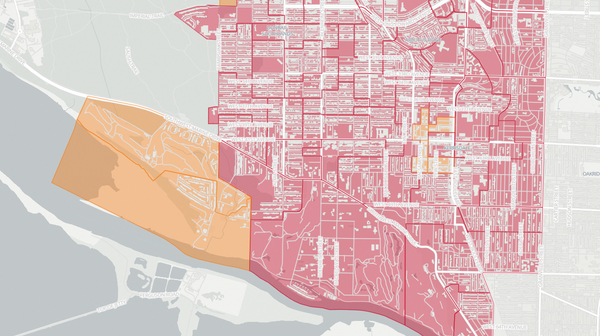
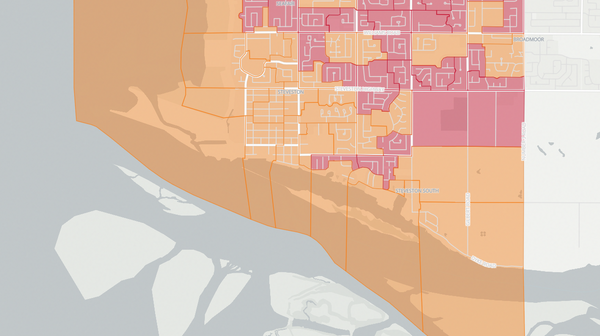
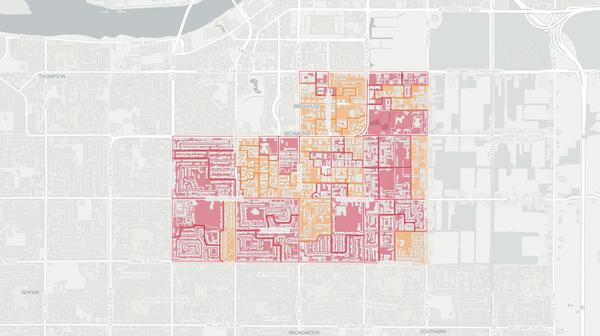
Poll-by-poll results for Richmond North Centre in the 2020 British Columbia election. The BC Liberal Party candidate won this riding. Explore detailed voting data, candidate results, and turnout statistics at the poll level.
Riding information
Auto generated. Flag an issue.Richmond North Centre
Richmond North Centre sits in the heart of the city of Richmond, a suburban municipality on Lulu Island in Metro Vancouver. The riding has the highest proportion of Chinese-language speakers of any electoral district in the province, reflecting Richmond's large and established Chinese-Canadian community with deep ties to Hong Kong, mainland China, and other parts of Asia. The local economy is shaped by retail, services, and the nearby Vancouver International Airport, while the Canada Line rapid transit connection has driven significant residential densification along the No. 3 Road corridor. The NDP government's speculation and vacancy tax was a polarizing issue in a community with extensive transnational family structures, and the Cullen Commission's revelations about money laundering at Richmond's River Rock Casino cast a long shadow over local politics.
The BC Liberals had held the seat since the riding's creation in 2017, and their traditional dominance in Richmond was historically built on strong ties within the Chinese-Canadian community. But the NDP was making inroads across the city that would have been unthinkable a decade earlier, and the 2020 contest reflected a broader generational and political shift underway in Richmond.
Candidates
Teresa Wat (BC Liberal Party) — Wat grew up in Hong Kong and immigrated to Canada in 1989. She built a career in multicultural media, serving as news director at Channel M Television, which later became OMNI TV, and as news editor for Ming Pao Daily News. She was also president and CEO of Mainstream Broadcasting Corporation. First elected to the Legislature in 2013, she served as Minister of International Trade and Minister Responsible for the Asia Pacific Strategy and Multiculturalism from 2013 to 2017.
Jaeden Dela Torre (BC NDP) — Dela Torre was a nineteen-year-old student and NDP constituency executive who had run for the NDP in the Steveston–Richmond East riding in the 2019 federal election. In 2018, he organized a youth sleep-out in front of Richmond city hall to advocate for supportive housing, helping build a coalition that contributed to the construction of a facility now housing forty residents.
Vernon Wang (BC Green Party) — Wang had immigrated to Canada from Shanghai at age sixteen and studied at Mount Saint Vincent University in Halifax, earning a bachelor's degree in applied human nutrition. He held a master's degree in public health from Simon Fraser University and had worked as a community coordinator and grassroots environmentalist.
Local Issues
The Cullen Commission of Inquiry into Money Laundering in British Columbia cast a long shadow over Richmond politics during the 2020 campaign. The inquiry, established by the NDP government in 2019, was examining systemic failures that had allowed vast sums of suspected criminal proceeds to flow through BC casinos, real estate, and luxury car dealerships. Testimony revealed that Richmond's River Rock Casino had been a central node in the money-laundering network—staff had routinely underreported suspicious transactions, filing reports only for amounts above fifty thousand dollars rather than the ten-thousand-dollar threshold required by federal regulations. RCMP investigations had documented high-rolling patrons arriving with hundreds of thousands of dollars in small-denomination bills packed into suitcases and bags. The commission's hearings resonated deeply in a community that had witnessed the effects of unchecked capital flows on housing prices and public safety, and the question of accountability—particularly for regulatory failures during the BC Liberals' sixteen years in government—was a politically charged issue in a riding that had long been a Liberal stronghold.
The NDP government's speculation and vacancy tax, introduced in late 2018, was a polarizing measure in Richmond. The tax—initially set at 0.5 percent of assessed property value for the first year, rising to 2.0 percent for foreign owners and satellite families—was designed to discourage speculative ownership and encourage the return of vacant properties to the rental market. An independent review found that the tax had helped return approximately twenty thousand condominium units to the long-term rental market across Metro Vancouver and had a moderating effect on prices. However, in a community with extensive personal and family ties to Hong Kong, mainland China, and other parts of Asia, the tax drew accusations of unfairly targeting immigrant families—particularly those with members working abroad. Some Richmond residents faced substantial tax bills on properties they considered primary residences, and the intersection of housing policy with the community's transnational family structures made the speculation tax an unusually personal political issue.
The planned Capstan Station on the Canada Line advanced through planning during the NDP's term, representing a significant transit infrastructure investment for the riding. By May 2019, the City of Richmond had raised $32 million in developer contributions—exceeding the original $27.8-million target—to fund the infill station at the intersection of No. 3 Road and McMyn Way. In December 2019, TransLink and the city agreed on a design concept, and public engagement on the station took place in November 2020. The station promised to improve transit access for a rapidly densifying area of central Richmond, where new residential towers were being built in anticipation of the station's completion, and signalled the kind of transit-oriented development that both the provincial and municipal governments were encouraging across Metro Vancouver.
Settlement services, multilingual government access, and multicultural programming were not abstract policy questions in Richmond North Centre but everyday necessities. The riding's large immigrant population relied on services delivered in Cantonese, Mandarin, and other languages, and the adequacy of provincial funding for settlement agencies, language training, and cultural programming was a recurring concern. The COVID-19 pandemic added new dimensions to these issues, as public health communications needed to reach linguistically diverse communities quickly and accurately, and reports of anti-Asian racism across Metro Vancouver heightened anxiety within a community that was already navigating complex questions of identity, belonging, and political representation.