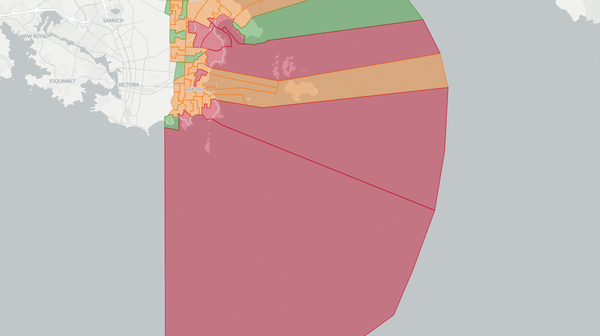
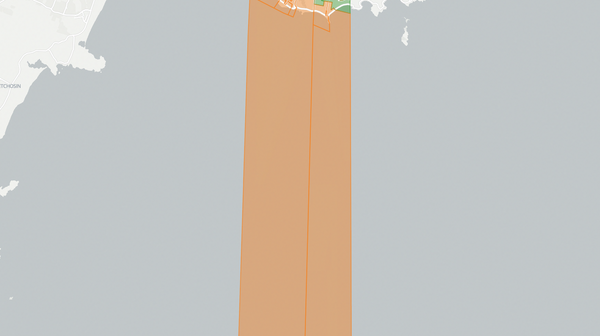
Saanich North and the Islands — 2020 British Columbia Provincial Election Results Map
Saanich North and the Islands — 2020 Election Results
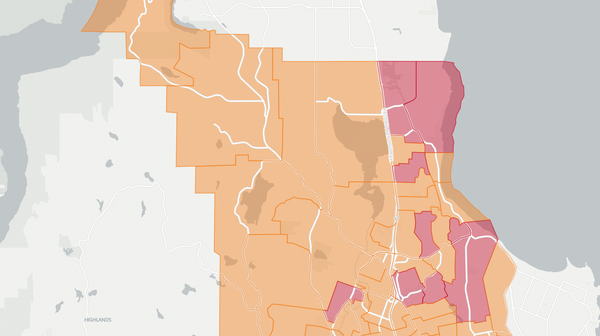
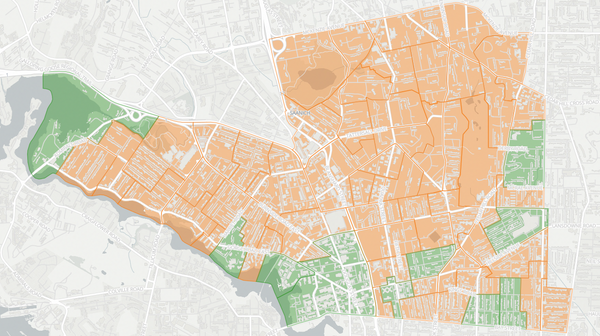
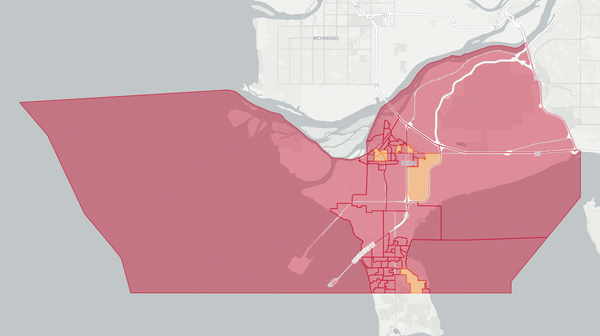
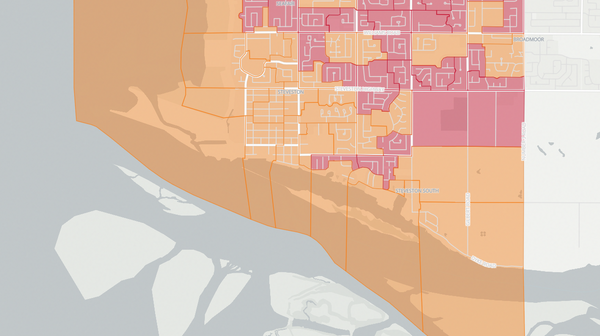
Poll-by-poll results for Saanich North and the Islands in the 2020 British Columbia election. The BC Green Party candidate won this riding. Explore detailed voting data, candidate results, and turnout statistics at the poll level.
Riding information
Auto generated. Flag an issue.Saanich North and the Islands
Saanich North and the Islands spans the Saanich Peninsula municipalities of Central Saanich, North Saanich, and Sidney, as well as the Southern Gulf Islands of Salt Spring, Galiano, Mayne, Pender, and Saturna. The riding's character is defined by the interplay between its peninsula towns, which serve as bedroom communities for Greater Victoria, and the Gulf Islands communities that depend entirely on BC Ferries connections for access to services, employment, and health care. The area's large retiree population, environmentally conscious voters, and rural-island lifestyle give the riding a political profile unlike most of Vancouver Island.
The riding had been a competitive three-way battleground in recent elections. The Liberals held it from 1996 to 2013, when the NDP won by fewer than four hundred votes in one of the closest three-way races in modern BC history. The Greens captured the seat in 2017, making it one of only three ridings to elect a Green MLA and a pillar of the confidence-and-supply agreement that sustained the NDP minority government. Heading into 2020, the snap election call — which effectively ended that agreement — was itself a major campaign issue in a riding where many voters felt the minority arrangement had delivered stable governance.
Candidates
Adam Olsen (BC Green Party) — A member of the Tsartlip First Nation and lifelong resident of the Saanich Peninsula, Olsen had served as MLA since 2017, when he became the first Indigenous Green Party member elected to a legislature in North America. Before entering provincial politics, he served two terms on Central Saanich municipal council and worked in the communications and service sectors. During the 2017-2020 term, he served on the Finance and Government Services Committee and used his platform to advocate for BC Ferries affordability, old-growth forest protection, and Indigenous reconciliation.
Zeb King (BC NDP) — A Central Saanich municipal councillor since 2002, King held a Master of Public Administration from the University of Victoria. His long tenure on council gave him extensive experience with land use planning, environmental stewardship, and municipal infrastructure on the Saanich Peninsula. He cited the NDP's CleanBC climate action plan as a key motivation for his candidacy.
Stephen P. Roberts (BC Liberal Party) — A Salt Spring Island resident and retired banking executive, Roberts was contesting the riding for a third consecutive election. He contributed to local governance through involvement with the Islands Trust and served on the boards of the Mary Winspear Centre's Memorial Park Society, the Vancouver Hospice Society, and the Lady Minto Gulf Islands Hospital Foundation.
Local Issues
The NDP government's ferry fare policies during the 2017-2020 term brought tangible changes to the Gulf Islands communities that defined much of the riding's character. Effective April 2018, the province froze fares on major routes and cut fares by fifteen per cent on minor and northern routes — a reduction that applied directly to the Southern Gulf Islands sailings connecting Galiano, Mayne, Pender, and Saturna islands to Swartz Bay. The province also reinstated free Monday-to-Thursday travel for seniors, easing costs for the riding's large retiree population. Despite these measures, islanders argued that fares remained a significant financial burden for families who depended on ferries for medical appointments, grocery shopping, and employment, and that the service reductions imposed during the pandemic — including capacity limits and cancelled sailings — had made life on the islands markedly more difficult.
The primary care crisis on the Saanich Peninsula had deepened considerably during the NDP's term. By 2020, an estimated fifteen thousand residents of the peninsula lacked a family physician, with attachment rates hovering around sixty-three to sixty-six per cent across Central Saanich, North Saanich, and Sidney. The Shoreline Medical Society, a charitable non-profit founded in 2015, had grown from five physicians to twenty-five between its Sidney and Brentwood Bay clinics, but could not keep pace with demand. Central Saanich council formally called on the province to treat the physician shortage as a crisis, and in September 2020, the NDP government announced funding for a Saanich Peninsula Primary Care Network to attach fifty-one thousand patients to team-based care across the peninsula and western communities over four years. Whether this commitment would translate into tangible improvements was a central question for voters.
Climate action and environmental stewardship took on heightened urgency during the 2017-2020 term. Central Saanich council approved accelerated climate targets in December 2019 aligned with the United Nations recommendation to limit global warming to 1.5 degrees Celsius, and the District of Saanich adopted its 2020 Climate Plan. Olsen had used his position as a Green MLA to press the NDP on old-growth forest protections, and the government's September 2020 announcement of deferrals covering 353,000 hectares of at-risk old-growth — made just ahead of the snap election call — was seen by some as an acknowledgement of Green Party pressure. On the Gulf Islands, the freshwater supply was entirely dependent on rainfall recharge, and summer drought conditions raised recurring concerns about the sustainability of residential development on islands with limited aquifer capacity.
The snap election call itself was a potent campaign issue in the riding. Olsen argued that Premier Horgan had broken faith with the confidence-and-supply agreement that had sustained the NDP minority government for three years, and that calling an election during a pandemic — when a disproportionate share of the riding's elderly population was isolating at home — was irresponsible. The criticism resonated in a riding where the Greens had earned voter trust by demonstrating that a minority government arrangement could deliver stable governance, and where many residents felt the NDP had leveraged the Greens' policy contributions without sharing credit.