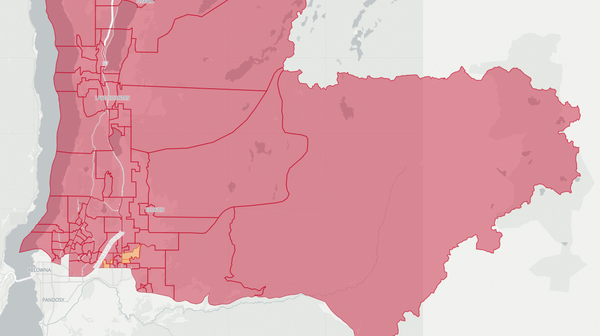
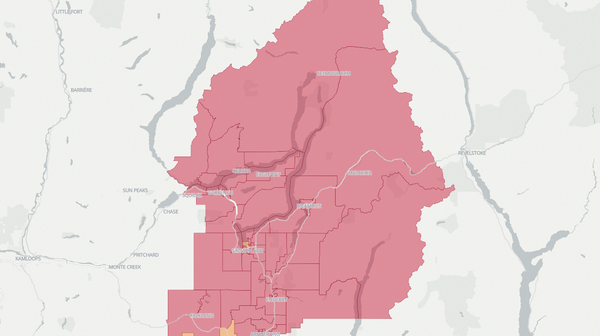
Kootenay East — 2020 British Columbia Provincial Election Results Map
Kootenay East — 2020 Election Results
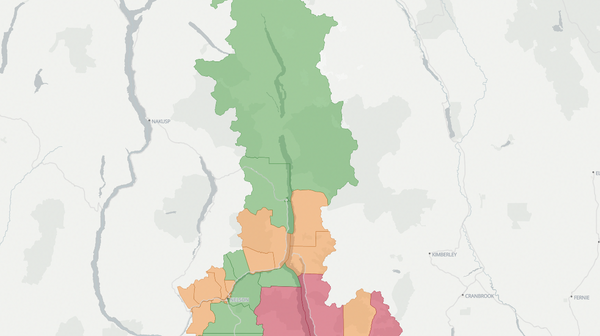
Poll-by-poll results for Kootenay East in the 2020 British Columbia election. The BC Liberal Party candidate won this riding. Explore detailed voting data, candidate results, and turnout statistics at the poll level.
Riding information
Auto generated. Flag an issue.Kootenay East
Kootenay East occupies the southeastern corner of British Columbia, stretching from Cranbrook and Kimberley in the Rocky Mountain Trench through the Elk Valley communities of Fernie, Sparwood, and Elkford. The riding covers a vast geography of mountain passes, river valleys, and resource-rich landscapes where coal mining, forestry, and outdoor recreation define the economic character. Cranbrook, with roughly 21,000 residents, serves as the regional service centre for health care, retail, and government services, while the Elk Valley's economy is anchored by Teck Resources' metallurgical coal operations.
The BC Liberals had held the seat continuously since 2001, and in 2020 the first-term Liberal incumbent sought re-election. However, the NDP fielded a high-profile challenger with deep roots in the region, making this the most competitive contest the riding had seen in years. The snap election call during the pandemic added further uncertainty to a traditionally safe centre-right seat.
Candidates
Tom Shypitka (BC Liberal Party) — Shypitka was the incumbent MLA, first elected in 2017. Born and raised in Cranbrook with five generations of family history in the community, he had worked in the hospitality industry, owning bars, restaurants, and nightclubs, before becoming a financial advisor. He served as a Cranbrook city councillor and regional district director prior to his election to the legislature. He was also an accomplished competitive curler, having won three provincial championships and competed at the Brier.
Wayne Stetski (BC NDP) — Stetski was the former Member of Parliament for Kootenay—Columbia, elected federally in 2015 and defeated in 2019. Before his parliamentary career, he served as mayor of Cranbrook from 2011 to 2014 and had a thirty-five-year career working with national and provincial parks and protected areas. He held a science degree in ecology and education from the University of Manitoba and had served as regional manager for BC Parks in the East Kootenay.
Kerri Wall (BC Green Party) — Wall was a public health care worker from Fernie who had spent ten years in Interior Health's Healthy Communities Program, working with local governments on age-friendly recreation planning, transportation planning, walkability, and community vitality. She was motivated to run by what she described as the urgency of the climate emergency.
Local Issues
The coal mining industry remained the central economic and environmental question in Kootenay East, but the stakes had escalated since 2017. Teck Resources' proposed Castle project—an expansion of Fording River Operations designed to access an adjacent deposit and maintain production capacity of ten million tonnes per year—became a flashpoint in 2020 when federal Environment Minister Jonathan Wilkinson ordered it to undergo a full federal environmental assessment. Conservation groups, First Nations, and the U.S. state of Montana had pressed for the review, citing concerns about cumulative selenium contamination in the Elk Valley and transboundary water pollution flowing into Lake Koocanusa. Teck had invested more than $1.4 billion in water treatment and other measures to address the contamination, but selenium levels in the Fording and Elk rivers downstream of the mines remained many times higher than what the provincial government considered safe for aquatic life.
The Fernie Memorial Arena ammonia leak of October 2017—which killed three workers and forced the evacuation of ninety-five residents from fifty-five nearby homes—cast a long shadow over the riding during the entire NDP term. Investigations by WorkSafeBC and Technical Safety BC revealed that aging equipment the City of Fernie had been advised to replace as early as 2010 had been kept in service, and that a small ammonia leak detected in spring 2017 had not been adequately addressed before the system was returned to operation for the fall curling season. Technical Safety BC issued eighteen recommendations to prevent similar incidents. The city installed a new refrigeration system in time for the 2018–2019 season, but the tragedy underscored the vulnerability of small-municipality infrastructure across rural British Columbia and the costs of deferred maintenance.
Health care access was a persistent concern in a riding where mountain passes and long drives separated communities from medical services. Ambulance service capacity became a particular flashpoint during the NDP's term. With the closure of Kimberley's emergency department back in 2002, all patients requiring emergency care had to be transported to Cranbrook, lengthening call durations and increasing the strain on a limited fleet. By 2020, Kimberley's two ambulances and Cranbrook's three were frequently all committed simultaneously, leaving gaps in coverage. The province deployed a temporary advanced care paramedic to Cranbrook as part of its COVID-19 response, but residents and the ambulance paramedics' union argued that the underlying resource shortfall predated the pandemic and required a permanent fix. Interior Health's High Acuity Response Team—critical care nurses and respiratory therapists based in Cranbrook—had been dispatched to support rural facilities like Fernie's hospital, but the model highlighted how thinly specialized resources were spread.
Wildfire preparedness remained a persistent concern after the devastating 2017 and 2018 fire seasons, which had caused evacuations and property losses across the East Kootenay. The pandemic compounded economic challenges for the tourism and recreation sectors—Fernie's ski resort and summer tourism operations faced a drastically altered 2020 season. The decline of forestry as a major employer—separate from the coal sector—continued to reshape smaller communities that had once depended on sawmills and logging operations, adding to the sense that the riding's economic base was narrowing even as coal revenues remained significant.