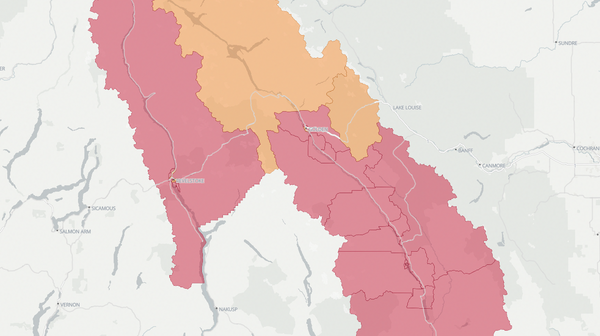
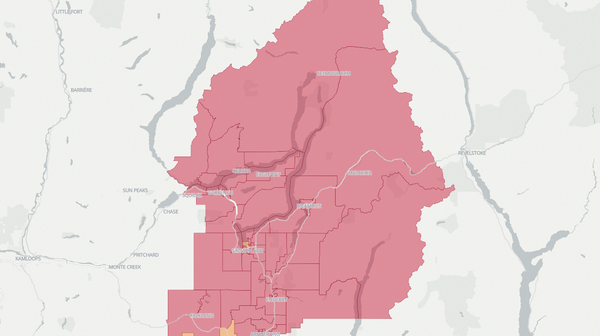
Kootenay West — 2020 British Columbia Provincial Election Results Map
Kootenay West — 2020 Election Results
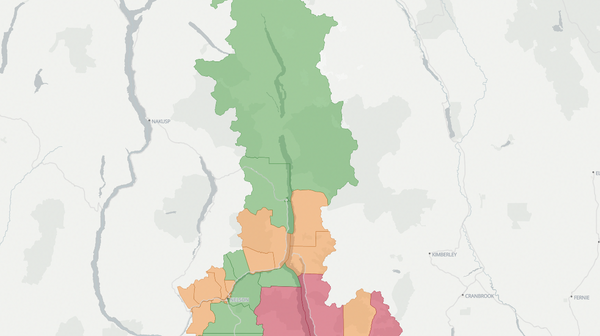
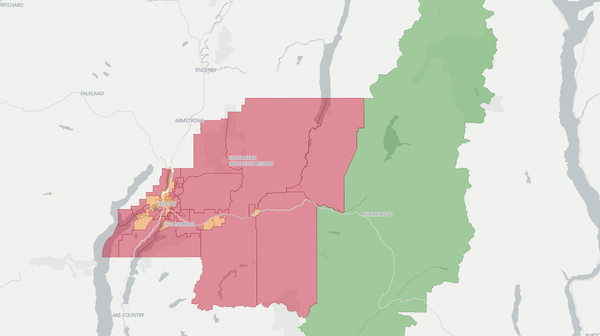
Poll-by-poll results for Kootenay West in the 2020 British Columbia election. The BC NDP candidate won this riding. Explore detailed voting data, candidate results, and turnout statistics at the poll level.
Riding information
Auto generated. Flag an issue.Kootenay West
Kootenay West spans over twelve thousand square kilometres of the West Kootenay, taking in Trail, Rossland, Castlegar, Fruitvale, Nakusp, and the smaller communities scattered through the mountain valleys between the Columbia and Kootenay rivers. Trail's Teck smelter, which has operated for over a century, remains the region's industrial anchor, but the broader economy has been diversifying as outdoor recreation, arts communities, and a growing remote-work population reshape towns like Rossland and Castlegar. The riding's dispersed geography—with mountain passes and long drives separating communities—defines daily life and shapes demands for health care, transportation, and public services.
The NDP had held Kootenay West since 2005, and the riding was considered safe NDP territory heading into 2020. The incumbent sought a fifth term, while the opposition parties fielded relatively low-profile challengers in a contest where the NDP's hold was not seriously in doubt.
Candidates
Katrine Conroy (BC NDP) — Conroy was the incumbent MLA and Minister of Children and Family Development, first elected in 2005. Born to Danish immigrants who settled in the West Kootenay in 1962, she grew up in Castlegar and graduated from Stanley Humphries Secondary School. Before entering politics, she worked as one of British Columbia's first female power engineers, later completed the early childhood education program at Selkirk College, and served as executive director of the Kootenay Columbia Childcare Society.
Andrew Duncan (BC Green Party) — Duncan was a Rossland resident with a background in environmental science integrated with physical geography. He was an active search and rescue manager in the West Kootenay. His campaign focused on climate action, the opioid crisis, and moving beyond GDP as the sole measure of economic well-being.
Corbin Kelley (BC Liberal Party) — Kelley was a nineteen-year-old political science and economics student at Thompson Rivers University. He had been involved with the BC Liberal Party since the age of fourteen and represented a younger generation of centre-right voices in a riding that had traditionally leaned NDP.
Glen Byle ran for the Conservative Party, while Ed Varney and Fletcher Quince ran as independents, all receiving modest support.
Local Issues
The Columbia River Treaty—under renegotiation between Canada and the United States—carried significant implications for the West Kootenay, and Conroy's role as minister responsible kept the issue prominently on the local agenda. In mid-2018, the province held community meetings in Castlegar and Nelson to gather residents' input as formal discussions with the Americans began. Sixty-four people attended the Castlegar session alone. Key local concerns centred on improved access infrastructure around the Lower Arrow Lake area, where communities isolated by valley flooding dating back to the original treaty's dam construction still lacked promised public roads and bridges. Residents also pushed for greater attention to the negative impacts of the treaty dams on local ecosystems and livelihoods, even as they acknowledged the importance of the reservoirs for power production and backup for renewable energy sources.
The Teck smelter in Trail remained the region's economic anchor but also its most persistent environmental concern. Blood lead levels in children living closest to the smelter had been declining steadily—from 2.9 micrograms per decilitre in 2018 to 2.3 in 2020—but remained roughly four times the Canadian average. An estimated eight thousand properties in the Trail area were still contaminated from historic emissions, and remediation work continued under the Trail Area Health and Environment Program. In 2019, air-quality monitoring sites in Trail were the only locations in the provincial and Metro Vancouver monitoring networks to exceed the hourly provincial target for sulphur dioxide. Across the border, U.S. courts had found Teck liable for discharging thousands of tonnes of heavy metals into the Columbia River, adding international legal pressure to the cleanup effort.
Health care access was a deeply felt concern across the riding's dispersed communities. Since 2017, sixteen physician positions had departed the West Kootenay, though recruitment efforts had brought in twenty-four replacements, making the region a provincial leader in attracting new doctors. Still, the loss of both medical oncologists serving the area—with no replacements found despite extensive searches—forced changes to cancer care delivery that alarmed patients and families. Residents in Nakusp and New Denver faced drives of ninety minutes or more for specialist appointments, and ambulance response times in the most remote valleys remained a recurring source of anxiety, particularly for aging populations.
The opioid crisis had reached deeper into the West Kootenay than many residents expected, with overdose deaths—particularly among younger men in resource industries—rising during the NDP's term. Meanwhile, the pandemic began to reshape the region's housing dynamics. Remote workers and retirees had started discovering communities like Rossland and Castlegar, where character homes could be purchased for a fraction of Lower Mainland prices. This nascent influx was welcome in communities with stagnating populations but carried the risk of pushing housing costs beyond the reach of longtime residents—a tension that was only beginning to surface by October 2020.