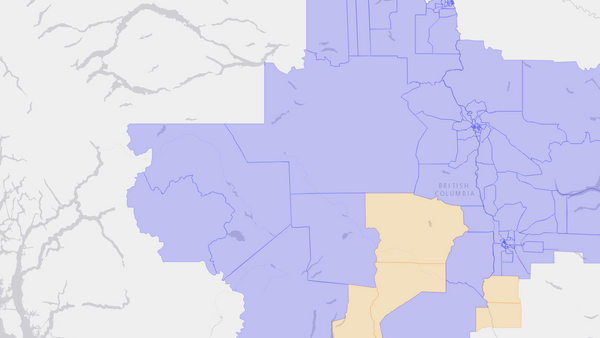
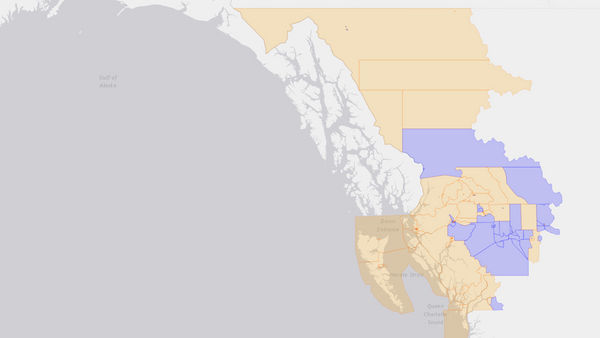
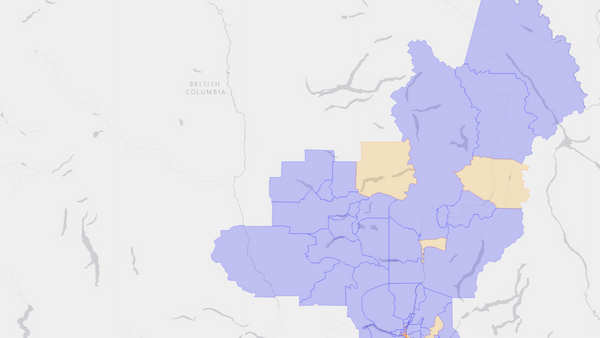
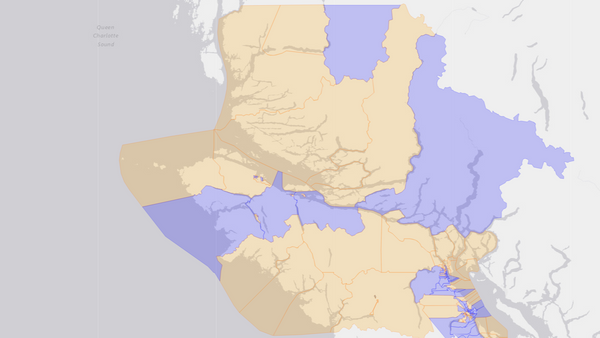
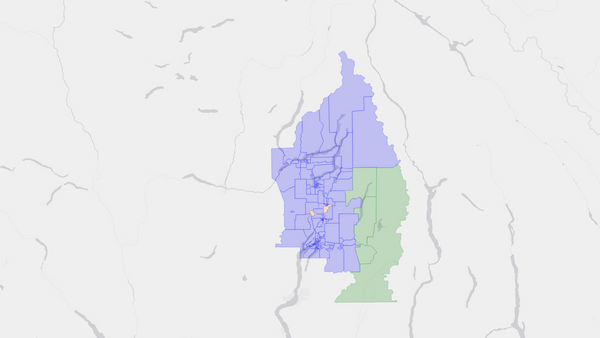
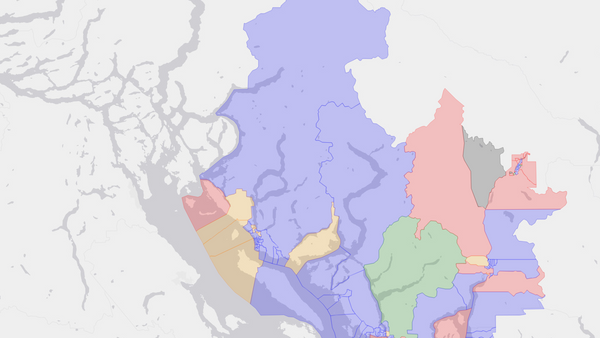
Prince George—Peace River, BC — 2008 Federal Election Results Map
Prince George—Peace River — 2008 Election Results
📌 The Canadian federal electoral district of Prince George—Peace River was contested in the 2008 election.
🏆 Jay Hill, the Conservative candidate, won the riding with 22,325 votes (63.6% of the vote).
🥈 The runner-up was Betty Bekkering (NDP-New Democratic Party) with 6,170 votes (17.6%), defeated by a margin of 16,155 votes.
📊 Other notable candidates: Hilary Crowley (Green Party, 10%) and Lindsay Gidney (Liberal, 8%).
Riding information
Auto generated. Flag an issue.Prince George—Peace River
At roughly 237,000 square kilometres this was among the largest ridings in the country, running from Prince George across the Rocky Mountains to the Alberta line and north to the Yukon boundary. Fort St. John, Dawson Creek, Chetwynd, Taylor, Hudson's Hope, Tumbler Ridge, Fort Nelson, Mackenzie and McBride all sat inside it, along with downtown Prince George and the parts of that city north of the Nechako and east of the Fraser. The southwestern quarter of Prince George, including the university, belonged to Cariboo—Prince George. Fewer than 106,000 people lived in the whole expanse.
Candidates
Jay Hill (Conservative) — Born in Fort St. John in 1952, Hill farmed grain in the Peace before entering politics. He had held the seat since 1993, first as a Reform member and then under the Canadian Alliance and Conservative labels, and had been Chief Government Whip since February 2006, making him the most senior British Columbian in the government's management of the Commons.
Betty Bekkering (NDP) — Retired and living in Prince George, Bekkering campaigned in a city whose mills were cutting shifts.
Hilary Crowley (Green Party) — A physiotherapist from Summit Lake, north of Prince George.
Lindsay Gidney (Liberal) — A railway trainmaster living in Chetwynd, in the Peace River foothills.
About the Riding
Oil and gas ran the eastern half. Fort St. John served the drilling business across the northeast, where work in the Montney formation had accelerated through the mid-2000s and pulled workers and capital into the Peace. Dawson Creek, at Mile Zero of the Alaska Highway, combined energy services with the grain and canola farming of the Peace River block, the only substantial agricultural district in the province north of the Cariboo. Tumbler Ridge lived off metallurgical coal, and Fort Nelson sat at the far northern end of the highway.
Forestry supplied the campaign's dominant story, and it was a grim one. Mackenzie, a purpose-built mill town of fewer than five thousand people, watched its mills go down one after another: AbitibiBowater shut two sawmills, and the pulp and paper complex owned by Pope & Talbot was idled in the spring of 2008 after the company's bankruptcy. More than a thousand jobs had gone by the time the writ dropped, and the province was paying for short-term brush-clearing and trail contracts to keep laid-off workers earning. On 8 October, in the last week of the campaign, Canfor announced the indefinite closure of its Tackama plywood plant at Fort Nelson — then the largest plywood mill in the province — putting roughly 290 more people out of work. Behind both stood the same pair of forces: a mountain pine beetle epidemic that had killed a vast share of the interior's merchantable pine, and a United States housing market that had stopped buying lumber.
Prince George itself, the largest city in the north, was split between two ridings, and the sawmills and pulp mills on its side of the Nechako were curtailing shifts through 2008 as the same market conditions bit.
Politically the region had been conservative for decades. Progressive Conservative Frank Oberle held the seat from 1972 to 1993 and Hill thereafter, and an electorate of drillers, loggers, farmers, contractors and small business owners had returned Reform-lineage members in every contest since. The national argument that autumn turned on the Liberal carbon tax proposal, which the Conservatives ran hard against in a region whose economy depended on gas, diesel and coal.