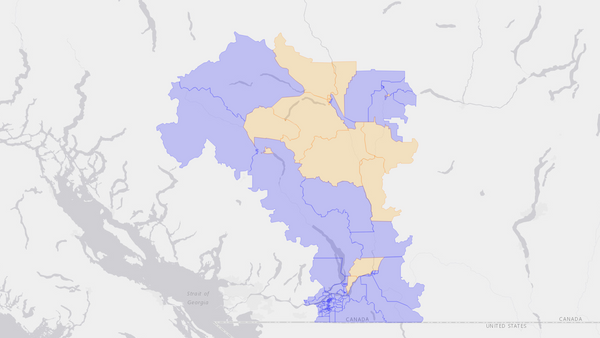
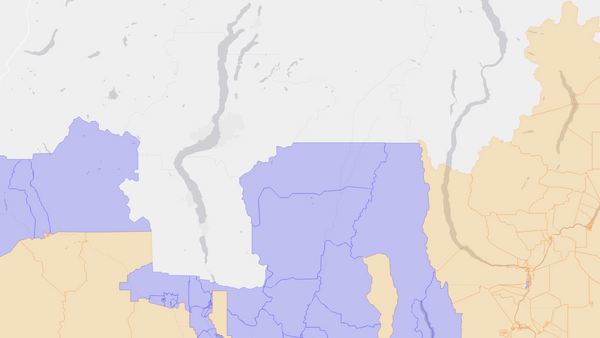
Kamloops—Thompson—Cariboo, BC — 2008 Federal Election Results Map
Kamloops—Thompson—Cariboo — 2008 Election Results
📌 The Canadian federal electoral district of Kamloops—Thompson—Cariboo was contested in the 2008 election.
🏆 Cathy McLeod, the Conservative candidate, won the riding with 25,209 votes (46.2% of the vote).
🥈 The runner-up was Michael Crawford (NDP-New Democratic Party) with 19,601 votes (35.9%), defeated by a margin of 5,608 votes.
📊 Other notable candidates: Ken Sommerfeld (Liberal, 10%) and Donovan Grube Cavers (Green Party, 8%).
Riding information
Auto generated. Flag an issue.Kamloops—Thompson—Cariboo
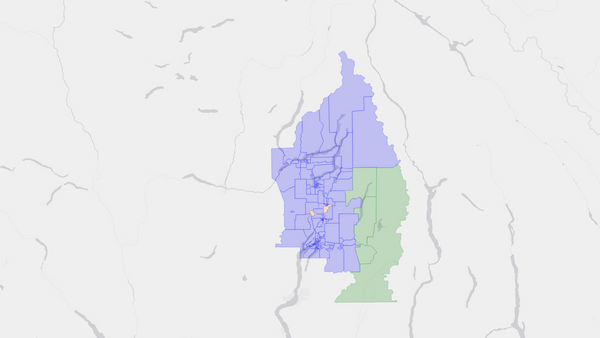
No incumbent's name appeared on the ballot here in 2008. Betty Hinton, who had represented the area since 2000 and served as parliamentary secretary to the minister of veterans affairs, made it known that she would not seek another term, and the Conservatives named Cathy McLeod as their candidate only days before the election was called. The riding runs from Kamloops north up the Cariboo plateau through Clinton, 100 Mile House and Lac La Hache, east up the North Thompson past Barriere and Clearwater to Blue River, and west along the Thompson to Savona. The landscape is dry — sagebrush and ponderosa pine on the valley floors, fir and lodgepole on the benches above.
Candidates
Cathy McLeod (Conservative) — Born in Kingston, Ontario in 1957, McLeod qualified as a registered nurse in 1981 and practised before moving into administration. She sat on Pemberton's council from 1993 to 1996 and served as that community's mayor from 1996 to 1999, then settled in Kamloops and took a management post in the regional health system. This was her first campaign for federal office.
Michael Crawford (NDP) — An assistant professor of social work based in Kamloops, Crawford had been the New Democrat candidate here in 2006 and finished second, and he returned in 2008 with existing name recognition in the city.
Ken Sommerfeld (Liberal) — A Kamloops lawyer, Sommerfeld had also carried the Liberal banner in the riding in 2006, giving both main challengers a rematch on an open seat.
Donovan Grube Cavers (Green) — An organic farmer from Kamloops, Cavers stood for the Greens, arguing that the interior's agriculture and forests were badly exposed to a warming climate.
About the Riding
Roughly three-quarters of the riding's residents lived in Kamloops, a city of about 80,000 at the 2006 census that serves as the commercial, medical and educational hub for a large stretch of the southern interior. Royal Inland Hospital is its largest single employer; Thompson Rivers University, which had gained university status three years earlier, and the head office of the British Columbia Lottery Corporation, in the city since 1985, add substantial white-collar payrolls. Heavier industry sits around the edges — a pulp mill at Kamloops, the plywood and veneer plant at Heffley Creek, and a supply and service economy built around interior mining.
Beyond the city the riding depends on cattle and trees. The Cariboo grasslands around 100 Mile House and 108 Mile Ranch, whose mile-post names survive from the gold-rush wagon road, carry ranches that have stayed in the same families for generations. Barriere and Clearwater were still adjusting to the McLure fire of 2003, which ran up the North Thompson and destroyed the Tolko sawmill at Louis Creek — the valley's largest employer, never rebuilt, and about 180 jobs gone with it. Everywhere the mountain pine beetle had turned hillsides red and then grey, and the 2008 collapse in North American lumber demand meant the salvage harvest that had softened the blow was no longer worth running at full speed.
Water, drought and range management were live concerns in a semi-arid valley, as were the interests of the Secwepemc communities whose reserves and cultural sites line the Thompson. Tk'emlúps te Secwépemc, immediately across the river from downtown Kamloops, was pursuing residential and commercial development on its lands. The riding's population was homogeneous by British Columbia standards, with a small immigrant share drawn mainly from Britain and the United States and a median age above the provincial figure. With no incumbent on the ballot, both leading parties put more effort in than the district's recent voting record might otherwise have justified.