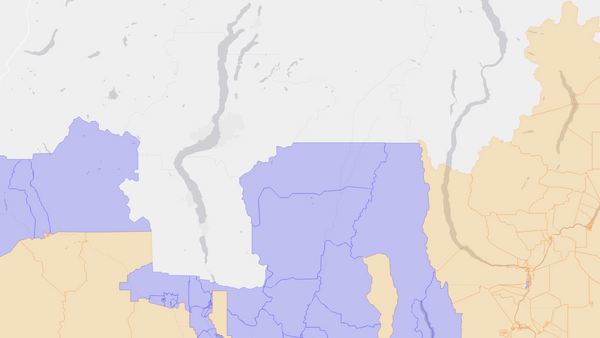
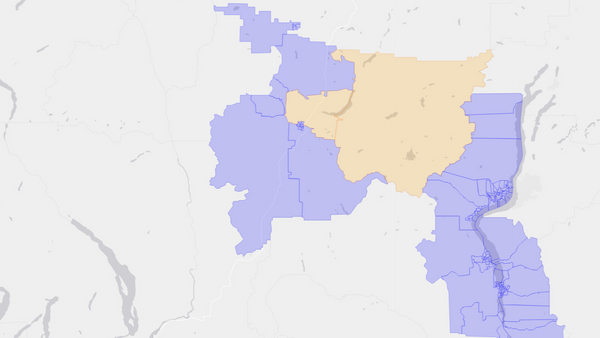
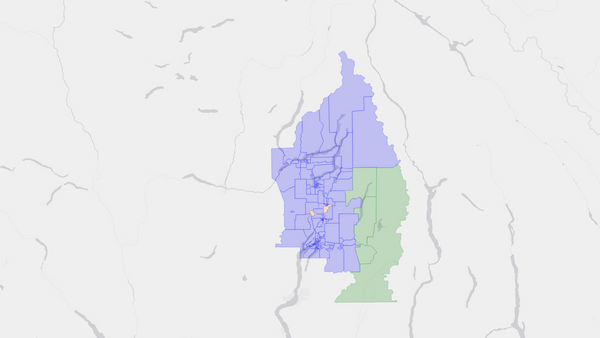
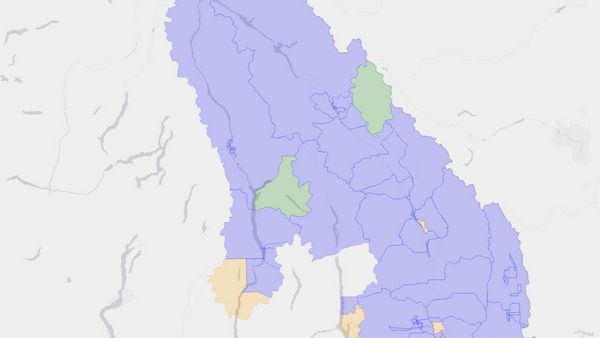
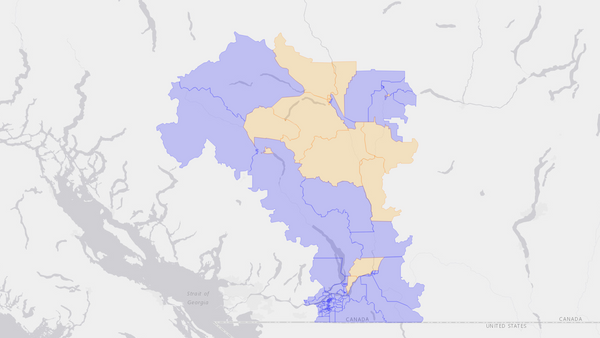
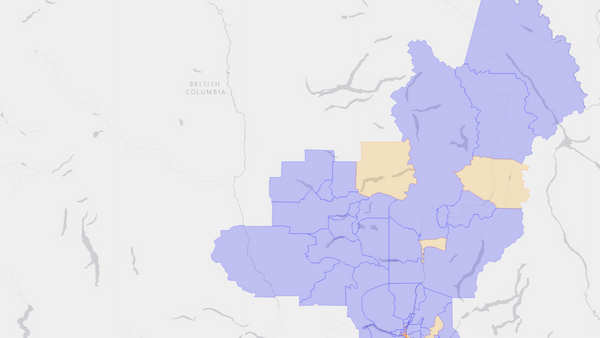
Kelowna—Lake Country, BC — 2008 Federal Election Results Map
Kelowna—Lake Country — 2008 Election Results
📌 The Canadian federal electoral district of Kelowna—Lake Country was contested in the 2008 election.
🏆 Ron Cannan, the Conservative candidate, won the riding with 31,907 votes (55.9% of the vote).
🥈 The runner-up was Tish Lakes (NDP-New Democratic Party) with 8,624 votes (15.1%), defeated by a margin of 23,283 votes.
📊 Other notable candidates: Diana Cabott (Liberal, 15%) and Angela Reid (Green Party, 14%).
Riding information
Auto generated. Flag an issue.Kelowna—Lake Country
A new five-lane crossing of Okanagan Lake opened at Kelowna on 25 May 2008, replacing the three-lane floating bridge that had carried Highway 97 since 1958 and had long since become shorthand for the valley's growing pains. The bridge is a fair emblem for the riding: an established Okanagan city of orchards and retirees remaking itself, quickly, into something larger. Kelowna—Lake Country covered the city and its benchlands, the airport and university lands to the north, the Joe Rich country to the east, and the District of Lake Country between Wood Lake and Kalamalka Lake. West Kelowna, across the water, belonged to another riding.
Candidates
Ron Cannan (Conservative) — Born in Edmonton in 1961, Cannan moved to Kelowna in 1990 and made his living in advertising and marketing sales. Voters put him on city council in 1996 and returned him twice more, nine years in all, and he also sat as a director of the Central Okanagan Regional District. He took the Conservative nomination in 2005 when Werner Schmidt announced his retirement, won the seat in 2006, and spent his first Parliament on the Commons international trade committee and as a persistent advocate for the valley's fruit growers and small business owners. He was seeking a second term.
Tish Lakes (NDP) — Lakes was executive director of a Kelowna non-profit providing legal advocacy for tenants and people on social assistance, and she campaigned on housing and poverty in a city where rents and prices had climbed sharply.
Diana Cabott (Liberal) — Retired and living in Lake Country, Cabott carried the Liberal nomination.
Angela Reid (Green) — A consultant from Kelowna who had been the riding's Green candidate in 2006, Reid pressed climate and sustainability arguments through the campaign.
Mark Haley, a farmer from Kelowna, ran for the Communist Party.
About the Riding
Kelowna had passed 100,000 residents at the 2006 census and was among the fastest-growing cities in Canada, drawing retirees from the Prairies, families from the coast and, increasingly, students. UBC's Okanagan campus had opened in 2005 on the site of the former university college north of the city, adding thousands of students and a research payroll to a place that had never had a full university before; Okanagan College and Kelowna General Hospital round out the institutional base, and the airport had become one of the busiest in the province.
The older economy still shapes the ground. Orchards on the benches and around Oyama and Winfield grow cherries, apples, peaches and pears, and vineyards planted since the 1990s had turned the valley into Canada's best-known wine region and a tourism draw worth hundreds of millions of dollars a year. A newer layer had appeared on top: Kelowna's software cluster drew outside attention after the Walt Disney Company bought Club Penguin — an online children's game founded in the city in 2005 — for $350 million in August 2007.
Two shadows hung over the 2008 campaign. The first was the Okanagan Mountain Park fire of 2003, which forced more than 27,000 people from their homes and destroyed well over two hundred of them on the southern edge of the city, leaving wildfire preparedness a permanent local preoccupation. The second was the economy: construction and real estate had driven Kelowna's boom, and both were slowing as the financial crisis unfolded that autumn. The provincial carbon tax introduced on 1 July 2008 and the federal Liberal carbon-pricing plan both met resistance in a spread-out, car-dependent riding whose electorate skewed older and more affluent than the provincial average. Kelowna and its predecessor seats had gone to Reform, Canadian Alliance and Conservative candidates at every general election since 1993, Schmidt holding the area for thirteen years before Cannan.