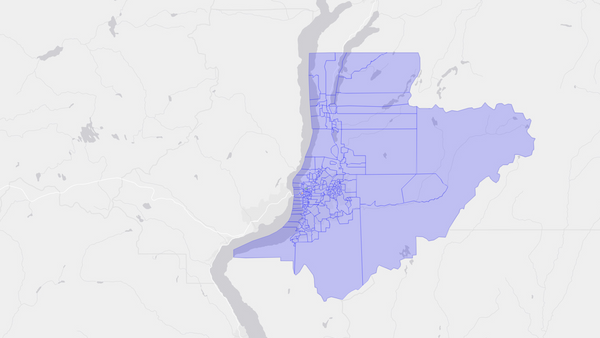
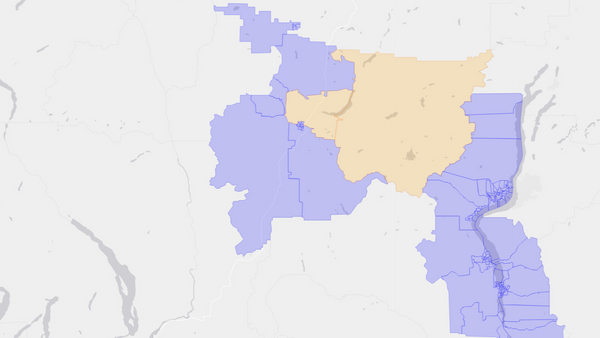
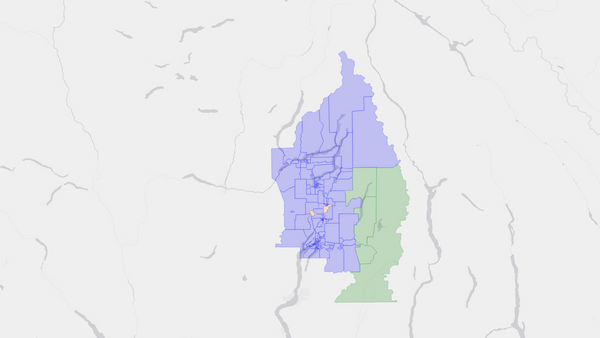
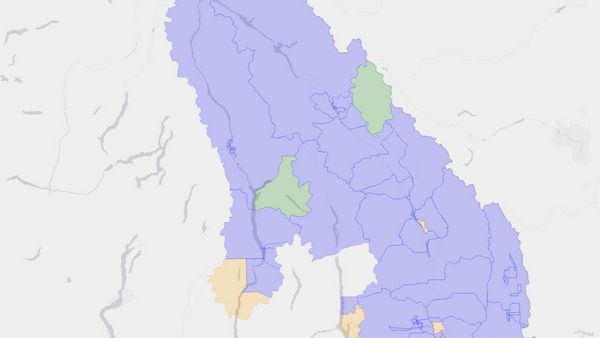
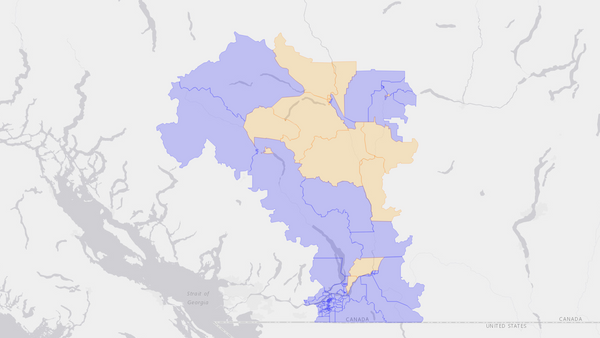
British Columbia Southern Interior, BC — 2008 Federal Election Results Map
British Columbia Southern Interior — 2008 Election Results
📌 The Canadian federal electoral district of British Columbia Southern Interior was contested in the 2008 election.
🏆 Alex Atamanenko, the NDP-New Democratic Party candidate, won the riding with 22,693 votes (47.5% of the vote).
🥈 The runner-up was Rob Zandee (Conservative) with 17,122 votes (35.9%), defeated by a margin of 5,571 votes.
📊 Other notable candidates: Andy Morel (Green Party, 10%) and Brenda Jagpal (Liberal, 7%).
Riding information
Auto generated. Flag an issue.British Columbia Southern Interior
This was a riding assembled out of valleys rather than around a single centre. It ran from Princeton and the Similkameen east through Keremeos and the fruit towns of Oliver and Osoyoos, across Boundary Country to Grand Forks, and on into the West Kootenay — Trail, Rossland, Castlegar, Nelson, Salmo, and the Slocan Valley villages of New Denver, Silverton, Slocan and Kaslo. About 95,000 people occupied some 26,700 square kilometres of mountain, lake and river valley, and nothing in it was larger than Nelson or Trail.
Candidates
Alex Atamanenko (NDP) — Born in New Westminster in 1945, Atamanenko took a physical education degree and a teaching qualification at the University of British Columbia and a master's degree in Russian at the University of Toronto. He taught Russian, French and English in Canadian and American schools before settling near Castlegar. He contested the riding unsuccessfully in 2004 against the sitting Conservative, took it in 2006, and served as his party's agriculture critic, pressing on food sovereignty, genetically modified crops and the position of small-scale farmers.
Rob Zandee (Conservative) — A manager living in Oliver, at the western end of the riding, Zandee campaigned on the government's economic record and its handling of the downturn that broke over the final weeks of the race.
Andy Morel (Green Party) — A contractor from Rossland, running on watershed protection, local food and support for small business.
Brenda Jagpal (Liberal) — An executive director living in Montrose, in the Beaver Valley below Trail.
Brian Sproule stood for the Marxist-Leninist Party.
About the Riding
Trail was the industrial anchor. Teck Cominco's lead and zinc operation there ranked among the world's largest fully integrated smelting and refining complexes, and its payroll reached well beyond the city into Rossland, Warfield, Fruitvale and Montrose. Castlegar, downstream where the Kootenay meets the Columbia, carried Selkirk College, the regional airport and the Celgar pulp mill; its sawmill changed hands early in 2008, sold to Interfor out of the bankruptcy of the American owner, Pope & Talbot, along with a second mill at Grand Forks. Several hundred mill workers and loggers across the West Kootenay watched that transaction closely.
Nelson had gone a different way, converting a heritage streetscape and a striking lakeside setting into an economy of tourism, arts, outdoor recreation and small enterprise. The Slocan Valley communities were smaller again, with a history of Doukhobor settlement, silver mining and, at New Denver, the wartime internment of Japanese Canadians. Westward the riding turned agricultural: Oliver and Osoyoos sit at the southern end of Canada's warmest growing region, producing tree fruit and a fast-expanding volume of wine grapes on seasonal labour and irrigation drawn from the Okanagan River system.
The politics reflected a long labour and cooperative tradition in the Kootenays alongside a more conservative disposition in the Boundary and South Okanagan. Jim Gouk, elected as a Reform member in 1993, represented this district and its immediate predecessor from 1997 until he stood down ahead of the 2006 election, when Atamanenko took it for the New Democrats. Conservative strategists regarded it as recoverable, and it was among the more closely watched interior contests of 2008.
Federal questions here clustered on agriculture and forestry: the softwood lumber agreement, mill curtailments as American lumber demand evaporated, supply management, and the regulatory treatment of small food producers. Border services at the Osoyoos, Carson, Paterson, Waneta and Nelway crossings, and health care for a dispersed and ageing rural population, also featured.