CBC double standard on political advertising

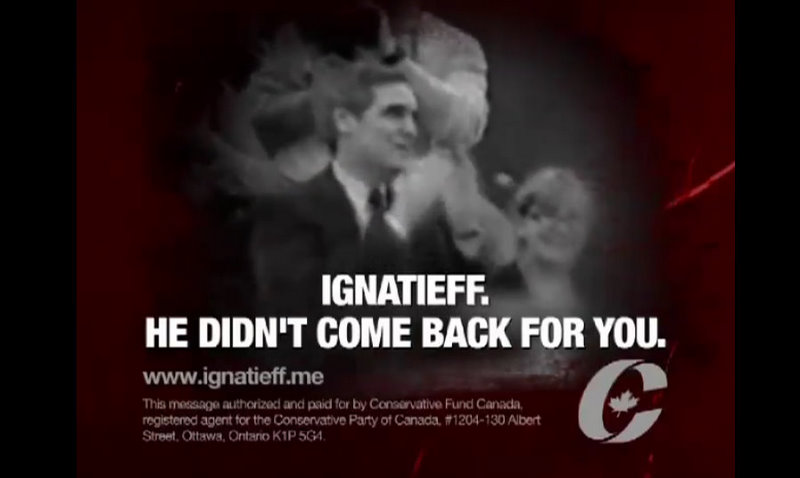
Here, a piece from Glen McGregor in 2009,

OTTAWA — The Conservative party was unable to get television commercials aimed at Liberal Leader Michael Ignatieff broadcast by the Canadian Broadcasting Corporation because the attack ads violated the network’s long-standing ban on political advertising.

The Tories approached CBC officials before the launch of the “Michael Ignatieff: just visiting” campaign and were told that an internal policy prevented the network from accepting political ads outside of times of elections.

As are other broadcasters, CBC is required to provide a share of its airtime to political parties during the writ period, but can set its own rules outside it.

“We’ll only accept political advertising like that when there is an election campaign on,” CBC spokesman Jeff Keay said. “We have generally pretty strict guidelines.”

The policy has been in place for many years and was reviewed a few years ago, Keay said.

And now tonight, on The National, the CBC gets an exclusive and gives a teaser of the new Liberal ad,

UPDATE: CBC notes that it did discuss the Conservative Party’s Trudeau ads in a larger story regarding the ups and downs of Trudeau’s first day as Liberal leader. And the ads were critiqued on the At Issue panel. A bit different than an entire (albeit short) segment dedicated to a featured teaser to be sure, but this update helps define the broader context regarding stories about political advertising/stories about advertising on CBC.

UPDATE: HuffPo publishes a lengthy piece about how I was ‘wrong’ about the CBC and its policies regarding political advertising and cite a policy change in October 2009 as proof of my terrible wrong-headedness.

I really can only go from the information that is provided publicly. One would think their published policy on political advertising would be the first and last source on this matter. Here it is. I note that it has been unchanged since May 5th, 2005 and doesn’t exist on some archived museum of public broadcasting page at CBC. We can only interpret this policy as the current one. I’ll copy it in full here:

Policy 1.3.10: Political Advertising

Effective: May 5, 2005
Responsibility: Vice-President and Chief Regulatory Officer

Policy

The CBC/Radio-Canada considers it a part of its mandate as a public broadcaster to support the democratic process during general elections. The objectives of this policy are: i) to allow qualified political parties participating in a general election to present their views directly to the voters whose support they are seeking; ii) to ensure the equitable allocation of commercial time among qualified parties; iii) to satisfy the requirements of applicable laws and regulations; iv) to ensure consistent management of political advertising.

The CBC/Radio-Canada accepts political advertising messages on its main television services during federal, provincial and territorial general election periods. On its other television services and on radio, the CBC/Radio-Canada accepts political advertising only as required by the Canada Elections Act and in accordance with the allocation made by the federal Broadcasting Arbitrator.

In federal elections, qualified political parties are those that have been registered by the Chief Electoral Officer and new parties that have had their application for registration accepted by the Chief Electoral Officer. In provincial and territorial elections, qualified political parties are those that are duly registered with the provincial or territorial Chief Electoral Officer and participate in the election by fielding candidates.

The CBC/Radio-Canada does not accept political advertising from groups other than qualified political parties or from individuals. The CBC/Radio-Canada does not accept program sponsorship, closed-captioning sponsorship, or product placement of a partisan political character.

Political advertising is sold in such a way as to ensure equitable allocation of time among qualified parties in accordance with CRTC regulations. It is scheduled in such a way as to ensure the integrity of programs and their environment. The CBC/Radio-Canada will not broadcast election advertisements that may imply, or give the appearance of, an endorsement on the part of the CBC/Radio-Canada or raise doubts as to its neutrality.

(my emphasis in bold)

Note that CBC has not updated its current official policy on political advertising since May 5, 2005 despite what some hasty revisionist PR-agents at MotherCorp would like to tell you otherwise.

Yet CBC PR suggests that their advertising policy allows for partisan advertising outside of a writ period. Curious, no?
Elizabeth May on Margaret Thatcher and Hugo Chavez

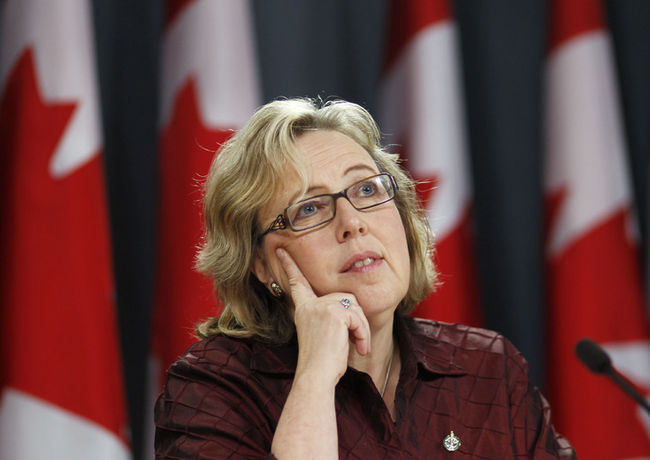
Margaret Thatcher passed away today at the age of 87. Here is Elizabeth May’s statement acknowledging the death of the Britain’s greatest peacetime Prime Minister,

Elizabeth May, Leader of the Green Party of Canada,

“Margaret Thatcher took strong positions. Among them people forget her science-based concern about the climate crisis. One of the few political leaders with a science background, she founded the Hadley Centre and supported the 1992 UN Framework Convention on Climate Change. While her anti-regulation, pro-privatization agenda did long-term damage to the environment, her climate awareness is tragically not shared by her ideological successors.”

What did Elizabeth May say when Hugo Chavez die? Not much, but here is tweet and news story she retweeted,

Here is the rabble news infographic that she links.

Elizabeth May’s schtick besides climate change has been about her views on democracy in Canada — specifically what she characterizes as the erosion of it. Now, retweets are not necessarily endorsements, but May recently wrote the Queen about the robocalls scandal and the Rabble infographic includes a quote from Jimmy Carter praising Chavez for his democratic ideals while includes quotes from Elections Canada on those robocalls.

Stephen Harper has not been evidenciarily linked to the robocalls scandal in Guelph and to date the only evidence that exists is that which has resulted in a charge against one young campaign worker, Michael Sona.

Elizabeth May takes the opportunity on the day of Margaret Thatcher’s passing to speciously link Thatcher to her issues while condemning Thatcher for privatization.

Meanwhile, May holds up Chavez as a paragon of democracy in order to attack Stephen Harper as a “real dictator”.

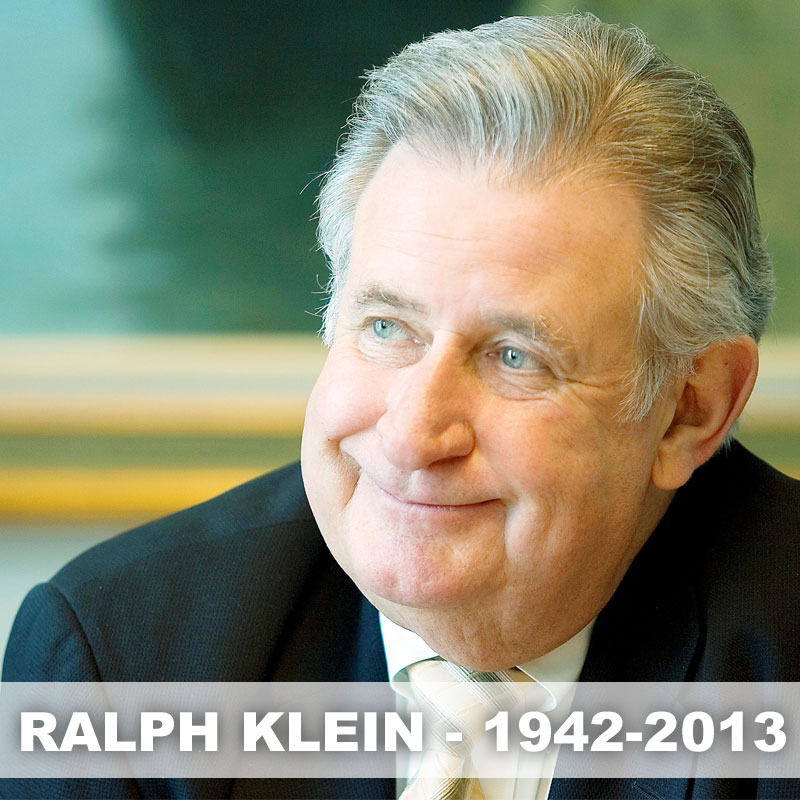
Stephen Harper’s remarks about Ralph Klein

“Thank you very much.“

Lieutenant Governor Ethell, Premier Redford, Mayor Nenshi, the Right Honourable Jean Chrétien, so many guests who are with us today, former premiers from all across the country, friends and colleagues of Ralph Klein, ladies and gentlemen.

“And, especially, Colleen and all members of the family.“You are in the thoughts and prayers of Laureen, myself and our family, and I am sure you know, in the thoughts and prayers of so many other families not just represented here today, but right across this great province of Alberta that Premier Klein served so well.

“I think we all have a little bit of understanding of what a difficult time this has truly been for you and for the family.“May God give you peace and comfort.“It is of Ralph Klein’s public service, his political career, that I wish to speak.

“You know, his story, his accomplishments, speak obviously of the great opportunities that are offered to us as citizens of this country and of this province and of this city.

“But past all of the stories, some humorous some outrageous, what we should not forget and never look past is the truly remarkable gifts and accomplishments of Ralph Klein as a person and as a leader.

“We all know how an outspoken television reporter ran for mayor and, to everyone’s astonishment, won handsomely.“In fact, he was mayor of Calgary, when I first came here.

“He became mayor just shortly before I arrived, and I have to tell you that after living in Toronto and living in Edmonton, having Ralph at City Hall was a bit of a culture shock.“I mean that in a good way.

“Because, as Mayor Nenshi said, as mayor, Ralph Klein did great things that really launched the modern era of this city: the Light Rail Transit System that so many people now take for granted, the Saddledome which was built on his watch, so many other major works, and, of course, the 1988 Olympics, where Ralph welcomed the world without any airs but with great comfort and great affability.

“We also know how, after coming out and forcefully backing the Canada-U.S. Free Trade Agreement during the 1988 election, he then moved into provincial politics and, in rapid succession, and again, to everyone’s astonishment, became a cabinet minister of course, and then the premier of the province.

“And, in that office, he also established a legacy that history is going to treat very kindly.

“Does everyone remember Ralph’s so-called ‘radical’ ideas?

“That the best decisions are not made in government office towers.“That taxpayers make the best choices about how to spend their own money.

“That governments and citizens should face problems head on, and his well-founded belief that, as he put it: ‘the strength of this country lies in the strength of the provinces’.

“Remember too his so-called ‘radical’ idea that Alberta could be an energy superpower?

“And that Alberta’s energy would mean prosperity for all of Canada?“Twenty years ago, those ideas were often considered radical indeed.

“But today, the wisdom of Ralph’s ideas is now widely, almost universally, accepted.“And, never forget it, Ralph Klein was especially right about that.“Alberta’s energy industry does bring prosperity to all of this great country.

“Ladies and gentlemen, once Ralph Klein’s ideas were well-planted, their fruits became his ‘miracle on the prairies’.“It amused some to call him ‘King Ralph’.“Perhaps it amused him too.

“’Welcome to Ralph’s world,’ he famously declared, the election night that he won a massive 74 out of Alberta’s 83 seats.

“But, the love that Albertans had for Ralph Klein – and I don’t think love is too strong a word – was based on something other than the extraordinarily successful management of Alberta’s finances.

“Albertans understood that this was a man, that this was a leader, who never forgot where he came from.“Neither did he forget the people he served.

“A man equally at home in the Petroleum Club, or in the St. Louis Hotel, well maybe not quite equally, Ralph had, as many have noted, many opponents, but precious few enemies.“He was affable, straightforward, and had a gift for saying what ordinary people were thinking, often in a way that made us smile.

“Asked about reducing the deficit, saving money by cutting into some very popular services and programs, he said, ‘well, you’ve got to hunt where the ducks are’.

“He knew every part of Alberta.

“He knew us.

“And Albertans knew and respected Ralph Klein for his honesty and for his principles.

“Above all, Albertans responded to his vision of Alberta as a rock of Confederation, a vision he brought to life, the vision of a mature, forward-looking Alberta, yet one that never lost sight of the rugged values on which it had been born and raised.

“That was Ralph.

“Agree or disagree, you knew where he stood.

“And so, to Albertans, he was ‘King Ralph’ – I love that phrase, you know people outside Alberta don’t get that – he was ‘King Ralph’ only in the sense of being a king-size character, but in personality and demeanor he was really to us ‘Citizen Ralph’.

“He said what he would do, and then he did what he said.“I admire that.“We all admire that.

“And, when he was installed last November, by the Governor General as an Officer of the Order of Canada, it was welcomed with great affection by all of his fellow Albertans.

“Ladies and gentlemen, let me just finish with this.

“Ralph Klein was faithful and true, true to himself, faithful to the people of this province, and, always, a proud Canadian.

“So, to ‘Citizen Ralph,’ we say: hail and farewell!

“Your fellow Calgarians, Albertans and Canadians will always remember you.”