February/March election? Think again

As we break for the Christmas/New Years holidays, Ottawa has been talking about a real possibility of an election in February and March.

I believe that the current conventional wisdom on the timing of an election is wrong.

First, no party is really in a good position for an election.

Consider the Conservatives; statistically tied with the Liberals in the latest Harris/Decima poll, the Tories aren’t riding their traditional high numbers. Some have attributed this decline to Canada’s bad press at Bali, some blame the attention that Mulroney has received. But a budget will be a bonanza of tax cuts in February, you may think, and this surely will be enough to buoy Conservative numbers. It may, but the Conservatives need the decision of at least one party to survive and three to defeat it.

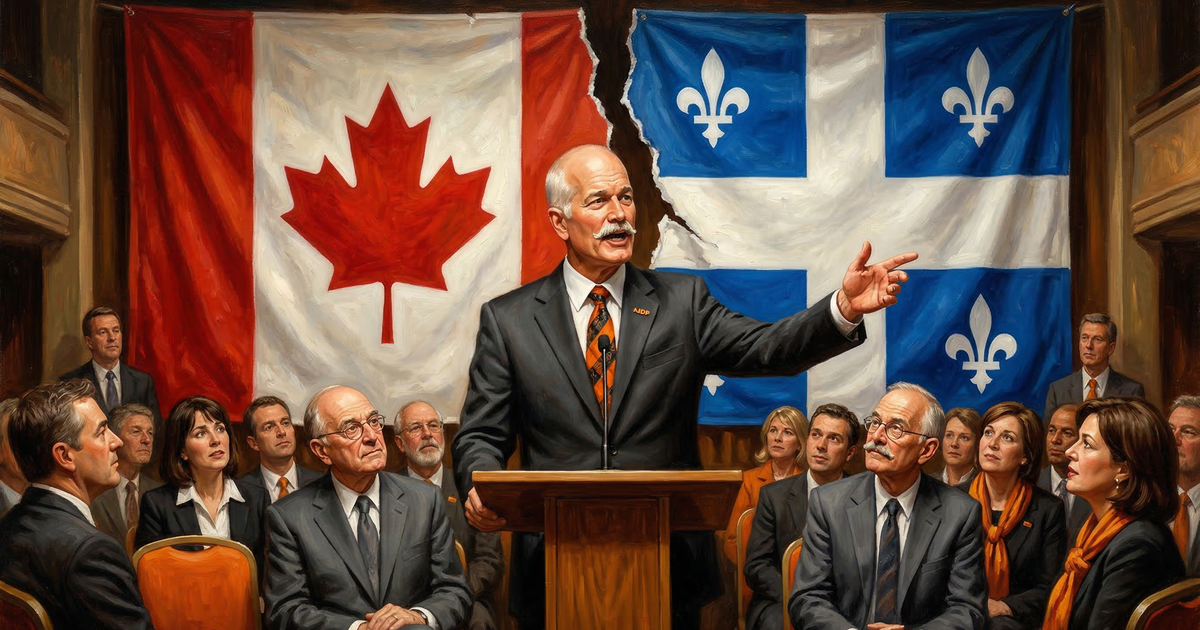
That brings us to the main opposition party: the Liberals. Stephane Dion has been routinely embarrassed in the House of Commons by being forced to abstain from votes of confidence such as the throne speech and subsequent crime legislation (named a matter confidence by the PM). A staffer in Dion’s office recently told me that this pattern cannot continue at length. He’s right. The Liberals will stand in February to defeat the budget. In fact, they’ve already indicated that they intend to try force an election. This is a necessary move by Dion, as he cannot remain neutered indefinitely lest his caucus revolts. The smart play here is that he’s been first out of the gate in declaring his intentions meaning that he will not have to race Jack Layton and Gilles Duceppe to the waiting cameras outside of the House doors (besides Layton and Duceppe are closer to the doors anyway). So Dion is forcing the NDP and Bloc to react to Dion whereas earlier Dion reacted to the declared intentions of those two parties instead. Dion is well ahead on this vote. This will help relieve some of the negative attention received from his chronic abstentions in this latest session in 2007. The move, however, is somewhat disingenuous as Dion knows that at least one other party will save Harper’s government (and Dion) to fight another day.

While the NDP has had better fundraising fortunes than the Liberals, this opposition party still needs to continue its strides in becoming a viable opposition in the minds of Canadians. While they will no doubt vote against the budget (and the Conservative government won’t change its legislation to accommodate them), they are unlikely thrilled about a March election. Further, the NDP standing with the Conservatives on a conservative budget would destroy much of the NDP’s credibility.

That leaves us with the Bloc, who shares a particularly important electoral interest with Stephen Harper: Quebec. The Bloc will vote for the budget because there will undoubtedly be some good items for their province. In fact, we can be quite confident in this prediction as Harper/Flaherty would be unlikely to pen a budget without extended consideration for Quebec. If they did, they would guarantee that their government would fall and that their hard-fought gains in that province would be tenuous at best and their planned gains would evaporate overnight. Expect good things for Quebec in 2008 and expect the Bloc to pass the budget; the Bloc is the only party Harper needs onside to survive.

This scenario generally satisfies all parties to some extent. The Conservatives will continue to govern while entrenching their image as tax fighters in the minds of Canadians. They will also continue to build in Quebec. The Liberals (and especially Dion) will relieve a lot of pressure internally in caucus and externally in their image as the hapless leader breaks his abstention streak. The NDP will still get to stand up to the Conservatives (the NDP gains from this scenario are the least of the four parties). Finally, the Bloc will have voted for a better budget for the people of Quebec, even if it is delivered by Conservatives. The Bloc has been concerned by the Conservative encroachment upon their nationalist strategy as it has been reconfigured by Harper as decentralization and respect for provincial jurisdiction. Duceppe would only be handing Harper voters if he defeats this government as the Prime Minister will be seen to be a better defender of Quebec’s interests.

If the Prime Minister really wants an election in March, the budget will contain a poisoned pill that is inert to Quebeckers but unacceptable for the Bloc.

NDP climbs down

Just received:

STATEMENT

Ms. Mathyssen phoned Mr. Moore earlier this evening.

Mr. Moore offered to explain that it was of his girlfriend.

Ms. Mathyssen has accepted the explanation and offered her apologies and she will be making a formal statement in the House of Commons at the earliest opportunity.

Courtesy: NDP Press Office

Well ok then.

Since when did the NDP become the party of prudish moral outrage?

The new “opposition”

If Joe Clark’s mistake was that he arrogantly governed with his minority government as if he had a majority, will Stephane Dion’s mistake be that he is timidly opposing Stephen Harper’s minority government as if the Prime Minister had a majority?

But it’s even worse than that. Stephane Dion as Opposition leader is not opposing or even supporting the government’s mandate. In effect, by abstaining from judging the government’s sought mandate, Dion isn’t showing up for work.

The NDP has parsed the opposition benches into the absent opposition (Liberals) and the effective opposition (NDP).

The Prime Minister should play along this theme.

Since Dion is effectively silent on the Prime Minister’s mandate by abstaining from voting on the Throne Speech, Harper should simply rebuke Dion’s future questions and remind him of the opportunity he had to support or oppose the government’s outlined agenda. Harper should then proceed to only debate the points of the NDP and the Bloc as the effective opposition since these parties are the ones fulfilling their parliamentary roles.

If elections are held for parties to seek a mandate from the people to govern, the Throne Speech is ratification and confirmation of that mandate by Parliament. If Stephane Dion wants Parliament to work as he so clearly states, it can do so by approving the government’s mandate or by opposing it sending the parties back to the hustings to determine the true support/opposition to the government’s plan. In effect, by abstaining Dion has made Parliament less functional and by not wanting an election it seems that the Liberal leader would rather leave Parliament, with its checks and balances, in limbo for the sake of our convenience rather than allow us to fulfill our duty as the electorate since he cannot exercise his as Leader of Her Majesty’s Loyal Opposition.

If Dion cannot enunciate his party’s position in opposition when the government seeks its mandate, how can he expect us to trust his abilities to do so if he should ever form government?

UPDATE: I found this post on Ignatieff’s website concerning what the Liberals should do for the Throne Speech.

“I’m driving down the highway with Suzanna and Scott Brison is at the wheel. It is a white knuckle experience. I’ve just given a talk to 300 students at Dalhousie Law School and tonight well be in Cheverie at a fundraiser for Scott. There is media at every spot asking what the party should do on the throne speech. We need to read it first and then decide what party interest and national interest require. One thing is sure : we — and not the PM — will do the deciding. Let’s keep and hold the initiative. More later. MI”

Unfortunately for Ignatieff (or fortunately?), the Liberals didn’t take initiative and the Liberals instead decided on being indecisive.