Vancouver-West End — 2024 British Columbia Provincial Election Results Map
Vancouver-West End — 2024 Election Results
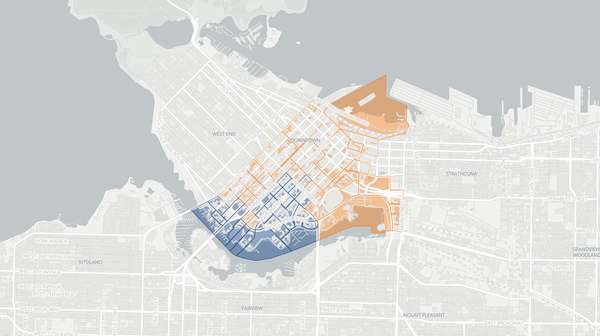
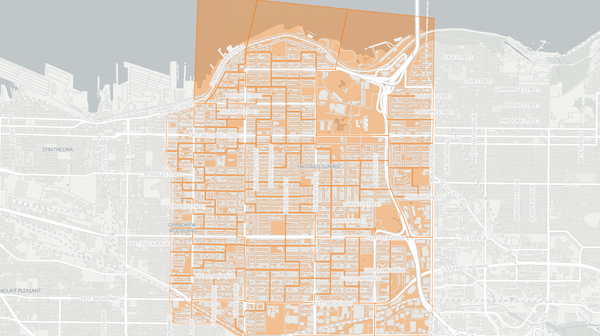
Poll-by-poll results for Vancouver-West End in the 2024 British Columbia election. The BC NDP candidate won this riding. Explore detailed voting data, candidate results, and turnout statistics at the poll level.
Riding information
Auto generated. Flag an issue.Vancouver-West End
Vancouver-West End covers one of the most densely populated neighbourhoods in western Canada, a compact peninsula bounded by Stanley Park to the north, English Bay to the west, and the towers of the downtown core to the east. The riding's residential streets — lined with low-rise apartment buildings dating from the 1950s through the 1970s — house a population that is overwhelmingly composed of renters, and the commercial corridors along Davie Street and Denman Street anchor a vibrant restaurant and retail economy that depends on foot traffic, tourism, and the cultural life of the city's established LGBTQ community centred in Davie Village. The 2024 redistribution adjusted the riding's boundaries to include portions of Coal Harbour, adding waterfront condominium towers and a somewhat different demographic mix to the constituency.
Candidates
Spencer Chandra Herbert (BC NDP) — Chandra Herbert was the incumbent MLA, having represented the riding since winning a 2008 by-election in the predecessor riding of Vancouver-Burrard. A performing arts producer by background, he had served on the Vancouver Park Board from 2005 to 2008 before entering the Legislature. Over the course of his legislative career, he led the successful campaign to add explicit protections for transgender people to the BC Human Rights Code, founded Vancouver's Rent Bank, and chaired the provincial Rental Housing Task Force in 2018 that produced recommendations to modernize tenancy laws. He had also served as Minister of Tourism, Arts, Culture and Sport.
Jon Ellacott (Conservative Party) — Ellacott had spent his career in the construction industry as a manager and small business owner, overseeing the building of social, industrial, and commercial projects across British Columbia. He had previously contested the riding in 2020 as the BC Liberal candidate against Chandra Herbert. His 2024 campaign focused on development reform, calling for streamlined permitting processes and the repeal of what he described as flawed NDP housing density legislation.
Eoin O'Dwyer (BC Green Party) — O'Dwyer was a web developer and renter who had lived in the West End for nearly a decade. He campaigned on affordable rental housing, strengthened public healthcare, protection of 2SLGBTQIA+ rights, and climate action.
Carl Turnbull (Independent) also contested the riding.
Local Issues
Rental affordability remained the defining political issue in a riding where the vast majority of residents were tenants. Despite the NDP government's measures over two terms — including tying annual rent increases to the rate of inflation, banning fixed-term lease clauses used to circumvent rent control, and increasing penalties for bad-faith evictions — vacancy rates in the West End stayed below two per cent and average asking rents for a one-bedroom apartment exceeded $2,500 per month by 2024. The province's new housing density legislation, Bills 44 and 47, which required municipalities to permit greater density near transit stations and allow secondary suites and small multiplexes on single-family lots, was intended to boost supply over time, but critics argued it would do little to address affordability in an already dense neighbourhood where the constraint was not zoning but the cost of construction and land.
Public safety and the visible effects of the overlapping mental health and toxic drug crises had become a growing concern along the riding's commercial corridors. Businesses on Davie Street and Denman Street reported an increase in property crime, shoplifting, and incidents related to untreated mental illness and addiction, mirroring trends across downtown Vancouver. The NDP government's reversal on drug decriminalization — requesting that the federal government amend its Health Canada exemption to re-criminalize public drug consumption — reflected the political pressure that public drug use had created. The change took effect in May 2024, but residents remained divided on whether enforcement or expanded treatment and harm reduction services would better address the underlying crisis.
The neighbourhood's LGBTQ community, historically anchored along Davie Street, continued to advocate for targeted investments in mental health services, supportive housing for queer and transgender youth, and public realm improvements in the Davie Village corridor. The province had broken ground on a new 154-unit affordable rental building at 981 Davie Street, which would include a new home for the QMUNITY Resource Centre, but advocates argued that more purpose-built supportive housing was needed to address the disproportionate rates of homelessness and housing instability among LGBTQ residents.