Vancouver-Strathcona — 2024 British Columbia Provincial Election Results Map
Vancouver-Strathcona — 2024 Election Results
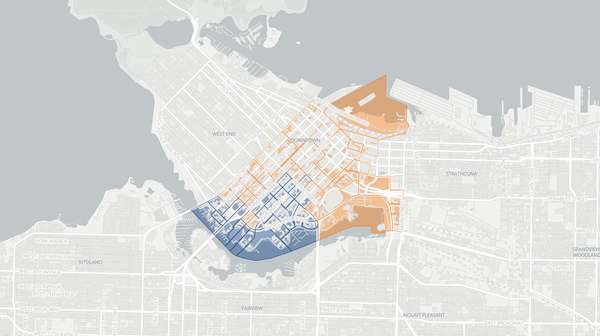
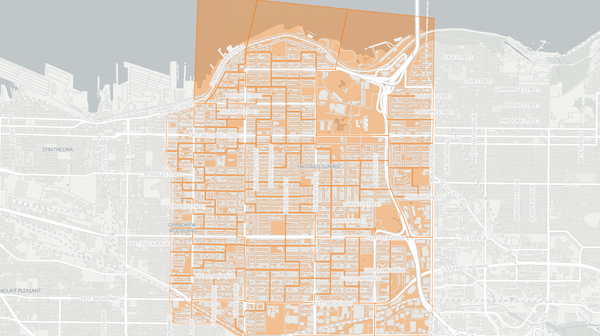
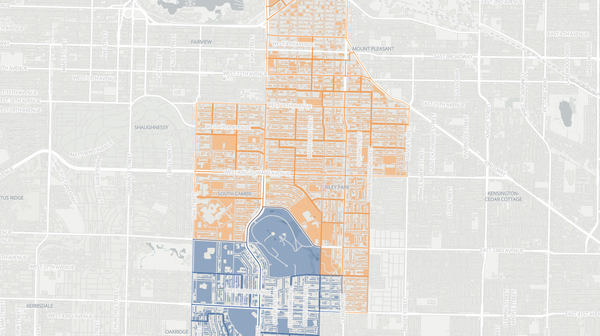
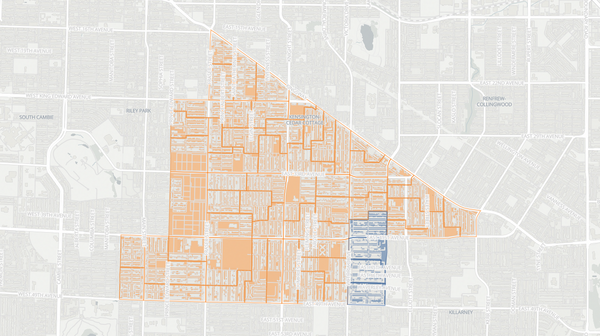
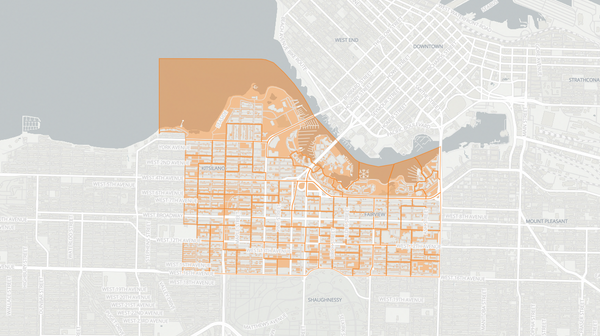
Poll-by-poll results for Vancouver-Strathcona in the 2024 British Columbia election. The BC NDP candidate won this riding. Explore detailed voting data, candidate results, and turnout statistics at the poll level.
Riding information
Auto generated. Flag an issue.Vancouver-Strathcona
Vancouver-Strathcona occupies a narrow band of the city's east side, stretching from the industrial flats along False Creek through the Victorian-era residential streets of Strathcona to the edges of the Downtown Eastside and the commercial energy of Commercial Drive. The riding was created through the 2024 redistribution, carved primarily from the former Vancouver-Mount Pleasant, and it absorbed neighbourhoods where some of the sharpest contrasts in urban British Columbia coexist within a few blocks — heritage houses under heritage protection beside single-room-occupancy hotels, craft breweries and tech offices alongside supervised consumption sites. The waterfront along the False Creek Flats had become a focal point for the city's industrial land strategy, with the new St. Paul's Hospital under construction nearby and proposals for biomedical research facilities competing with advocates for maintaining the area's light-industrial employment base.
Candidates
Joan Phillip (BC NDP) — Phillip was the incumbent MLA, first elected in a 2023 by-election in the predecessor riding of Vancouver-Mount Pleasant. The granddaughter of Tsleil-Waututh actor and Chief Dan George, Phillip had dedicated her career to Indigenous community service — working as a youth counsellor at Britannia Secondary School, serving as education and program director at the Aboriginal Friendship Centre in Vancouver, and spending two decades as lands manager for the Penticton Indian Band before retiring from that role in 2019. She and her husband, Grand Chief Stewart Phillip, president of the Union of BC Indian Chiefs, had been married for nearly four decades and raised five surviving children together.
Scotty Muller (Conservative Party) — Muller was a small business owner who had owned and operated a barbershop and salon on East Hastings Street for nine years. Originally from Langley, he had lived in Vancouver for fifteen years and campaigned on affordability, childcare, and healthcare.
Simon de Weerdt (BC Green Party) — De Weerdt held a Bachelor of Science in Computer Science from the University of British Columbia and had worked as a systems analyst and in software development before spending thirteen years as a Vancouver city bus driver with TransLink. He was active as a youth sports coach and served in various roles on his children's Parent Advisory Council.
Kimball Cariou (Communist Party of BC) — Cariou was the leader of the Communist Party of BC, having been elected to the position in December 2020. Born in Saskatoon with Metis and European settler heritage, he had served for approximately 26 years as editor of People's Voice, the newspaper of the Communist Party of Canada, stepping down from the role in 2019. He was a long-time activist in labour, Indigenous rights, and anti-war movements.
Local Issues
The opioid crisis remained the most devastating public health emergency in the riding. British Columbia had declared a public health emergency over toxic drug deaths in April 2016, and by 2024 the province-wide death toll had surpassed 14,000 people, with the Downtown Eastside and adjacent Strathcona neighbourhoods bearing a disproportionate share of the losses. The NDP government's initial support for drug decriminalization — a Health Canada exemption that took effect on January 31, 2023, removing criminal penalties for possession of small amounts of illicit drugs — had been partially reversed in May 2024, when Premier Eby requested and received federal approval to re-criminalize public drug use. The reversal reflected mounting pressure from residents and businesses who described open drug consumption spreading beyond the Downtown Eastside into surrounding commercial areas, while harm reduction advocates argued the policy change would push people who use drugs into more dangerous and hidden settings.
Housing affordability and the displacement of low-income residents had intensified across the riding's neighbourhoods. The single-room-occupancy hotels that had long served as the housing of last resort in the Downtown Eastside continued to deteriorate or convert to market-rate rentals, and rents for conventional apartments in Strathcona and along Commercial Drive climbed well beyond the reach of many existing residents. The provincial government had purchased several hotels during the COVID-19 pandemic to convert into supportive housing, but advocates maintained that the overall stock of deeply affordable units was still shrinking faster than new supply could be built. The NDP's legislation enabling increased density near transit stations and on single-family lots — Bills 44 and 47, passed in late 2023 — promised to boost long-term housing supply, but their effects had not yet materialized on the ground.
The construction of the new St. Paul's Hospital on the False Creek Flats, expected to open in 2027, was reshaping planning conversations across the riding. The approximately $2.2-billion project would replace the aging Burrard Street facility and bring a major acute care hospital into the riding's southern edge, generating both anticipation about improved healthcare access and concern about the displacement of light-industrial businesses and the loss of the working-class employment base that the Flats had supported for decades. Candidates debated how to balance the economic development that would follow the hospital with the preservation of affordable industrial space for trades, manufacturing, and arts organizations that had long called the area home.