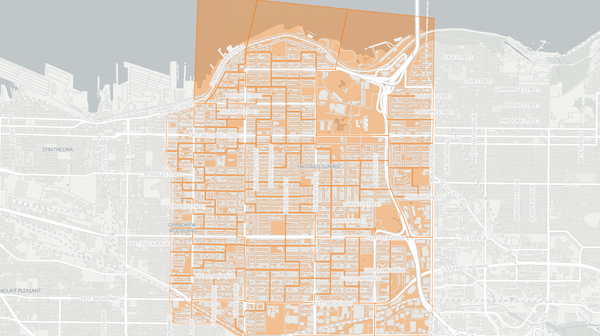
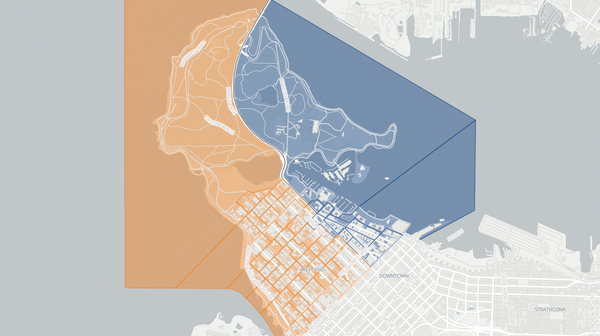
North Vancouver-Seymour — 2024 British Columbia Provincial Election Results Map
North Vancouver-Seymour — 2024 Election Results
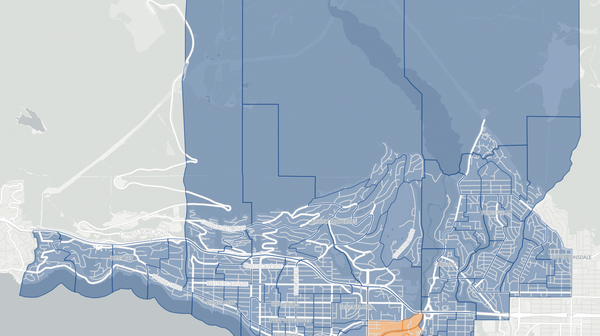
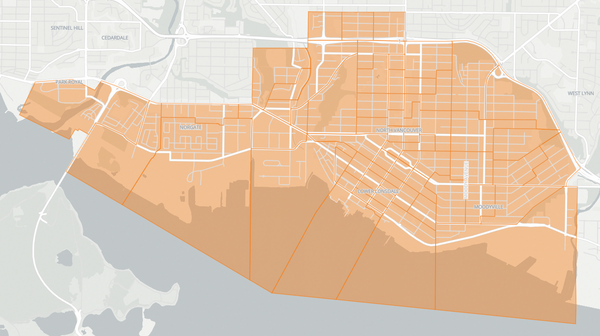
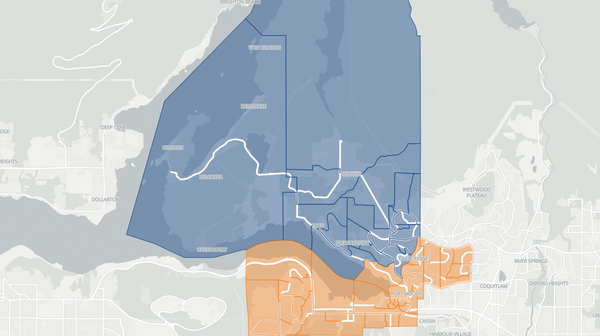
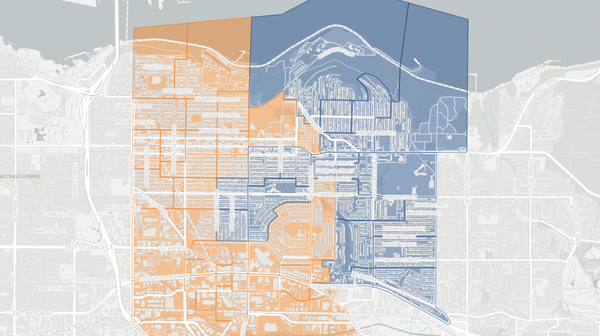
Poll-by-poll results for North Vancouver-Seymour in the 2024 British Columbia election. The BC NDP candidate won this riding. Explore detailed voting data, candidate results, and turnout statistics at the poll level.
Riding information
Auto generated. Flag an issue.North Vancouver—Seymour
North Vancouver—Seymour encompasses the more suburban and mountainous areas of the District of North Vancouver, including Deep Cove, Seymour Heights, Lynn Valley, and the communities pressed against the North Shore mountains. The riding's identity is inseparable from its proximity to wilderness — residents live at the doorstep of Mount Seymour Provincial Park, Lynn Canyon, and the Baden-Powell Trail, with the coastal rainforest beginning where their backyards end. The local economy is primarily residential and service-oriented, with most workers commuting across Burrard Inlet to Vancouver or eastward to Burnaby and the Tri-Cities. The riding had been one of the safest centre-right seats in the province for nearly three decades before Susie Chant flipped it for the NDP in the 2020 election.
Candidates
Susie Chant (BC NDP) — Chant was the incumbent MLA, having won the riding from the BC Liberals in 2020 to become the first New Democrat to hold the seat. A lifelong North Shore resident who has called Lynn Valley home since 1988, she worked for decades as a registered nurse in community care with Vancouver Coastal Health. Her nursing career took her abroad to teach nursing students in Saipan and to work in children's psychiatry in Hawaii. She retired from the Royal Canadian Navy Reserves in 2022 after more than forty years of service.
Sam Chandola (Conservative Party of BC) — Chandola is the founder of multiple technology startups, having created hundreds of jobs in British Columbia and achieved three successful exits. He was named to the BC Business Top 30 Under 30 list in 2014 and received the TMX Canada's Next 150 Award in 2017. In 2021, the Vancouver Economic Commission named him one of the Top 24 People of Asian Descent to Watch.
Mitchell Baker (Independent) — Baker was born and raised in North Vancouver and has been self-employed in the construction industry for more than thirty years, building single-family, multi-family, and small commercial projects. His mother, Marilyn Baker, served as an alderman and later as mayor of North Vancouver for nine years. He ran on a centrist platform in a politically polarized environment.
Subhadarshi Tripathy (BC Green Party) — Tripathy has more than twenty years of experience in the media and entertainment industry.
Local Issues
Wildfire preparedness in the wildland-urban interface remained the riding's most distinctive local concern. Many homes in the district backed directly onto forested slopes, and the record-setting wildfire seasons of 2017, 2018, 2021, and 2023 elsewhere in the province had heightened awareness among residents who lived in what fire scientists classified as high-risk terrain. The District of North Vancouver's FireSmart program encouraged property owners to reduce combustible vegetation, but retrofitting established neighbourhoods built decades ago with minimal consideration of wildfire risk was a slow and expensive process. The 2021 heat dome, which brought temperatures above forty degrees Celsius to parts of Metro Vancouver and killed hundreds of British Columbians, underscored the broader climate vulnerability of communities throughout the province.
Transportation congestion mirrored the frustrations of neighbouring North Vancouver—Lonsdale but was compounded by the riding's greater distance from the SeaBus terminal and more limited transit options. Commuters in Deep Cove and the upper reaches of the district faced long drives to reach highway interchanges before beginning the crawl across a bridge. The Burrard Inlet rapid transit studies were closely watched, particularly route concepts via the Second Narrows that could connect the North Shore to Brentwood Town Centre and Metrotown. But for residents who had heard promises of improved connections for decades, scepticism about timelines remained high.
Housing affordability, though the riding's property values were among the highest in Metro Vancouver, was a growing concern for younger residents seeking to remain in the community where they grew up. The district's approach to densification had been more cautious than in the urban City of North Vancouver, and tensions between preserving the area's tree-covered, suburban character and accommodating the housing that younger families needed played out in municipal planning discussions that provincial candidates were drawn into. The NDP government's legislation requiring municipalities to permit greater density, particularly near transit corridors, pushed the district to consider zoning changes that some residents viewed as an unwelcome departure from the community's established form.
The cost of living and provincial fiscal management emerged as campaign themes that cut across local and provincial concerns. The carbon tax, which the Conservatives pledged to scrap, was debated alongside questions about health care spending, infrastructure investment, and the provincial deficit. In a riding with a historically centre-right electorate, the question of whether the NDP's first-term breakthrough in 2020 would prove durable or whether the Conservative surge would restore the riding to its traditional political alignment gave the contest broader significance.