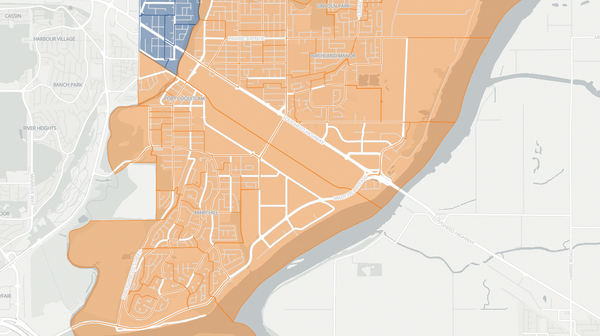
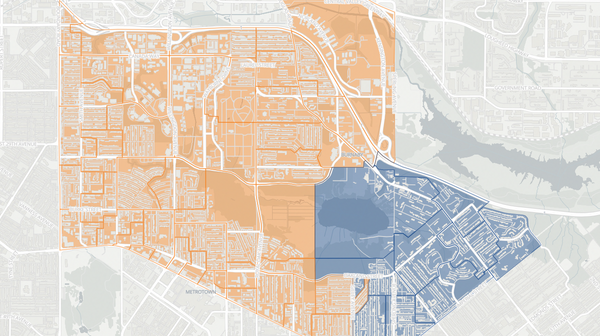
Port Moody-Burquitlam — 2024 British Columbia Provincial Election Results Map
Port Moody-Burquitlam — 2024 Election Results
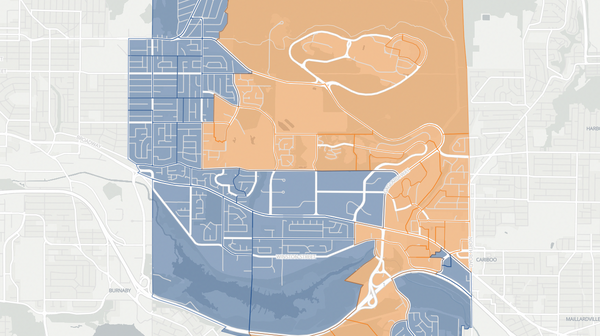
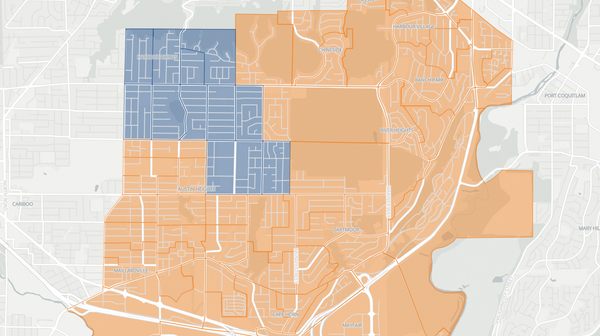
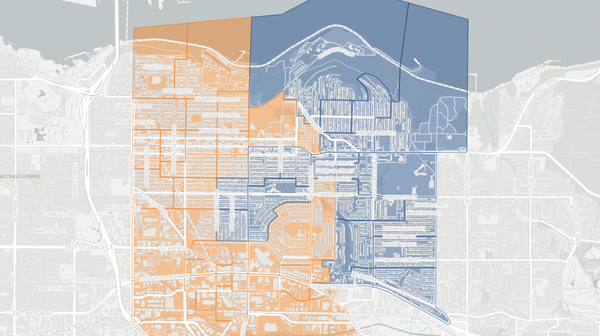
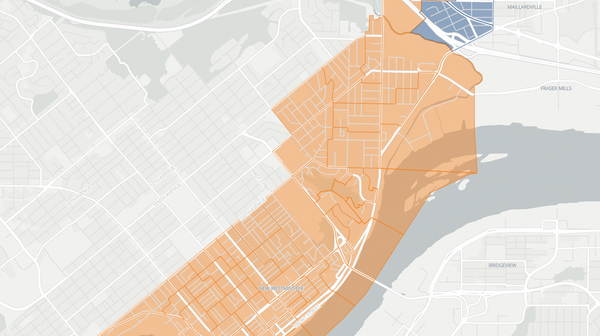
Poll-by-poll results for Port Moody-Burquitlam in the 2024 British Columbia election. The BC NDP candidate won this riding. Explore detailed voting data, candidate results, and turnout statistics at the poll level.
Riding information
Auto generated. Flag an issue.Port Moody—Burquitlam
Port Moody—Burquitlam wraps around the head of Burrard Inlet, taking in the city of Port Moody, the villages of Anmore and Belcarra, and the Burquitlam neighbourhood of Coquitlam along the slope between Lougheed Highway and the SkyTrain corridor. The riding was redrawn in the 2024 redistribution, replacing the former Port Moody—Coquitlam seat with adjusted boundaries that shifted some western Coquitlam territory. Port Moody had been transformed by the 2016 opening of the Evergreen SkyTrain Extension, which brought rapid densification around its three stations — Moody Centre, Inlet Centre, and the terminus — while the Burquitlam station spurred high-rise development on the Coquitlam side.
Rick Glumac had won the seat narrowly in 2017 and held it more comfortably in 2020. His background in software development and visual effects — including work on productions like ReBoot and at DreamWorks — gave him an unusual profile for a suburban MLA. The 2024 contest tested whether the NDP could hold the seat as the Conservative Party, bolstered by the absorption of former BC United supporters, mounted its strongest challenge.
Candidates
Rick Glumac (BC NDP) — Glumac held a Bachelor of Applied Science in electronics engineering from Simon Fraser University and had built a career in computer graphics and visual effects before entering politics. He was elected to Port Moody city council in 2011 and won the provincial seat in 2017 by fewer than 1,900 votes. He was seeking his third term.
Kerry van Aswegen (Conservative Party) — Van Aswegen immigrated to Canada from South Africa in 1993 and had operated a business in the Tri-Cities for twenty-seven years. She held a Bachelor of Arts in Education from the University of Pretoria. She had run for the school board and supported local MLAs through their riding associations. She campaigned on affordability, safer streets, and improved mental health services.
Samantha Agtarap (BC Green Party) — Agtarap was a Port Moody city councillor elected in 2022, a professional engineer, and a small business owner with nearly two decades of experience in engineering and climate action. She chaired the city's Climate Action committee and its Economic Development and Tourism committee.
Local Issues
Densification around SkyTrain stations continued to divide the community between 2020 and 2024. The redevelopment of the former Flavelle sawmill site on Port Moody's waterfront — which the city had approved for roughly 3,400 residential units across towers up to thirty-eight storeys — advanced through planning after the mill ceased operations in late 2020. The project crystallized the tension between Port Moody's identity as a quieter, more intimate city on the inlet and the pressures of transit-oriented growth, with residents who had moved to the community precisely for its smaller scale confronting a future skyline of towers. The provincial government's transit-oriented development legislation, mandating increased density within 800 metres of SkyTrain stations, added further pressure on local planning.
Housing affordability remained the overarching economic concern. Despite the volume of new construction around SkyTrain stations, the gap between household incomes and housing costs continued to widen. Young families who had been drawn to Port Moody and Burquitlam as alternatives to Vancouver's pricing found themselves priced out of both ownership and rental markets. The NDP government's Enhanced Care auto insurance model had delivered average premium reductions of roughly twenty per cent — a meaningful savings in a commuter-heavy riding — but the broader cost-of-living pressures on groceries, childcare, and housing overshadowed the benefit.
Health care access in the Tri-Cities was a growing concern as the area's population surged. Port Moody residents relied on facilities in Coquitlam, Burnaby, and New Westminster for hospital-level care, and the strain on the regional health system — exacerbated by the pandemic and chronic staffing shortages — raised questions about the adequacy of health infrastructure in one of Metro Vancouver's fastest-growing corridors. The opioid crisis, which had killed roughly six British Columbians per day by 2024, was felt across the Tri-Cities, and the debate over the NDP government's approach to decriminalization and harm reduction was a live issue at the doorstep.