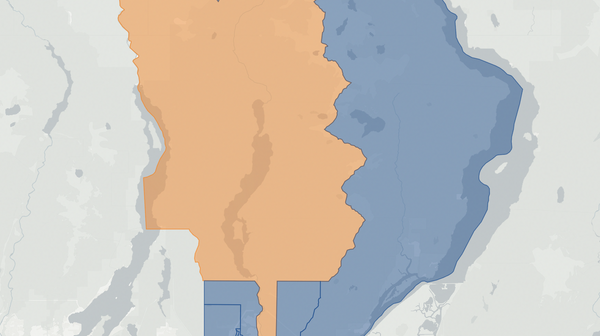
Fraser-Nicola — 2024 British Columbia Provincial Election Results Map
Fraser-Nicola — 2024 Election Results
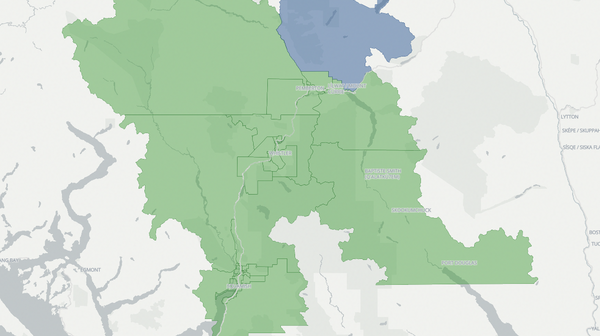
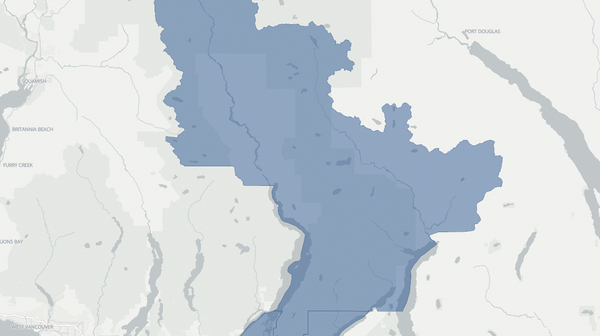
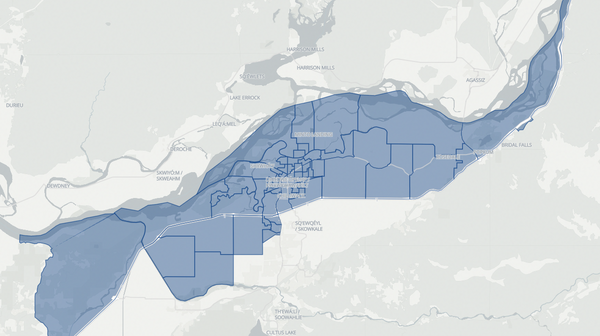
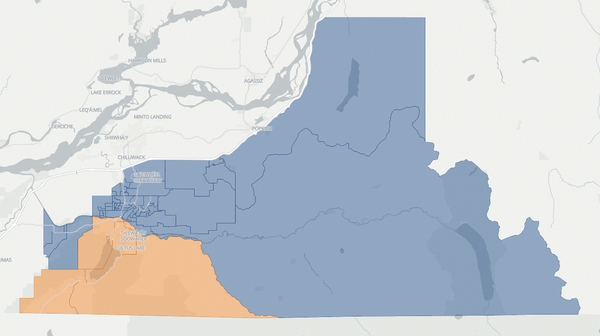
Poll-by-poll results for Fraser-Nicola in the 2024 British Columbia election. The Conservative Party candidate won this riding. Explore detailed voting data, candidate results, and turnout statistics at the poll level.
Riding information
Auto generated. Flag an issue.Fraser-Nicola
Fraser-Nicola is among British Columbia's most geographically vast and physically dramatic constituencies, sweeping across the Interior and the Fraser Canyon. The riding was substantially redrawn ahead of the 2024 election — losing Ashcroft and Cache Creek to Cariboo-Chilcotin while gaining the communities of Dewdney, Deroche, Lake Errock, Harrison Mills, Harrison Hot Springs, Agassiz, and the District of Kent from the former Chilliwack-Kent riding. The reconfigured constituency stretches from the lower Fraser Valley communities along the north bank of the Fraser River through Hope and up the Fraser Canyon through Yale, Boston Bar, and Lytton to Lillooet, then east through Logan Lake to Merritt. Its economy has historically rested on ranching, forestry, mining, and transportation — the Canadian Pacific and Canadian National railways thread through the canyon, and multiple provincial highways converge in the region. The riding's large Indigenous population, including communities of the Nlaka'pamux, Secwepemc, St'át'imc, and Syilx nations, gives reconciliation, land-use governance, and Indigenous economic development particular weight in the riding's political life.
The seat had been held by three-term BC Liberal MLA Jackie Tegart, who retired in 2024 rather than seek re-election. Conservative Tony Luck, a former city councillor in both Mission and Merritt, ran against NDP candidate Francyne Joe and Green candidate Jonah Timms in a riding that had endured two catastrophic natural disasters — the 2021 Lytton wildfire and the November 2021 atmospheric river flooding — since the previous election.
Candidates
Tony Luck (Conservative Party of BC) — Luck was born in Vancouver, raised in Richmond, and moved to Merritt eight years before the election after careers that included a decade as a financial planner and twenty-six years with BC Hydro. He held two degrees from the University of the Fraser Valley — a Bachelor of Business Administration and a Bachelor of Arts in history — and served as chair of the UFV Alumni Association from 2008 to 2013. His municipal political career included a term on Mission city council from 2012 to 2016 and a term on Merritt city council from 2018 to 2022, during which he ran unsuccessfully for mayor. He also held leadership positions with the Fraser Valley Regional District and the Southern Interior Local Government Association, where he led discussions on improvements to Emergency Management BC.
Francyne Joe (BC NDP) — Joe was raised in the Nicola Valley by her ranching grandparents and grew up between the Lower Nicola Indian Band and Kamloops. A former president of the Native Women's Association of Canada, she brought twenty years of frontline advocacy experience to the campaign, having fought for economic development, job creation, and justice for Indigenous communities across Canada, and was one of the leading voices in the campaign against violence toward Indigenous women. She worked in emergency management at the time of the campaign and described herself as bringing both an Indigenous perspective and a rancher's pragmatism to the issues facing rural British Columbia.
Jonah Timms (BC Green Party) — A geography graduate from the University of Victoria, Timms had worked across western Canada in conservation and resource management roles. He served as an interpreter for Parks Canada and conducted FireSmart wildfire risk surveys for the Alberta government before settling in Lillooet to take a position as Senior First Nations Relations Advisor with the BC Ministry of Forests. His work in the region forged close ties with St'át'imc and Nlaka'pamux communities throughout the Fraser Canyon and Nicola Valley. Timms had also founded the Lillooet Community Volunteer Invasives Team and was making his second run for the Greens in the riding after also contesting the seat in 2020.
Local Issues
The destruction and agonizingly slow rebuilding of Lytton was the most emotionally charged issue in the riding. A wildfire on June 30, 2021 destroyed most of the village, levelling more than 520 buildings, causing two deaths, and displacing the entire population. Three years later, with the 2024 election approaching, the rebuild remained far from complete. Candidates and residents alike pointed to the contrast between the scale of recovery funding committed by provincial and federal governments and the handful of building permits that had been issued. The catastrophic delay became a symbol of government failure in the riding's political discourse, with the Conservative and Green candidates criticizing the pace of the NDP government's response.
The November 2021 atmospheric river flooding compounded the riding's trauma. Merritt was evacuated when the Coldwater River overtopped its banks, damaging homes and critical infrastructure across the city. Approximately $12.2 million in Disaster Financial Assistance funding from the province was approved for Merritt in the aftermath, and the province funded the reconstruction of a bridge damaged during the flooding. But residents who lived through both the Lytton fire and the Merritt flood questioned whether the province had invested adequately in flood mitigation and climate adaptation infrastructure for Interior communities that faced escalating risks from extreme weather events. Candidates debated emergency preparedness, the capacity of Emergency Management BC, and the need for permanent flood protection works along the Nicola and Coldwater rivers.
Healthcare access in a geographically vast riding with scattered small communities was a chronic and worsening concern. The closure or reduced hours of medical clinics in Merritt and Lillooet left residents facing long drives to Kamloops for routine care, and ambulance response times in remote areas of the Fraser Canyon could extend well beyond provincial targets. The NDP government pointed to investments in primary care networks and telehealth services, but residents in communities like Logan Lake and Lytton argued that these measures were insufficient for a population spread across hundreds of kilometres of challenging terrain.
The forestry sector's contraction continued to erode the economic base of communities throughout the riding. Mill curtailments and closures in the BC Interior — driven by reduced timber supply after years of mountain pine beetle devastation and catastrophic wildfires — directly affected employment in towns like Merritt and Logan Lake. Ranchers faced their own pressures from drought, water restrictions, and rising input costs, and the region's mining operations — including the Highland Valley Copper mine near Logan Lake — provided employment but also raised environmental questions about water use and tailings management in a water-scarce landscape.