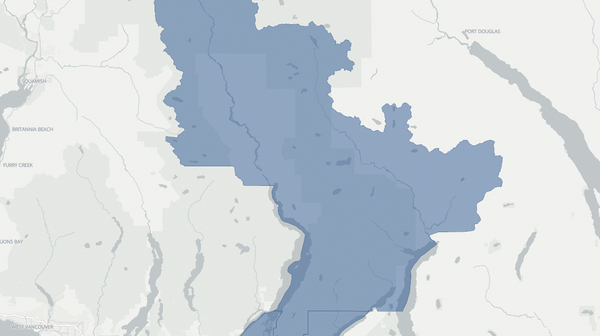
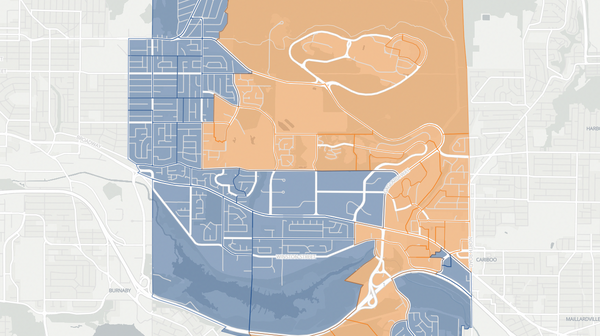
Coquitlam-Burke Mountain — 2024 British Columbia Provincial Election Results Map
Coquitlam-Burke Mountain — 2024 Election Results
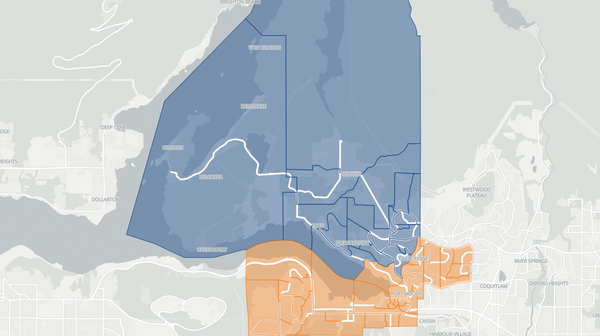
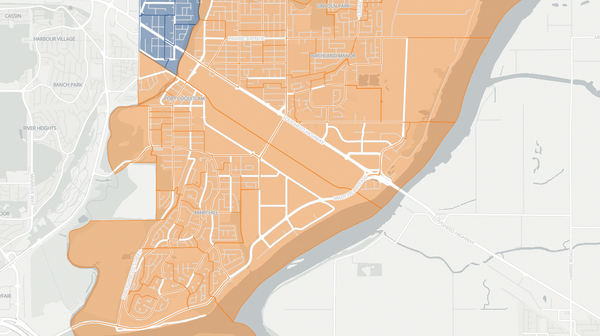
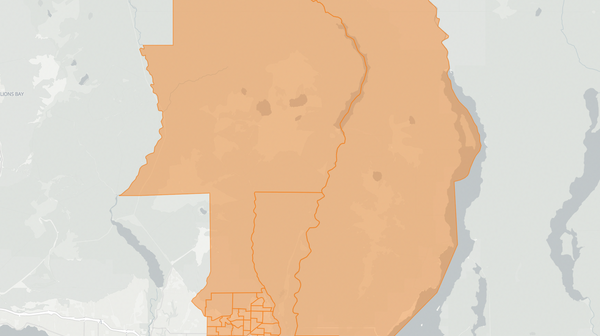
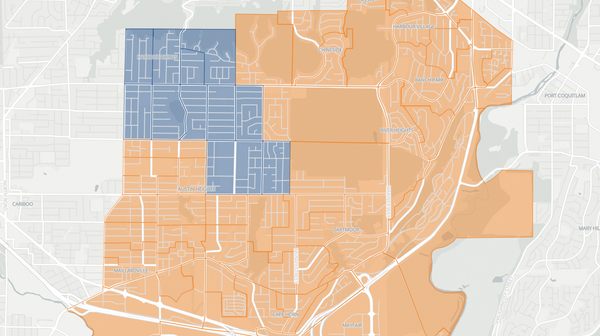
Poll-by-poll results for Coquitlam-Burke Mountain in the 2024 British Columbia election. The BC NDP candidate won this riding. Explore detailed voting data, candidate results, and turnout statistics at the poll level.
Riding information
Auto generated. Flag an issue.Coquitlam-Burke Mountain
Coquitlam-Burke Mountain occupies the rapidly developing eastern flank of the Tri-Cities in Metro Vancouver, where forested hillside has been systematically transformed into dense residential subdivisions over the past decade. The riding takes in Burke Mountain's terraced streets of townhouses and single-family homes, the newer Partington Creek and Smiling Creek neighbourhoods, and portions of the Coquitlam River valley that separate the suburban edge from the wilderness of Pinecone Burke Provincial Park above. The population skews younger than the Metro Vancouver average, with a high proportion of families with school-age children who were drawn to the area by relatively affordable housing within commuting distance of Vancouver and Burnaby via the Evergreen Extension of SkyTrain.
The seat had been the site of one of British Columbia's tightest electoral contests in 2017, when NDP candidate Jodie Wickens — who had won the riding in a 2016 by-election — lost to BC Liberal Joan Isaacs by just eighty-seven votes. Seven years later, Wickens returned to contest the riding again, facing Conservative candidate Stephen Frolek in a two-candidate race that once more came down to a narrow margin in a community where the gap between the pace of residential development and the provision of schools, transit, and community services remained the defining local tension.
Candidates
Jodie Wickens (BC NDP) — Wickens had won Coquitlam-Burke Mountain for the NDP in a February 2016 by-election, only to lose the seat by eighty-seven votes in the 2017 general election. She returned to the riding in 2024 with deep community connections built over years of local involvement. Her campaign focused on the need for expanded school capacity, improved transit access, and housing affordability in one of Metro Vancouver's fastest-growing residential communities.
Stephen Frolek (Conservative Party of BC) — Frolek grew up in South Delta and joined the Canadian Forces Army Reserve after high school, eventually volunteering for deployment to Afghanistan, where he mentored Afghan National Police officers and taught first aid. After his military service, he spent more than a decade working as a carpenter building homes across the Lower Mainland, and together with his wife he operated a small bookkeeping and business advisory firm in Coquitlam. He also spent seven years mentoring youth in the community and participated in mission trips to Mexico, where he learned Spanish to work with the Tarahumara people.
Local Issues
The shortage of school capacity on Burke Mountain was the single most galvanizing local issue through the 2020–2024 period. Thousands of new homes were built and occupied across the hillside, but for years the community lacked a secondary school, forcing students to travel to facilities elsewhere in Coquitlam. Nearly 110 portables were in use across the school district at one point, underscoring the gap between residential construction and educational infrastructure. In August 2024, construction officially began on the Burke Mountain Middle/Secondary School — a project with nearly $135 million in provincial funding designed to accommodate roughly 1,000 students — though parents and candidates debated whether the timeline for completion was fast enough to serve families who had been waiting for years.
Transit connectivity remained a persistent frustration for residents living on the hillside above Coquitlam's urban core. While the Evergreen Extension of SkyTrain had linked the Tri-Cities to the broader rapid transit network in 2016, Burke Mountain's steep terrain and distance from the nearest SkyTrain station at Lafarge Lake–Douglas meant that many commuters relied on infrequent bus service or drove to park-and-ride lots that filled early in the morning. TransLink's planning for improved bus connections to Burke Mountain proceeded incrementally, and residents pressed candidates on whether service frequency and route coverage would keep pace with a neighbourhood projected to eventually house upwards of 50,000 people.
Housing affordability remained a concern even in a community that had attracted many of its residents precisely because it was more affordable than central Metro Vancouver. During the pandemic and its aftermath, property values on Burke Mountain rose sharply, and the townhouses and single-family homes that had drawn young families to the area became increasingly out of reach for the next wave of prospective buyers. The NDP government's various housing measures — including changes to municipal zoning rules to permit more density and the BC Builds program aimed at accelerating construction on public land — were debated against the Conservative pitch for reduced regulatory burden and faster permitting.
Community amenities lagged behind the residential build-out in ways that affected daily quality of life. Burke Mountain lacked a dedicated community recreation centre, and commercial retail options in the neighbourhood were limited, forcing residents to drive to Coquitlam's town centre or Port Coquitlam for routine shopping and services. The City of Coquitlam's plans for a village centre on Burke Mountain had been discussed for years but remained largely unrealized, and candidates faced questions about what the provincial government could do to support municipalities in delivering the infrastructure and services that complete communities require.