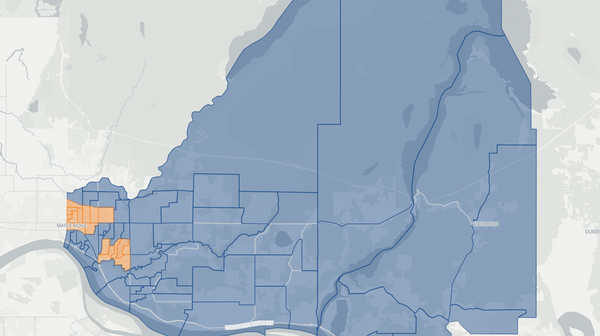
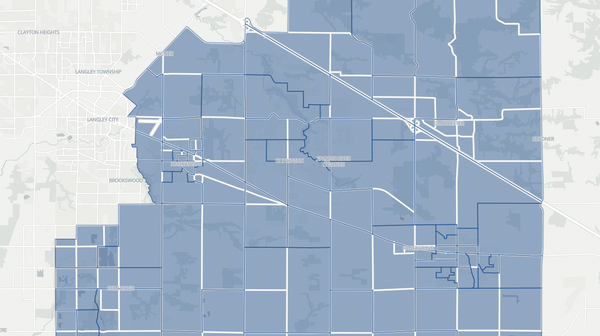
Chilliwack North — 2024 British Columbia Provincial Election Results Map
Chilliwack North — 2024 Election Results
Poll-by-poll results for Chilliwack North in the 2024 British Columbia election. The Conservative Party candidate won this riding. Explore detailed voting data, candidate results, and turnout statistics at the poll level.
Riding information
Auto generated. Flag an issue.Chilliwack North
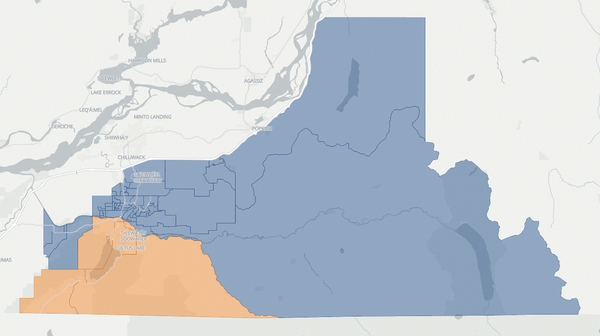
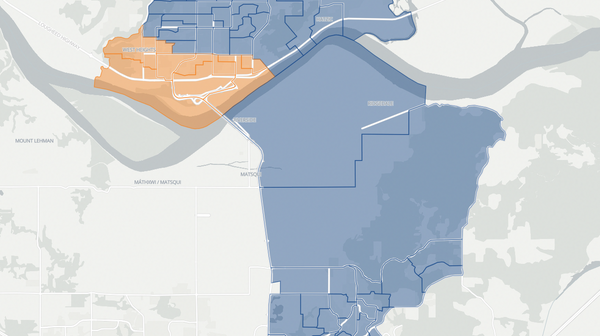
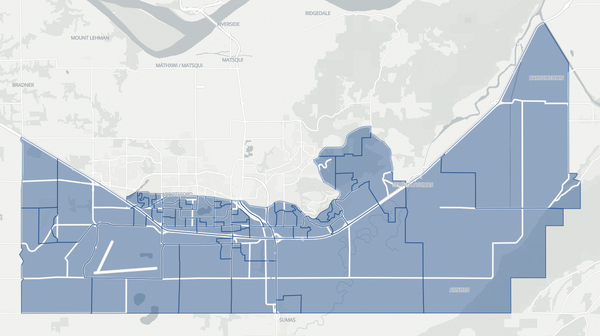
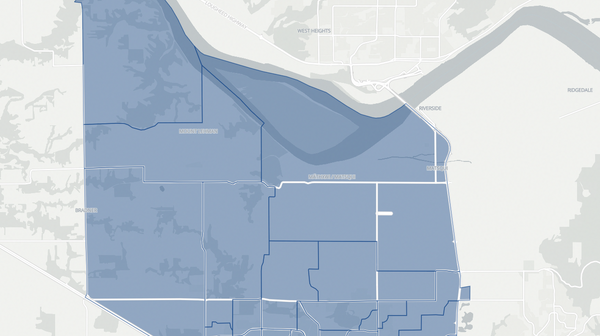
Chilliwack North is centred on the city of Chilliwack's downtown core and the northern residential neighbourhoods above Highway 1, taking in Greendale, Fairfield Island, Rosedale, and Popkum along the Fraser River corridor. The riding also extends west to encompass portions of east Abbotsford around Sumas Mountain Regional Park. The constituency was reconfigured ahead of the 2024 election from its predecessor, the Chilliwack riding, shedding Yarrow to the south while absorbing Rosedale and Popkum to the east. It is a riding shaped by rapid suburban growth on one hand and the agricultural character of the Fraser Valley on the other — dairy and poultry farms operate alongside new subdivisions serving families who have pushed eastward along Highway 1 in search of more affordable housing than Metro Vancouver can offer.
The riding's population had grown rapidly during the early 2020s as families priced out of Metro Vancouver continued to settle in the eastern Fraser Valley. NDP incumbent Dan Coulter — first elected in the predecessor Chilliwack riding in 2020 and serving as Minister of State for Infrastructure and Transit — sought re-election in the reconfigured seat against Conservative candidate Heather Maahs and two other challengers in a contest shaped by affordability pressures, the opioid crisis, and public safety concerns.
Candidates
Heather Maahs (Conservative Party of BC) — Maahs moved to Chilliwack from North Vancouver in 1993 with her family and co-operated a construction business with her husband until his unexpected passing in 2009. She was first elected to the Chilliwack Board of Education in 2008 and served continuously for sixteen years across five re-elections, becoming one of the district's longest-serving trustees. During her time on the board, Maahs pursued specialized training in Orton-Gillingham literacy tutoring and Early Assessment through the University of Hull in England, and she championed foundational reading skills as a core educational priority. She also moderated a long-running education policy listserv that connected trustees, parents, teachers, and ministry officials across the province.
Dan Coulter (BC NDP) — Coulter was a millwright by trade who was severely injured in a workplace accident in 1999, an experience that shaped his advocacy for occupational health and safety. He later served as a trustee and chair of the Chilliwack Board of Education and as president of his union local before winning election as MLA for Chilliwack in the 2020 snap election. In government, he served as Parliamentary Secretary for Accessibility — leading consultations that shaped the Accessible British Columbia Act — and was subsequently appointed Minister of State for Infrastructure and Transit, where he oversaw transit expansion planning for growing Fraser Valley communities.
Tim Cooper (BC Green Party) — Cooper ran on the Green platform of environmental sustainability and affordability, seeking to offer a progressive alternative in a traditionally centre-right region of the Fraser Valley.
Independent candidate Dan Grice also contested the riding.
Local Issues
The opioid crisis remained one of the most pressing public health emergencies in Chilliwack throughout the 2020–2024 period. Data showed that the majority of fatal overdoses in the community occurred in private residences rather than on the streets. The provincial government announced the addition of up to twenty-two complex-care housing spaces in Chilliwack in 2022, aimed at providing wraparound supports for people living with severe mental health and substance use challenges. Despite these investments, candidates debated whether the pace and scale of intervention matched the severity of the crisis, with the Conservative campaign pressing for stricter enforcement measures and the NDP defending its harm-reduction approach.
Homelessness and housing affordability intensified as interlinked concerns across the riding during the legislative term. Chilliwack's unhoused population had climbed steadily, and shelter capacity struggled to keep pace with demand. The broader affordability squeeze that had driven population growth into the Fraser Valley from Metro Vancouver also pushed rental and ownership costs upward in Chilliwack itself, creating a cycle in which the community absorbed demand it was not fully equipped to serve. At all-candidates forums, housing dominated the conversation, with candidates offering competing visions — from the NDP's emphasis on purpose-built rental and supportive housing investments to the Conservatives' focus on reducing regulatory barriers to speed up construction.
Healthcare access was a persistent concern for residents across the riding. Physician recruitment remained an ongoing challenge, and the NDP government pointed to investments in primary care networks and urgent care centres across the province, while the Conservatives argued that emergency room wait times and the shortage of family physicians demanded a fundamentally different approach to health care delivery.
Transportation infrastructure shaped daily life for thousands of commuters. Highway 1 congestion between Chilliwack and Metro Vancouver remained a significant frustration. Transit service expansion in the eastern Fraser Valley had been a focus of Coulter's ministerial portfolio, but residents questioned whether service improvements were keeping pace with the rapid population growth that continued to reshape Chilliwack and the surrounding communities.