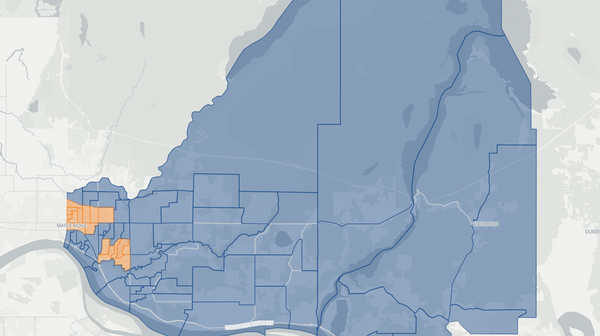
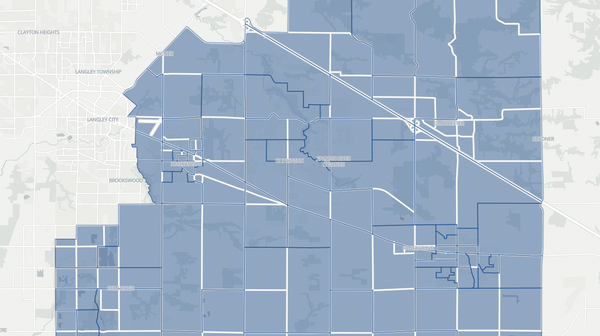
Chilliwack-Cultus Lake — 2024 British Columbia Provincial Election Results Map
Chilliwack-Cultus Lake — 2024 Election Results
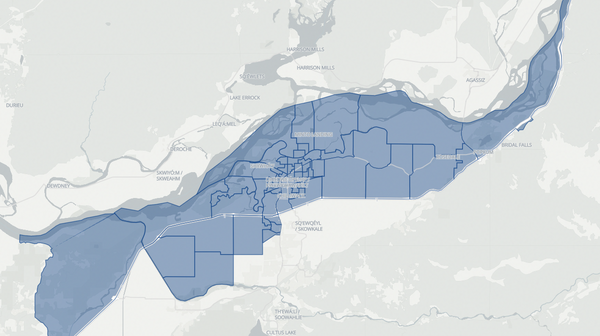
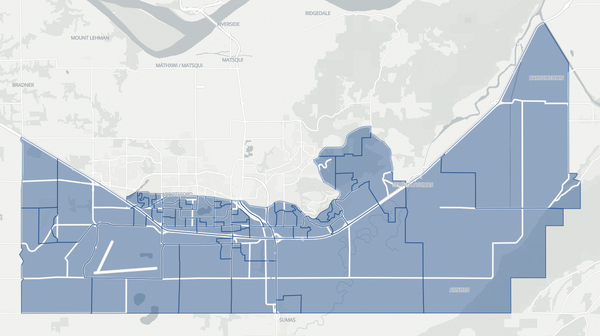
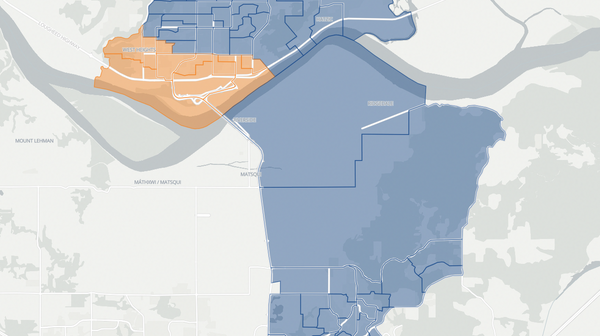
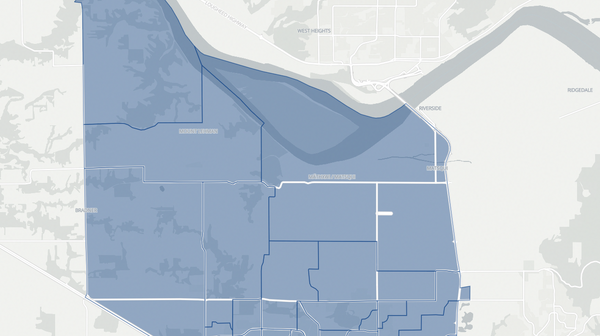
Poll-by-poll results for Chilliwack-Cultus Lake in the 2024 British Columbia election. The Conservative Party candidate won this riding. Explore detailed voting data, candidate results, and turnout statistics at the poll level.
Riding information
Auto generated. Flag an issue.Chilliwack-Cultus Lake
Chilliwack-Cultus Lake encompasses the southern and eastern portions of the City of Chilliwack, one of the Fraser Valley's fastest-growing communities, along with the popular recreational area around Cultus Lake Provincial Park. Chilliwack's 2021 census population of 93,203 represented growth of more than 11 per cent from 2016, driven by families seeking more affordable housing than Metro Vancouver could offer. The riding takes in established suburban neighbourhoods, newer residential developments on the city's southern fringe, agricultural lands within the Agricultural Land Reserve, and the resort and campground communities around Cultus Lake. The economy blends agriculture, retail, light industry, and the growing service sector that supports a commuter population tied to the Lower Mainland.
The seat was newly drawn through redistribution, replacing the former Chilliwack-Kent riding that had been won by the NDP's Kelli Paddon in 2020. Paddon, who served as Parliamentary Secretary for Gender Equity, sought re-election in the reconfigured riding. The contest attracted attention as a test of whether the NDP's 2020 gains in the eastern Fraser Valley could withstand the Conservative surge and the riding's changing demographics.
Candidates
A'aliya Warbus (Conservative Party) — Warbus is a member of the Skowkale First Nation, situated in the traditional lands of the Sto:lo people, and is the daughter of former BC Lieutenant-Governor Steven Lewis Point. She holds a Master of Fine Arts in film production and has worked as Director of Cultural Communications at the Sto:lo Xwexwilmexw Government and as a professor at Capilano College in the Indigenous Digital Film department. She is the mother of three children and lives in the riding.
Kelli Paddon (BC NDP) — Paddon was the incumbent MLA, having won the former Chilliwack-Kent riding in 2020. She was appointed Parliamentary Secretary for Gender Equity during the legislative term. Her professional background spans more than fifteen years in the community living sector, including work in policy and government relations, along with experience as a community support worker, youth employment counsellor, and instructor. She is a longtime Chilliwack resident.
Local Issues
Chilliwack's rapid population growth strained municipal infrastructure and services throughout the inter-election period. The province issued a Housing Target Order requiring the city to complete 4,594 net new housing units within a five-year period starting July 2024, or roughly 919 units per year. The city had built approximately 793 homes in 2022 and only 573 in 2023, falling short of the pace needed to keep up with demand. The small-scale multi-unit housing legislation affected approximately 11,000 Chilliwack properties by requiring municipalities to permit secondary suites and up to four units on larger residential lots. With 67 per cent of the city's land base classified as agricultural, developable space was constrained, and tensions between housing growth and farmland protection were acute.
Housing affordability had become a primary driver of Chilliwack's growth — and its stress. Families were trading Metro Vancouver for a quieter, more affordable life, but the influx was driving up local housing and rental costs. By 2024, average one-bedroom rents ranged between $1,500 and $1,700 per month, while three-bedroom units reached $2,500 to $2,700. Property taxes rose alongside assessments, and long-time residents on fixed incomes struggled with the financial pressures that accompanied rapid expansion. Limited transit funding compounded the problem, as residents who moved to Chilliwack for affordability often found themselves dependent on cars for commutes to the Lower Mainland.
The opioid and toxic drug crisis affected Chilliwack with disproportionate intensity. The community had experienced high rates of overdose deaths relative to its size, and the province's drug decriminalization pilot was a polarizing issue locally. Visible drug use in parks and commercial areas generated strong community reaction, and the Conservative campaign's call to reverse decriminalization and pursue enforcement-based strategies found a receptive audience. The NDP defended its harm-reduction approach while acknowledging the need to address public concern about open drug use.
The November 2021 atmospheric river flooding affected Chilliwack as well, though less severely than neighbouring Abbotsford. Highway closures during the event isolated the community, and agricultural operations in the valley sustained damage. The broader lesson of infrastructure vulnerability to extreme weather shaped conversations about climate adaptation, dike maintenance, and emergency preparedness throughout the campaign. Cultus Lake Provincial Park, a major recreational asset, received investment from the NDP government for facility upgrades during the inter-election period, reflecting the park's importance to both local quality of life and the regional tourism economy.