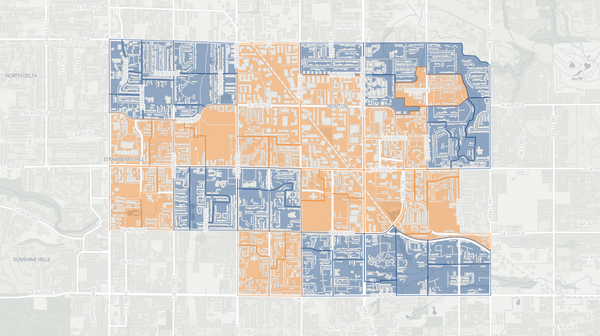
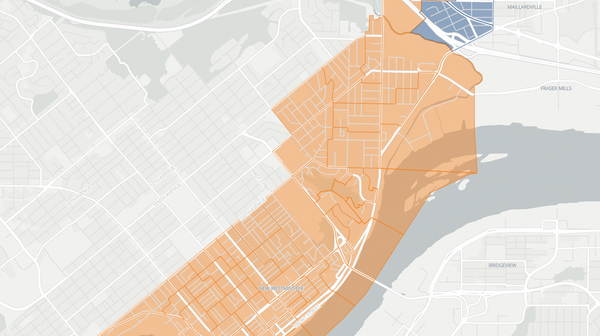
Delta North — 2024 British Columbia Provincial Election Results Map
Delta North — 2024 Election Results
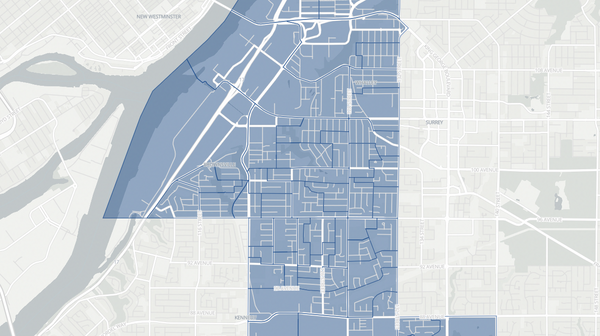
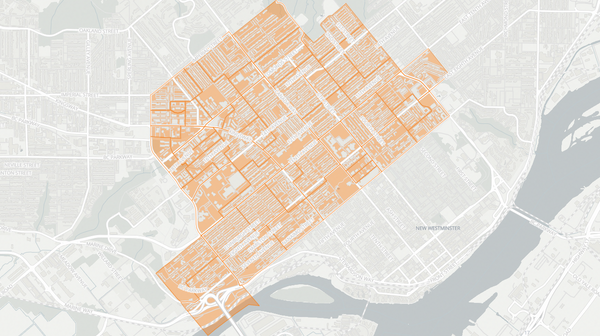
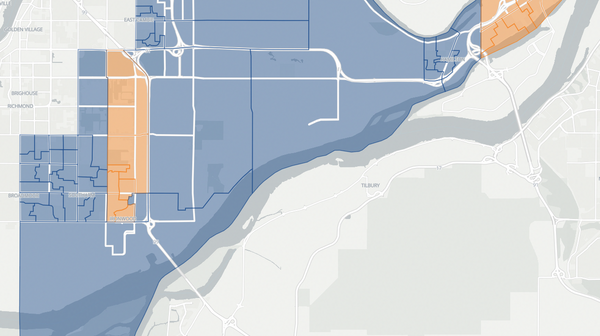
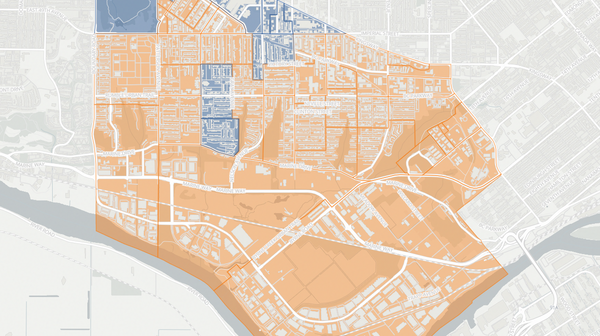
Poll-by-poll results for Delta North in the 2024 British Columbia election. The BC NDP candidate won this riding. Explore detailed voting data, candidate results, and turnout statistics at the poll level.
Riding information
Auto generated. Flag an issue.Delta North
Delta North is centred on the residential community of North Delta, a commuter suburb wedged between the Fraser River's south arm and the City of Surrey. The riding's neighbourhoods — Nordel, Sunstone, Sunshine Hills, Scottsdale, and Annieville — sit on elevated land above the river flats, with tree-lined streets of single-family homes giving way to newer townhouse and condominium developments near the commercial corridors of Scott Road and 72nd Avenue. The population is among the most ethnically diverse in the province, with large South Asian, East Asian, and Filipino communities shaping the riding's cultural character. The industrial lands of Annacis Island, one of Metro Vancouver's major employment zones for manufacturing and distribution, lie within the riding's boundaries along the Fraser's north channel.
NDP cabinet minister Ravi Kahlon — first elected in 2017 and serving as Minister of Housing and Government House Leader in the Eby government — sought a third term against Conservative challenger Raj Veauli and two other candidates. As the minister responsible for the provincial government's ambitious housing agenda, Kahlon's re-election campaign was inextricable from the broader debate over whether the NDP's housing policies were delivering results.
Candidates
Ravi Kahlon (BC NDP) — Kahlon represented Canada in field hockey at both the 2000 Sydney and 2008 Beijing Summer Olympics, earning more than 130 international caps before retiring from the sport and entering politics. First elected as MLA for Delta North in 2017, he rose through a series of cabinet posts — including Minister of Jobs, Economic Recovery, and Innovation — before being appointed Minister of Housing and Government House Leader when David Eby became Premier in December 2022. In the housing portfolio, he oversaw the introduction of legislation requiring municipalities to permit increased density near transit stations, the launch of the BC Builds program to accelerate construction on public land, and changes to short-term rental regulations aimed at returning units to the long-term market.
Raj Veauli (Conservative Party of BC) — Veauli ran on a platform emphasizing fiscal responsibility, public safety, and opposition to the NDP's housing densification mandates, which he argued were being imposed on municipalities without adequate community consultation.
Nick Dickinson-Wilde (BC Green Party) — Dickinson-Wilde represented the Green perspective in the riding, campaigning on environmental sustainability and affordable housing.
Manqoosh Khan of the Freedom Party of BC also contested the riding.
Local Issues
The George Massey Tunnel replacement was the single largest infrastructure issue affecting Delta North and its commuters. The aging four-lane tunnel beneath the Fraser River — a daily bottleneck for tens of thousands of vehicles travelling Highway 99 between Delta and Richmond — had been slated for replacement for more than a decade, with competing proposals debated under successive governments. The NDP government committed to a toll-free, eight-lane immersed-tube tunnel with three general-purpose lanes and a dedicated transit lane in each direction, along with a separated multi-use path for cyclists and pedestrians. In July 2024, the design phase advanced with the selection of the Cross Fraser Partnership as the developer. For North Delta commuters who spent hours each week crawling through the existing tunnel, the pace of progress was a source of both cautious optimism and lingering frustration.
Housing affordability and densification shaped the riding's political landscape in direct and personal ways, given Kahlon's role as Housing Minister. The provincial government's legislation requiring municipalities to allow up to six units on single-family lots and to rezone areas near transit stations for higher density drew mixed reactions in North Delta, where many homeowners had purchased in a suburban community precisely for its single-family character. Kahlon defended the measures as necessary to increase housing supply in a region where vacancy rates were near zero and home prices had risen far beyond the reach of average families. The Conservatives argued that the densification mandates overrode local planning authority and risked overwhelming existing infrastructure.
Transit service and the broader transportation network remained persistent concerns in a riding whose residents were heavily dependent on cars for their daily commute. TransLink warned of potential major service reductions unless sustainable funding was secured, and North Delta — where bus service was already infrequent relative to demand — stood to be disproportionately affected by any cuts. The new tunnel project's inclusion of a dedicated transit lane raised hopes for eventual rapid transit connections along the Highway 99 corridor, but concrete plans for bus rapid transit or other enhanced service remained aspirational rather than funded.
Public safety and the rising cost of living were recurring themes at all-candidates forums. Residents expressed concern about property crime and the visibility of homelessness along commercial corridors, and the Conservative campaign pressed the NDP on its record regarding enforcement and public order. At the same time, grocery costs, auto insurance, and utility bills consumed an increasing share of household budgets, and candidates debated whether the NDP's affordability measures — including the BC Family Benefit, reduced childcare fees, and ICBC rate reductions — were sufficient to offset inflationary pressures.