Surrey-Newton — 2024 British Columbia Provincial Election Results Map
Surrey-Newton — 2024 Election Results
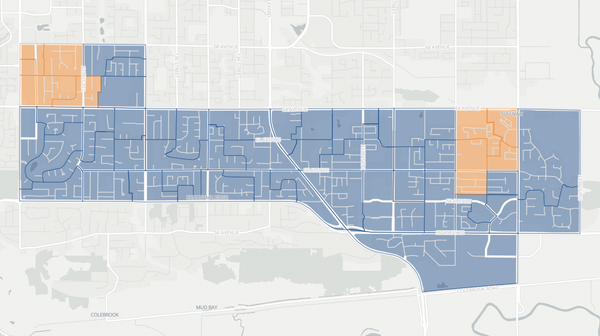
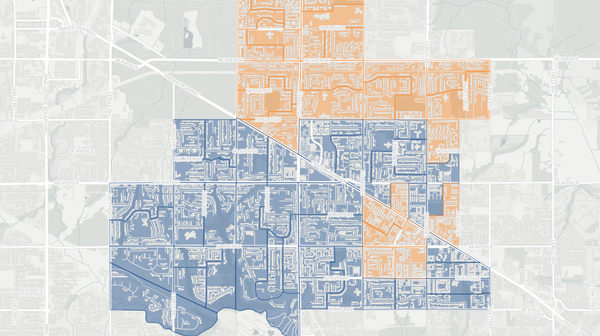
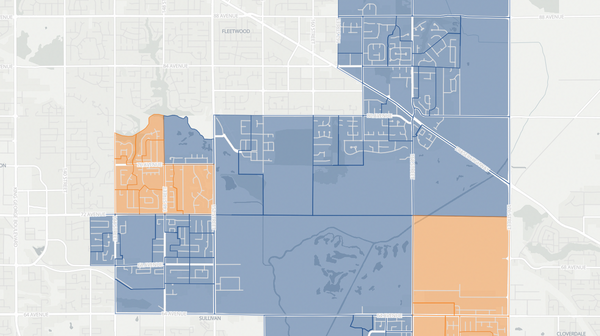
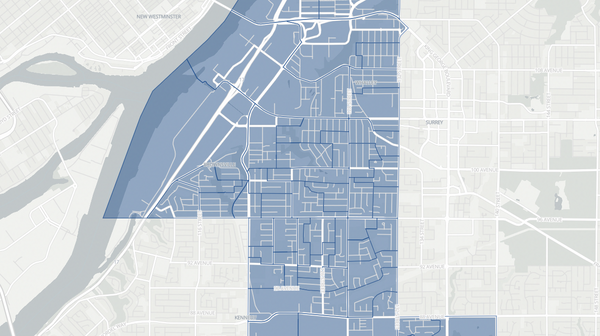
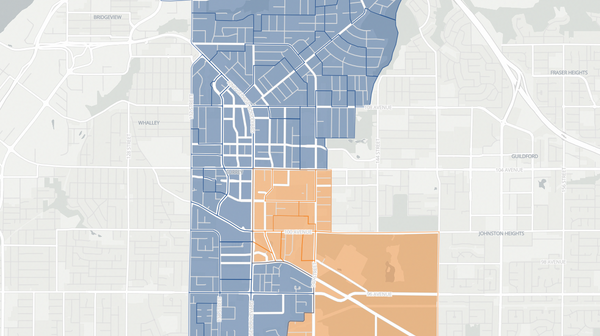
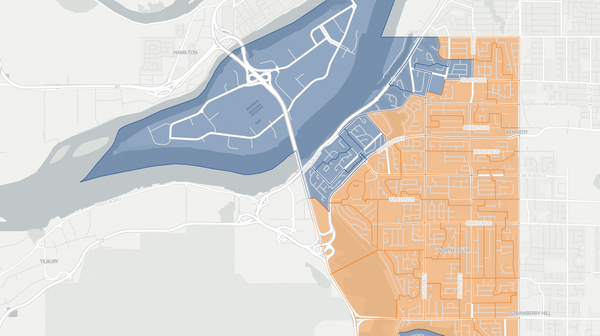
Poll-by-poll results for Surrey-Newton in the 2024 British Columbia election. The BC NDP candidate won this riding. Explore detailed voting data, candidate results, and turnout statistics at the poll level.
Riding information
Auto generated. Flag an issue.Surrey-Newton
Surrey-Newton covers roughly fourteen square kilometres of one of Surrey's most densely populated neighbourhoods, centred on the Newton Town Centre along King George Boulevard south of the Fraser Highway. The riding is among the most linguistically diverse in British Columbia, with a large Punjabi-speaking South Asian population and a median age below the provincial average. Service-sector employment, retail, and the gig economy anchor the local labour market, with many residents commuting to jobs elsewhere in Metro Vancouver.
Harry Bains, the NDP's longtime Minister of Labour, had represented Surrey-Newton continuously since 2005 but did not seek re-election in 2024. The open seat drew first-time NDP candidate Jessie Sunner against Conservative Tegjot Bal in a riding where the NDP's historical strength was tested by the province-wide Conservative surge.
Candidates
Jessie Sunner (BC NDP) — Sunner grew up in Surrey and was a human rights lawyer and trade unionist who had worked for the Hospital Employees' Union. She served as vice-president of the Surrey Women's Centre and sat on the boards of the South Asian Bar Association and the BC College of Social Workers.
Tegjot Bal (Conservative Party) — Bal was a senior marketing executive and radio host at Radio Punjab AM1600. Born in India, he studied hotel management in Switzerland and computer science in London, England, before moving to Canada. He had previously worked as a store manager in the Liquor Distribution Branch of the Government of British Columbia.
Amrit Birring (Freedom Party of BC), Japreet Lehal (Independent), and Joginder Singh Randhawa (Independent) also contested the riding.
Local Issues
The opioid crisis continued to devastate Newton, where the nearby SafePoint supervised consumption site on 135A Street — in the adjacent Whalley neighbourhood — had been operating since 2017. The facility reversed hundreds of overdoses annually without a single on-site death, but fatal overdoses across Surrey continued to climb as an increasingly toxic street drug supply claimed lives. The NDP government had invested in harm reduction, safe supply programs, and naloxone distribution, but the Conservatives argued for a fundamentally different approach, advocating involuntary treatment and expanded recovery beds. For Newton residents, the crisis was not abstract: emergency calls, visible drug use in public spaces, and property crime linked to addiction were daily realities.
The policing transition was a source of particular concern in Newton. Along with Whalley, Newton was one of the first deployment districts for the new Surrey Police Service, meaning the neighbourhood with some of the highest concentrations of street-level crime would be among the first to experience the changeover from RCMP to municipal policing. Residents and business owners along the King George Boulevard corridor questioned whether the transition would strengthen or disrupt frontline service during a period when public safety demands were acute.
Transit remained a sore point for Newton commuters. The cancellation of the Surrey-Newton-Guildford LRT in 2018 had redirected transit investment to the SkyTrain extension along Fraser Highway toward Langley, leaving Newton without a concrete timeline for rapid transit. The Newton Town Centre Plan, which envisioned higher-density mixed-use development around a future transit hub, depended on a rail connection that had no confirmed funding. Meanwhile, residents continued to rely on overcrowded bus routes for their daily commute, and the lack of rapid transit in a neighbourhood of this density was a persistent frustration.