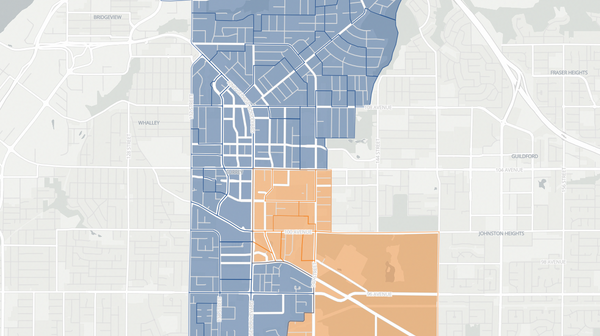
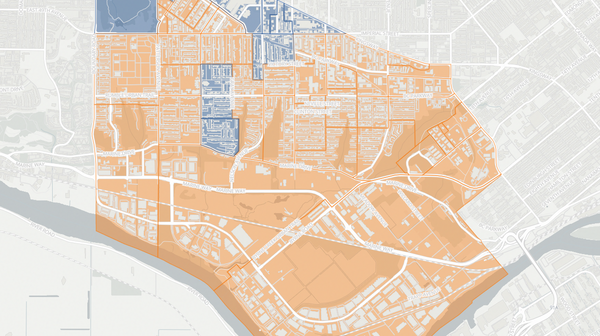
New Westminster-Coquitlam — 2024 British Columbia Provincial Election Results Map
New Westminster-Coquitlam — 2024 Election Results
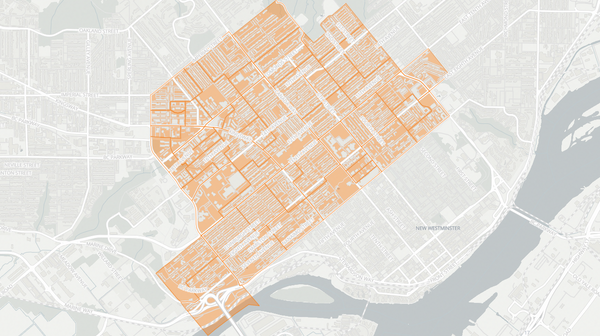
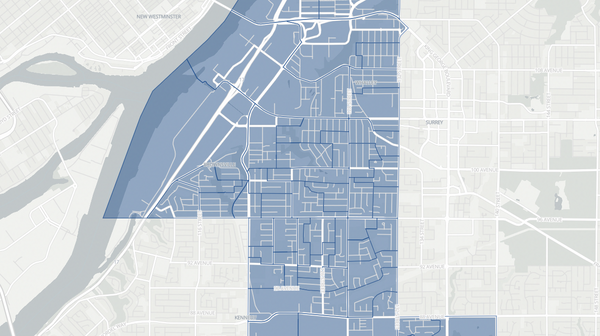
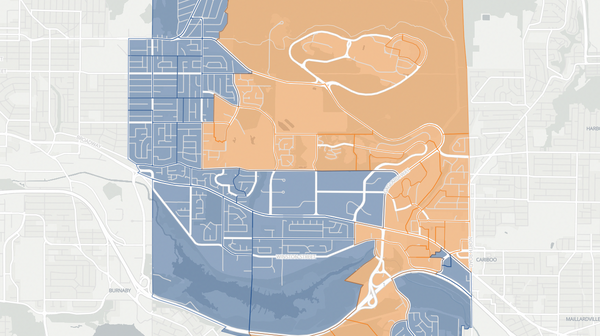
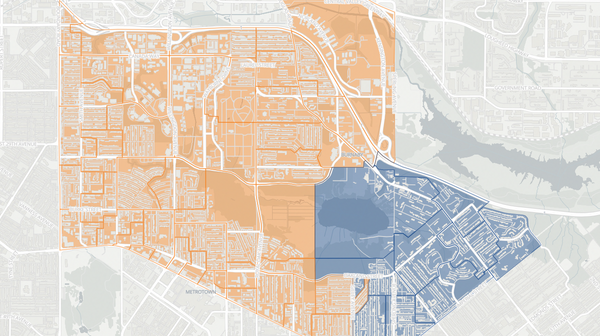
Poll-by-poll results for New Westminster-Coquitlam in the 2024 British Columbia election. The BC NDP candidate won this riding. Explore detailed voting data, candidate results, and turnout statistics at the poll level.
Riding information
Auto generated. Flag an issue.New Westminster—Coquitlam
New Westminster—Coquitlam is a new riding created by the 2024 redistribution, joining the historic city of New Westminster with a portion of neighbouring Coquitlam. The New Westminster section encompasses the city's compact urban core along Columbia Street, the Sapperton neighbourhood anchored by Royal Columbian Hospital, and the residential areas climbing the hill toward Queens Park. The Coquitlam portion adds the Maillardville neighbourhood and adjacent areas along the Brunette River corridor. Three SkyTrain stations connect the riding to Metro Vancouver's rapid transit network, making it one of the region's most transit-accessible constituencies. New Westminster's claim as British Columbia's first capital gives it a heritage sensibility that coexists uneasily with the rapid densification transforming its waterfront and commercial corridors.
Candidates
Jennifer Whiteside (BC NDP) — Whiteside was the incumbent MLA, having won the former New Westminster seat in 2020. A lifelong New Westminster resident, she studied history at Simon Fraser University before spending her career in the labour movement. She rose through the Hospital Employees' Union to become its secretary-business manager, serving as the union's chief spokesperson and lead negotiator, and she spearheaded British Columbia's first living wage campaign. In the NDP government she held two cabinet portfolios: Education under Premier Horgan, followed by Mental Health and Addictions under Premier Eby.
Ndellie Massey (Conservative Party of BC) — Massey brings experience in managing government projects in South Africa and consulting for Revenu Quebec, as well as leading initiatives at BC Hydro. As a small business owner, she campaigned on fiscal responsibility and efficient service delivery.
Maureen Curran (BC Green Party) — Curran has twenty-five years of teaching experience in Coquitlam, currently at Centennial Secondary, where she has built sustainable and socially diverse learning communities. She holds a master of science degree in nuclear physics from the University of Victoria and previously ran for the Green Party of Canada in Burnaby South during the 2021 federal election. She is active in the community, advocating for accessible playgrounds, cycling safety, and the protection of local forests and streams.
Local Issues
The Royal Columbian Hospital redevelopment dominated the riding's infrastructure agenda. Phase two of the project — a new ten-storey acute care tower featuring an expanded emergency department, additional operating rooms, a larger maternity unit, underground parking, and a rooftop helipad — was under construction during the campaign period. The hospital serves as the Fraser Health Authority's primary trauma centre, and the expansion represented one of the largest government-funded health care investments in British Columbia. For Sapperton residents, the construction brought years of noise, road closures, and disruption, but the promise of a modernized facility capable of serving the region's growing population was widely supported across party lines.
The Pattullo Bridge replacement project was under construction during the campaign. The $1.38-billion undertaking by the Ministry of Transportation was replacing the aging four-lane crossing connecting New Westminster to Surrey with a new four-lane, toll-free bridge featuring wider lanes, a centre median, and dedicated walking and cycling paths. The project had faced delays and cost increases, and its completion date had been pushed back from its original timeline. For New Westminster residents, the project raised questions about how the new crossing would affect traffic patterns through their neighbourhoods and whether the construction period's detours and congestion would give way to improved livability or simply redirect vehicle flows.
Housing affordability and the pace of densification continued to reshape New Westminster's identity. Condominium towers along the waterfront and near SkyTrain stations had transformed the skyline of a city that prized its heritage character, and the NDP government's provincial housing targets required municipalities to accelerate the approval of new residential construction. Critics argued that much of the new development served investors and higher-income buyers rather than the renters and lower-income families who most needed relief. The addition of the Maillardville neighbourhood in Coquitlam to the riding brought another community grappling with densification pressures, as the area's francophone heritage and smaller-scale built form confronted proposals for higher-density development near transit corridors.
The overdose crisis remained a persistent concern in a riding whose MLA had served as the province's Minister of Mental Health and Addictions. The toxic drug supply continued to claim lives, and the debate over the appropriate balance between harm reduction, treatment, enforcement, and housing-first approaches animated all-candidates forums. The closure of businesses along Columbia Street — including the permanent shuttering of the Army and Navy department store during the pandemic — had left visible gaps in the city's commercial fabric, and the intersection of homelessness, addiction, and economic uncertainty in the downtown core tested the patience of residents and the resolve of candidates.