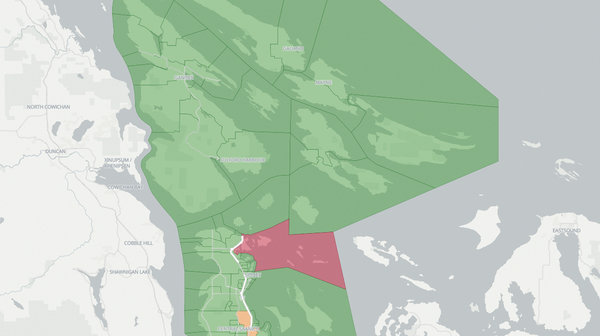
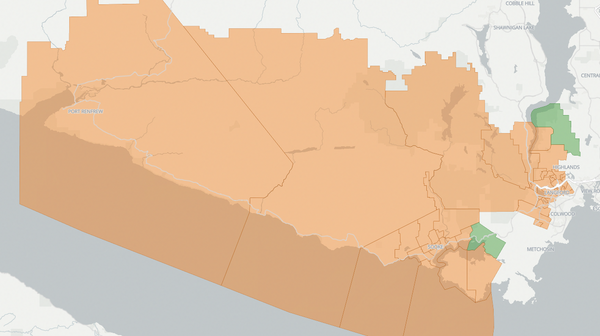
Victoria-Swan Lake — 2020 British Columbia Provincial Election Results Map
Victoria-Swan Lake — 2020 Election Results
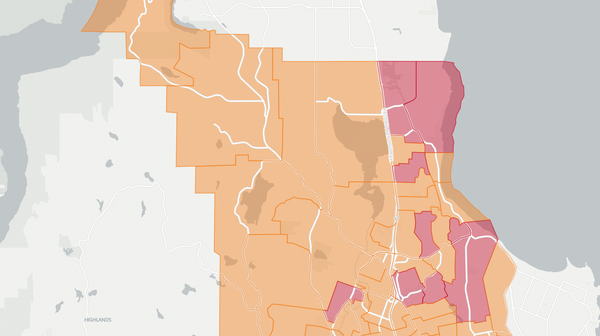
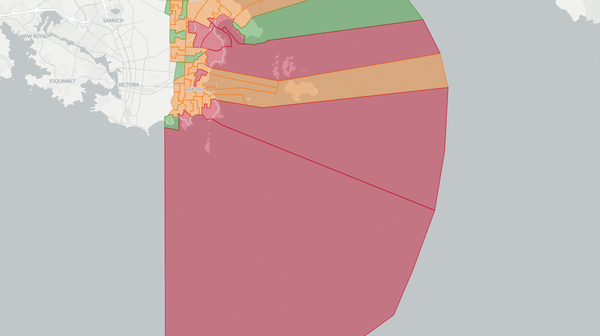
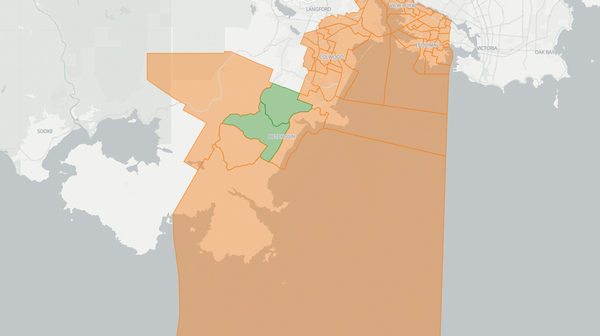
Poll-by-poll results for Victoria-Swan Lake in the 2020 British Columbia election. The BC NDP candidate won this riding. Explore detailed voting data, candidate results, and turnout statistics at the poll level.
Riding information
Auto generated. Flag an issue.Victoria-Swan Lake
Victoria-Swan Lake makes up the northern portions of the city of Victoria and the southern portions of Saanich. It includes the neighbourhoods of Hillside-Quadra, Fernwood, Oaklands, and Burnside-Gorge on the Victoria side, and Tillicum, Uptown, and parts of Quadra-Cedar Hill in Saanich. The riding centres on a mix of older residential streets, small commercial nodes, and the Swan Lake Christmas Hill Nature Sanctuary, a 57-hectare protected wetland in the heart of the district. Demographically, it is a younger, more progressive-leaning riding than the capital region average, with a strong population of renters, artists, and public-sector workers in its Fernwood and Hillside-Quadra core.
Victoria-Swan Lake has been one of the NDP's most reliable seats on Vancouver Island, returning the party's candidate in every election since the riding was created. The NDP incumbent had held the seat since 2005 and won comfortably in each cycle. In 2020, the main question was whether the BC Greens, who had been steadily gaining ground in capital-region ridings and had come second here in recent elections, could mount a serious challenge.
Candidates
Rob Fleming (BC NDP) — Fleming served on Victoria city council from 1999 to 2005, chairing the city's finance committee and representing Victoria at the Capital Regional District. First elected to the Legislature in 2005, he served as the NDP's education critic before being named Minister of Education in 2017. His tenure was defined by two major undertakings: implementing the Supreme Court of Canada's 2016 ruling requiring the province to restore class size and composition provisions stripped from teachers' contracts in 2002, and managing the unprecedented disruption of in-class learning caused by COVID-19. Under his leadership, the province hired thousands of new teachers and specialist staff to comply with the court ruling and suspended in-person instruction in March 2020 in response to the pandemic.
Annemieke Holthuis (BC Green Party) — Holthuis was a lawyer who had spent 30 years in the federal civil service as a legal advisor to the Government of Canada on human rights and criminal law reform before retiring in 2020. She was part of an all-women slate of BC Green candidates nominated across South Island ridings by new party leader Sonia Furstenau.
David Somerville (BC Liberal Party) — Somerville was a legislative assistant for Liberal MLAs and a party activist. He campaigned on affordability, criticizing the NDP for cancelling a promised $400 renter's rebate and for rising ICBC rates.
Jenn Smith ran as an Independent, and Walt Parsons ran for the Communist Party of BC.
Local Issues
Education dominated the political conversation in a riding represented by the Minister of Education. The implementation of the Supreme Court ruling on class size and composition required the hiring of thousands of new teachers and specialist staff across the province through the Classroom Enhancement Fund, and Fleming spent his first year as minister meeting with all 60 school board chairs to assess where districts were falling short. Some districts adapted smoothly while others — particularly those in high-cost urban centres — struggled to recruit enough qualified teachers to fill the restored positions. The BC Teachers' Federation and the government clashed during contract negotiations in 2019 and 2020, with the union arguing that the government was attempting to water down the restored provisions. The arrival of COVID-19 added a further dimension, as parents, teachers, and administrators grappled with remote learning logistics, health and safety protocols for partial school reopening in June 2020, and the academic and social costs of months of disrupted instruction for students across the capital region.
Homelessness and the opioid crisis became increasingly visible in the riding during the NDP's term. Encampments appeared along Burnside Road and in parks across the capital region, and the tent city phenomenon that culminated in the Beacon Hill Park encampment in the neighbouring riding had spillover effects in Victoria-Swan Lake. The NDP government had pledged a ten-year housing plan and invested in modular and supportive housing projects, but residents in Hillside-Quadra and Fernwood felt the pace of construction was not keeping up with the growing population of people experiencing homelessness. The opioid crisis — which claimed lives at rates among the highest outside Metro Vancouver — compounded the challenge, with community members calling for more treatment beds, mental health outreach workers, and a comprehensive continuum of care that went beyond emergency shelters and harm reduction to include long-term recovery and supportive housing.
Housing affordability had worsened significantly since 2017 in both the ownership and rental markets. Benchmark home prices in parts of the riding continued to rise, and Victoria's vacancy rate remained among the lowest in Canada, hovering around one per cent. Young residents and service-sector workers in Fernwood and Hillside-Quadra expressed frustration at being priced out of the neighbourhoods where they worked and had built community ties. The NDP's legislative changes — tying rent increases to inflation, banning the fixed-term lease loophole, and introducing penalties for bad-faith evictions — provided some stability for existing tenants. But these measures did little to increase the overall supply of affordable rental units, and the gap between average rents and service-sector wages continued to widen.
The riding's environmental constituency, which overlapped significantly with the Green Party's base, focused attention on urban ecology and climate action during the 2017–2020 term. The Swan Lake Christmas Hill Nature Sanctuary, a 57-hectare protected wetland in the heart of the riding, served as both a community gathering space and a symbol of the tension between urban growth and environmental stewardship. Residents advocated for stronger watershed protection, expanded urban tree canopy targets, and more ambitious provincial climate policy. The NDP government's CleanBC plan, released in December 2018, set targets for emissions reductions across transportation, buildings, and industry, but environmental advocates argued the plan lacked enforceable interim milestones and relied too heavily on voluntary measures.