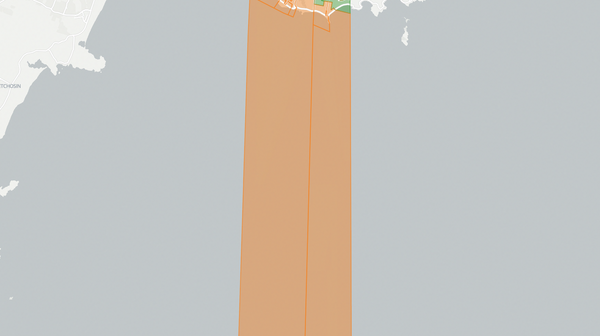
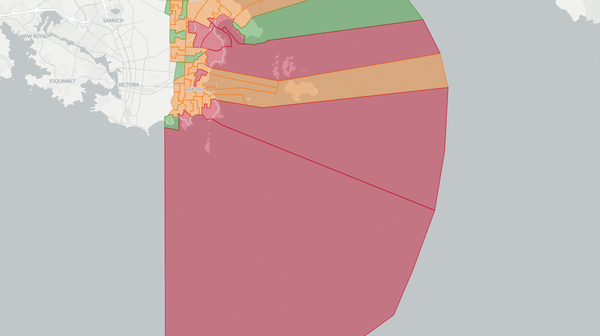
Langford-Juan de Fuca — 2020 British Columbia Provincial Election Results Map
Langford-Juan de Fuca — 2020 Election Results
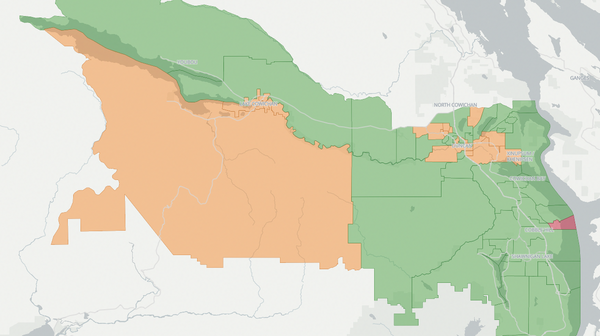
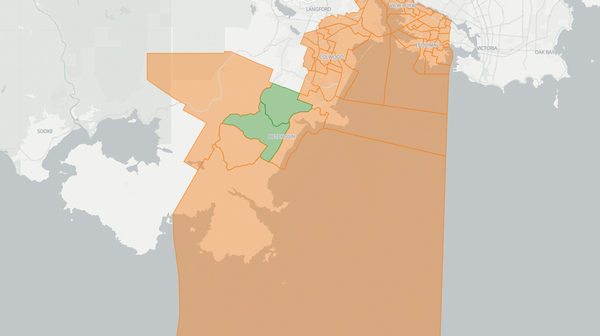
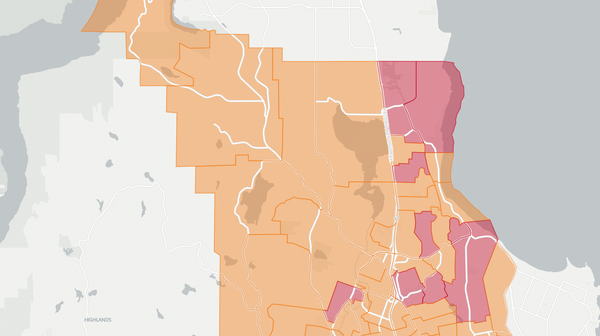
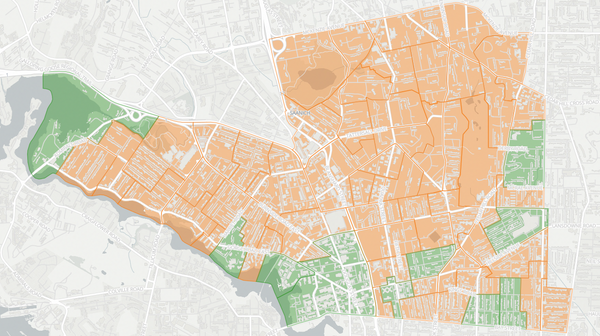
Poll-by-poll results for Langford-Juan de Fuca in the 2020 British Columbia election. The BC NDP candidate won this riding. Explore detailed voting data, candidate results, and turnout statistics at the poll level.
Riding information
Auto generated. Flag an issue.Langford—Juan de Fuca
Langford—Juan de Fuca sits on the western edge of Greater Victoria, stretching from the rapidly growing City of Langford through Colwood and out to the more rural community of Sooke along the southern coast of Vancouver Island. Langford had become one of the fastest-growing municipalities in British Columbia, with a 5.2 percent annual growth rate as of 2019—the highest in the province. New residential subdivisions had replaced the semi-rural landscape of a generation earlier, and roughly one-third of all new housing built in Greater Victoria was going up in Langford. The riding's economic life is defined by this growth, along with commuter traffic into downtown Victoria and the public-sector employment that anchors the capital region.
The NDP had held the riding since 2005, and it was considered a safe seat heading into 2020. The snap election called during the COVID-19 pandemic put NDP incumbent and Premier John Horgan before voters in his home riding, where the contest was not seriously competitive.
Candidates
John Horgan (BC NDP) — Horgan was the incumbent MLA, Premier of British Columbia, and leader of the BC NDP. He held a bachelor's degree from Trent University and a master's degree in history from the University of Sydney. Before entering politics, he served as chief of staff to Premier Dan Miller and as associate deputy minister in the Ministry of Finance. He had represented the riding since 2005 and led the NDP to a minority government in 2017 through a confidence-and-supply agreement with the BC Greens.
Gord Baird (BC Green Party) — Baird was a Highlands councillor in his second term and the co-creator of Eco-Sense, a sustainable living project that included a seismically engineered cob house with solar power, rainwater harvesting, composting toilets, and a living roof. His campaign focused on basic income, small business support through COVID-19, and sustainable transportation.
Kelly Darwin (BC Liberal Party) — Darwin was a Langford small business owner and co-host of the Westshore Business Podcast. He served on the board of directors of the WestShore Chamber of Commerce, where he had been elected second vice-president in 2016 and re-elected in 2018. His campaign centred on support for small businesses struggling through the pandemic.
Tyson Riel Strandlund ran for the Communist Party of BC, receiving minor support.
Local Issues
Transportation remained the defining local frustration, and Langford's explosive growth had made the problem materially worse since 2017. The so-called Colwood Crawl—severe rush-hour congestion on Highway 1 and the arterial routes connecting Langford and Colwood to Greater Victoria—affected up to 85,000 vehicles daily on the bottleneck stretch, with traffic expected to increase as thousands of new residents arrived each year. The NDP government had funded incremental interchange upgrades, and BC Transit planned a Westshore RapidBus line with a goal of ten-minute frequency connecting Langford to Victoria. But residents argued that a more transformative solution was overdue. The E&N rail corridor—a disused fifteen-kilometre right-of-way between Westhills in Langford and Vic West—had been studied as a commuter rail route, with West Shore mayors pushing hard for the concept. Trains had stopped running on the corridor in 2011, and the province assembled a working group to complete a business case, but by October 2020 no firm commitment to rail service had materialized.
Health care access was a growing concern, particularly for the rapidly expanding population at the western end of the riding. Sooke still lacked an urgent care facility, and residents relied on the Westshore Urgent Primary Care Centre in Langford—thirty minutes away—for same-day medical needs. The province had committed to a new integrated health-care centre in Sooke, but construction had not begun by election day. The pandemic underscored the fragility of the region's health infrastructure, as the Capital Regional District managed COVID-19 testing and contact tracing across a population that had grown far faster than the health system's capacity. Family physician shortages across Greater Victoria meant that thousands of residents lacked a regular doctor, and walk-in clinic waits stretched for hours.
Affordability, despite Langford's reputation as a more affordable alternative to the City of Victoria, was eroding. The city's aggressive approach to development under longtime mayor Stew Young had attracted young families seeking housing within commuting distance of the capital, but prices had climbed steadily as demand outstripped even Langford's rapid building pace. The NDP government pointed to its elimination of MSP premiums, its childcare investments, and the removal of bridge tolls as affordability measures, but the cost of living on southern Vancouver Island remained a concern for working families.
School District 62 Sooke—which served Langford, Colwood, Sooke, and surrounding communities—was under pressure from the population surge. Two new state-of-the-art secondary schools, Belmont and Royal Bay, had opened in 2015, but enrolment growth continued to outpace construction timelines. The broader question of whether community amenities—parks, recreation centres, community services—were keeping up with the pace of residential development was a recurring concern at the doors, as longtime residents watched the landscape of their community transform year by year.