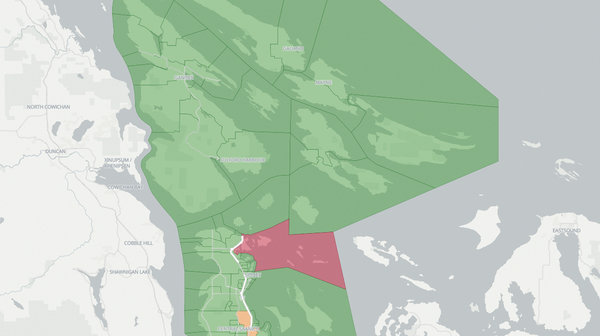
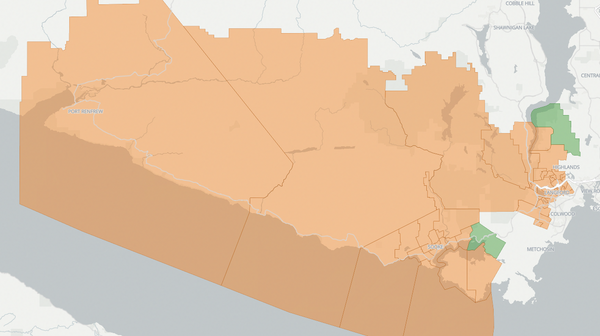
Saanich South — 2020 British Columbia Provincial Election Results Map
Saanich South — 2020 Election Results
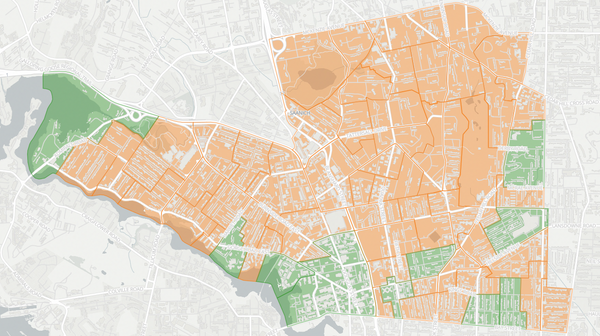
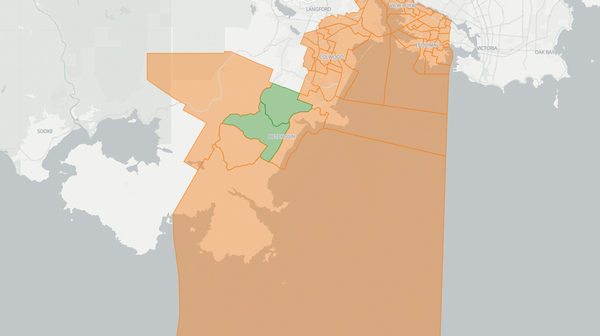
Poll-by-poll results for Saanich South in the 2020 British Columbia election. The BC NDP candidate won this riding. Explore detailed voting data, candidate results, and turnout statistics at the poll level.
Riding information
Auto generated. Flag an issue.Saanich South
Saanich South straddles the boundary between suburban Greater Victoria and the rural Saanich Peninsula, mixing established neighbourhoods like Cordova Bay, Broadmead, and Royal Oak with the agricultural parcels and greenhouses that line Blenkinsop Road and the Blenkinsop Valley. This urban-rural blend has historically required candidates to speak to both transit commuters heading into downtown Victoria and working farmers seeking protection for the Agricultural Land Reserve.
The NDP had held the riding in every election since 1991 except for the BC Liberal landslide of 2001, and by 2020 the seat was considered safely in the NDP column. The riding's defining policy tension — between suburban development pressure and agricultural land preservation — had been at the centre of provincial politics during the 2017-2020 term, giving the contest added significance despite its relatively predictable outcome.
Candidates
Lana Popham (BC NDP) — Originally from Saskatchewan and raised on Quadra Island, Popham held a Bachelor of Arts in Geography from the University of British Columbia. She and her family founded Barking Dog Vineyard in 1997, which became the first certified organic vineyard on Vancouver Island in 2000. As Minister of Agriculture from 2017 to 2020, she led legislative changes to the Agricultural Land Commission Act that strengthened protections for the Agricultural Land Reserve. She had won three previous elections in the riding by varying margins.
Rishi Sharma (BC Liberal Party) — A project manager with the BC Construction Association's Builders Code program, Sharma was on secondment from the Ministry of Advanced Education, Skills and Training, where he had served in various capacities including Director of Corporate Services and Intergovernmental Relations. The 2020 race was his second provincial campaign in the riding, having also run for the Liberals in Saanich South in 2013.
Kate O'Connor (BC Green Party) — At eighteen years old, O'Connor was the youngest candidate in the 2020 provincial election and among the youngest to ever run for the BC legislature. A recent graduate of St. Michaels University School who had turned eighteen just fifteen days before election day, she had taken a gap year from her plans to study politics, philosophy, and economics at the University of Toronto in order to run. She had volunteered with the Green Party and most recently worked on leader Sonia Furstenau's campaign.
Local Issues
Popham's tenure as Minister of Agriculture from 2017 to 2020 placed the riding's defining land use issue — the future of the Agricultural Land Reserve — at the centre of provincial policy. In 2018, she introduced Bill 52, which restored the ALR to a single zone across British Columbia, reversing the previous government's two-zone system that had allowed weaker protections for agricultural land outside the Lower Mainland and Vancouver Island. In 2019, Bill 15 strengthened the independence of the Agricultural Land Commission itself, reinforcing its mandate to preserve farmland and resist exclusion applications. For landowners in the Blenkinsop Valley, these legislative changes drew sharp lines: farming advocates welcomed the stronger protections, while some property owners who had hoped for greater flexibility to develop non-agricultural uses on their land saw the reforms as overly restrictive.
The completion of the McKenzie interchange project marked a significant infrastructure milestone for the riding. The $96-million grade-separated interchange at the junction of Highway 1 and Highway 17 — the Trans-Canada and Patricia Bay highways — reached substantial completion in December 2019, when free-flow traffic opened on the Trans-Canada beneath the new overpass. The project, jointly funded by the federal and provincial governments, addressed what had been rated the worst traffic bottleneck in the province outside the Lower Mainland. For Saanich South commuters, the improvement eased congestion at the riding's southern edge, but residents continued to press for safety improvements at other intersections along the Highway 17 corridor farther north, where collision rates at at-grade crossings remained elevated.
The District of Saanich's declaration of a climate emergency in 2019 and adoption of its 2020 Climate Plan — targeting one hundred per cent renewable energy and a resilient community — reflected the environmental priorities of many Saanich South voters. The plan called for significant reductions in transportation emissions and building energy use, goals that intersected with ongoing debates about housing density, transit service, and the protection of green space within the riding. The NDP's CleanBC plan, released in December 2018, set province-wide emissions targets and introduced incentives for electric vehicles and building retrofits, but critics — particularly Green supporters — argued the plan lacked enforceable timelines and fell short of what the climate science demanded.
The COVID-19 pandemic raised heightened concerns about seniors' care in a riding with an aging population. Reports of outbreaks in long-term care facilities across British Columbia focused public attention on staffing levels, infection control protocols, and the reliance on part-time workers who moved between multiple care homes. British Columbia recorded over 1,700 illicit drug toxicity deaths in 2020 — a seventy-four per cent increase over 2019 — and the crisis touched communities across the Capital Regional District, generating discussion about the need for treatment beds and community-based mental health services even in suburban ridings like Saanich South.