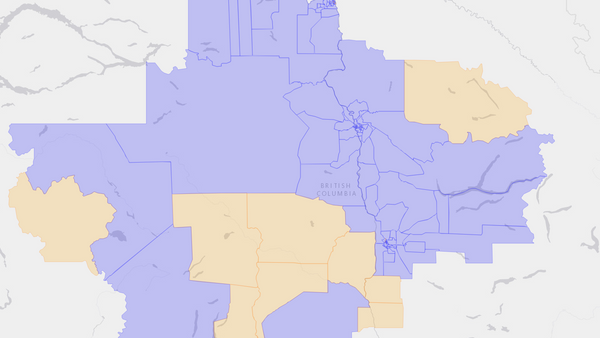
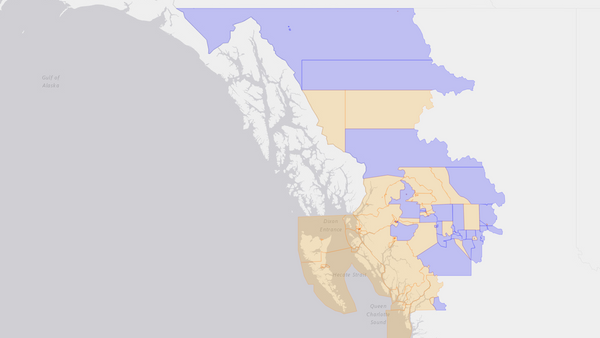
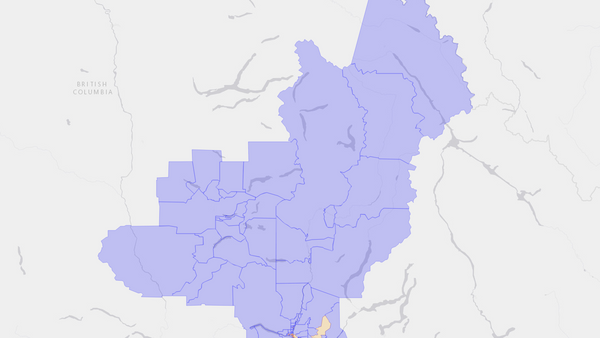
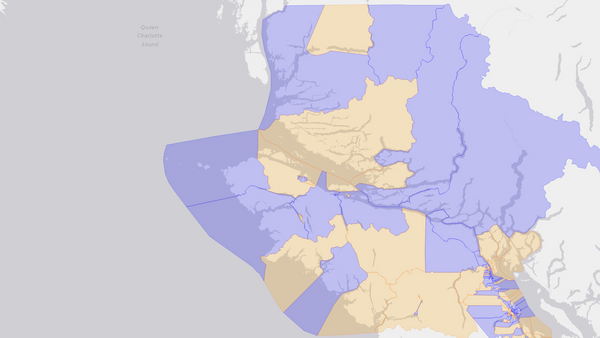
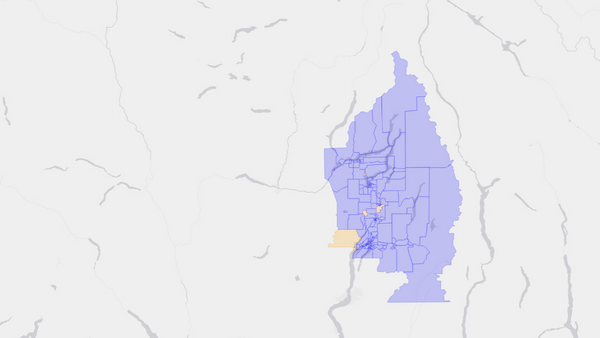
Prince George—Peace River, BC — 2011 Federal Election Results Map
Prince George—Peace River — 2011 Election Results
📌 The Canadian federal electoral district of Prince George—Peace River was contested in the 2011 election.
🏆 Bob Zimmer, the Conservative candidate, won the riding with 23,432 votes (61.6% of the vote).
🥈 The runner-up was Lois Boone (NDP-New Democratic Party) with 9,876 votes (26.0%), defeated by a margin of 13,556 votes.
📊 Other notable candidates: Hilary Crowley (Green Party, 6%) and Ben Levine (Liberal, 5%).
Riding information
Auto generated. Flag an issue.Prince George—Peace River
Prince George—Peace River was one of the largest federal electoral districts in Canada, spanning the vast northern interior and Peace River region of British Columbia. The riding stretched from the northern half of Prince George eastward across the Rocky Mountains to the Alberta border, encompassing the oil-and-gas hub of Fort St. John, the agricultural centre of Dawson Creek, the mining town of Tumbler Ridge, and the remote community of Fort Nelson. This immense territory covered hundreds of thousands of square kilometres of boreal forest, mountain passes, and river valleys.
Candidates
Bob Zimmer (Conservative) — Born on October 20, 1968, in Dawson Creek, Zimmer grew up in nearby Fort St. John. After graduating from North Peace Secondary School in 1986, he worked as a welder's assistant in the oil industry before training as a journeyman carpenter through Northern Lights College and operating a small construction business. He later attended Trinity Western University, where he coached varsity rugby and earned a degree in Human Kinetics, then completed a teaching degree at the University of British Columbia. Zimmer taught for seven years in Fort St. John before winning the Conservative nomination in a competitive sixth-round preferential ballot after long-time MP Jay Hill announced his retirement. Zimmer won the 2011 general election with approximately 62 percent of the vote.
Lois Boone (NDP) — Boone was a former BC NDP provincial politician who had represented Prince George North from 1986 to 1991 and Prince George-Mount Robson from 1991 to 2001, serving as a cabinet minister during the NDP's time in government. She brought deep knowledge of northern issues and government experience to her federal campaign. Boone finished second but was unable to overcome the Conservative advantage in the resource-dependent riding.
Hilary Crowley (Green Party) — Crowley was a physiotherapist based in the Prince George area who ran as the Green Party candidate, focusing on environmental stewardship and sustainable development in the north.
Ben Levine (Liberal) — Levine was a Prince George lawyer who carried the Liberal banner in a riding where the party had minimal support. The Liberal campaign focused on national themes but struggled for traction in northern BC.
Jeremy Coté (Pirate Party) — Coté represented the Pirate Party of Canada, a minor party focused on digital rights, copyright reform, and internet freedom.
About the Riding
Prince George—Peace River was defined by resource extraction. The Peace River region in the riding's eastern half was the centre of British Columbia's oil and natural gas industry, with Fort St. John serving as the operational hub for exploration and drilling activity across the vast northeastern fields. The area had experienced an energy boom in the years leading up to 2011, with shale gas development in the Montney and Horn River formations attracting billions of dollars in investment and creating thousands of jobs. Dawson Creek, the southern terminus of the Alaska Highway, served as a supply centre for the energy sector alongside its traditional agricultural base in the Peace River grain belt.
Prince George, the largest city in northern BC, anchored the riding's western portion. The city was a major forestry centre with numerous sawmills and pulp mills, though the industry had been battered by the mountain pine beetle epidemic that had devastated millions of hectares of lodgepole pine forest across the interior. The University of Northern British Columbia, in the neighbouring riding of Cariboo—Prince George, was a significant regional employer and research institution. Tumbler Ridge, in the Rocky Mountain foothills, depended on coal mining operations that had experienced cycles of boom and bust.
The riding's political culture was firmly conservative, shaped by the priorities of resource workers, farmers, and small business owners who valued limited government regulation, lower taxes, and the development of natural resources. Jay Hill, the outgoing Conservative MP, had served as a government whip and junior minister, and his retirement opened the door for Bob Zimmer to carry forward the Conservative tradition. The 2011 election was not competitive in the riding, with Zimmer's margin of victory reflecting both the strong local Conservative brand and the national momentum of the Harper majority.
Despite the NDP's historic national gains in 2011, the Orange Wave barely registered in Prince George—Peace River. Lois Boone's provincial political experience and northern credentials made her the strongest opposition candidate, but the riding's resource-based economy and culturally conservative electorate remained firmly aligned with the Conservative platform of energy development, lower corporate taxes, and tough-on-crime legislation.