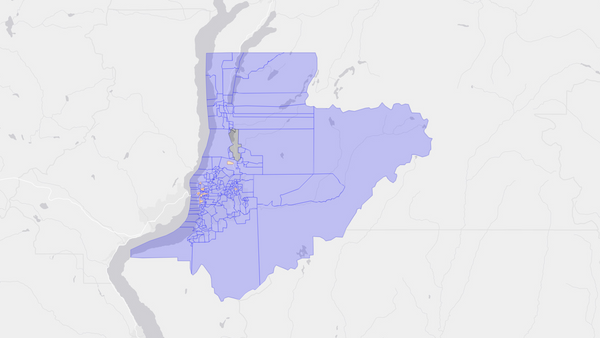
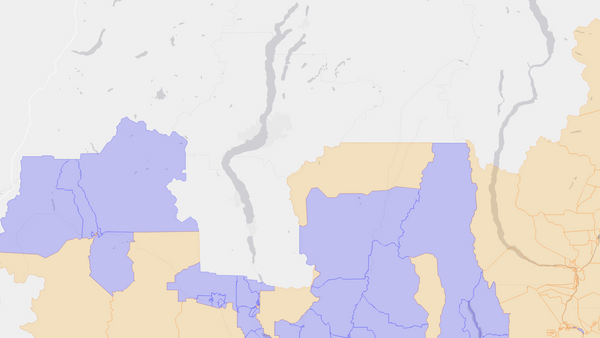
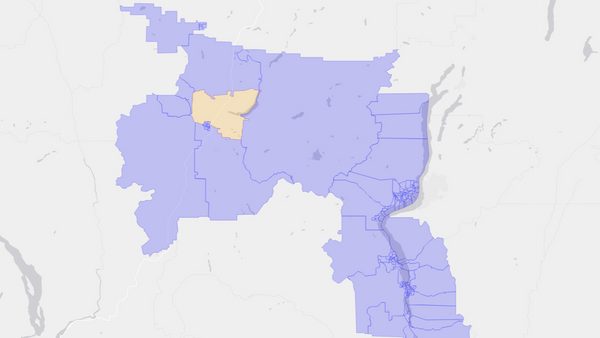
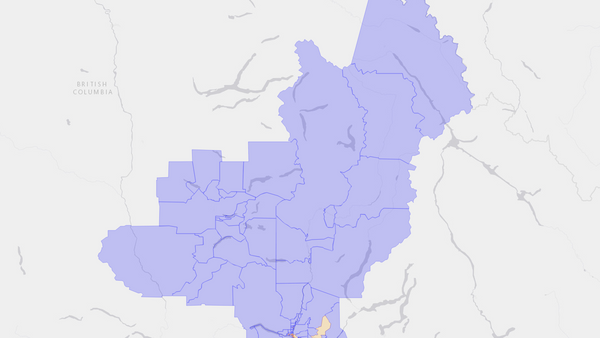
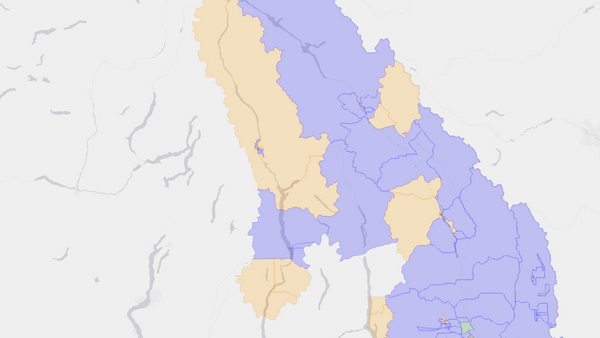
Okanagan—Shuswap, BC — 2011 Federal Election Results Map
Okanagan—Shuswap — 2011 Election Results
📌 The Canadian federal electoral district of Okanagan—Shuswap was contested in the 2011 election.
🏆 Colin Mayes, the Conservative candidate, won the riding with 31,439 votes (55.4% of the vote).
🥈 The runner-up was Nikki Inouye (NDP-New Democratic Party) with 14,955 votes (26.4%), defeated by a margin of 16,484 votes.
📊 Other notable candidates: Greig Crockett (Green Party, 11%) and Janna Francis (Liberal, 7%).
Riding information
Auto generated. Flag an issue.Okanagan—Shuswap
Okanagan—Shuswap was a large interior British Columbia riding that spanned the northern Okanagan Valley and the Shuswap region, taking in the cities of Vernon and Salmon Arm along with the communities of Armstrong, Enderby, Lumby, Coldstream, and Sicamous. The riding sat at the juncture of the Okanagan and Shuswap watersheds, encompassing vineyards and orchards in the south, cattle ranches in the rolling highlands, and the vast lake systems of the Shuswap that drew houseboaters and vacationers each summer.
Candidates
Colin Mayes (Conservative)* — Mayes was born on April 11, 1948, in New Westminster, British Columbia. Before entering federal politics he ran a trucking enterprise in the Yukon, owned a grocery store, and worked in business development. He served as mayor of Dawson City, Yukon, and then as mayor of Salmon Arm for nine years. First elected to Parliament in 2006 as the Conservative MP for Okanagan—Shuswap, he was re-elected in 2008 and won a third term in 2011 with approximately 55 percent of the vote. He chaired the Standing Committee on Aboriginal Affairs and Northern Development.
Nikki Inouye (NDP) — Inouye ran as the NDP candidate and finished second, approximately 29 percentage points behind Mayes. Despite the large margin, she expressed satisfaction that the NDP had become the official opposition nationally and noted that overcoming the Conservative stronghold in the Okanagan was her most significant challenge.
Greig Crockett (Green Party) — Crockett ran as the Green Party candidate in Okanagan—Shuswap.
Janna Francis (Liberal) — Francis was the Liberal candidate in a riding where Liberal support had been minimal for several election cycles.
About the Riding
Okanagan—Shuswap was defined by its interior geography, warm-summer climate, and resource-based economy. Vernon, the riding’s largest city with a population of approximately 38,000, served as a regional commercial and health care hub. Salmon Arm, at the head of Shuswap Lake, anchored the eastern portion of the riding and was a centre for agriculture, forestry, and tourism. The region boasted some of Canada’s sunniest weather, attracting both tourists and retirees.
The economy rested on several pillars: agriculture, including orchards, vineyards, and cattle ranching; forestry and sawmill operations; tourism centred on the lakes, ski hills like Silver Star Mountain Resort, and the Okanagan wine country; and a growing retirement and service economy. Retail trade, health care, and construction were among the largest employment sectors. The region’s wine industry had expanded significantly since the 1990s, adding agri-tourism wineries and cideries to the economic mix.
Demographically, the riding was predominantly English-speaking, with German as the most common non-official mother tongue. About 90 percent of the population reported English as their first language. The Indigenous population, largely Secwepemc and Syilx peoples, made up approximately eight percent of residents. The riding had a notably older population than the provincial average, with retirees drawn by the climate, affordability compared to the Lower Mainland, and outdoor recreation opportunities.
Politically, Okanagan—Shuswap was one of the safest Conservative seats in British Columbia. The riding and its predecessors had voted for right-of-centre candidates consistently since the Reform Party era of the 1990s. Mayes’s comfortable margins in three consecutive elections reflected a deeply conservative electorate that valued fiscal discipline, resource development, and traditional values. The NDP finished as a distant second, drawing limited support from Vernon’s service-sector workers and the smaller union presence in the region, while the Liberals and Greens were marginal forces in the riding.