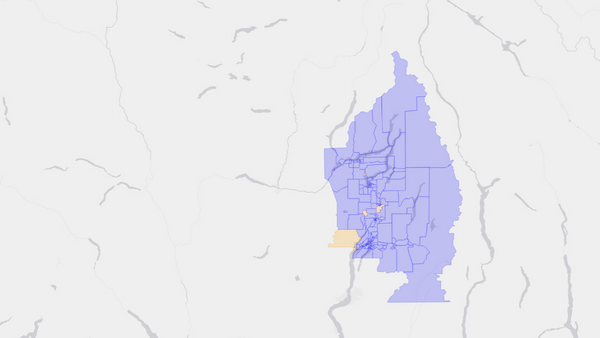
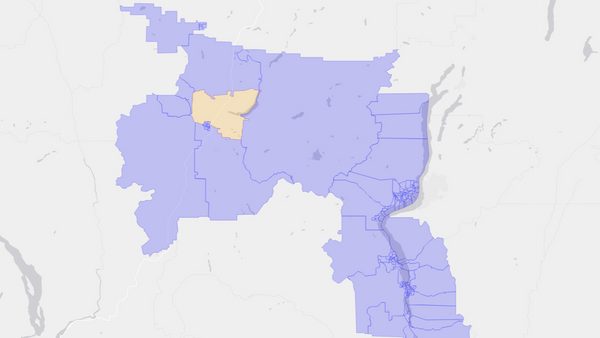
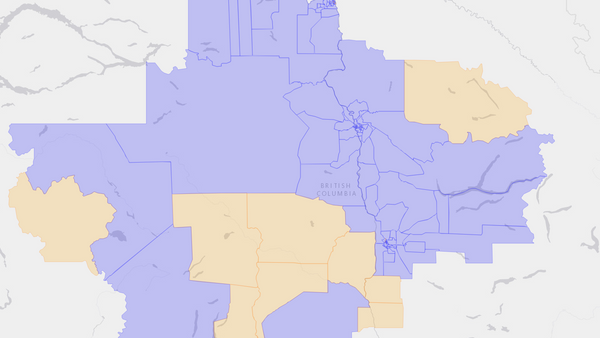
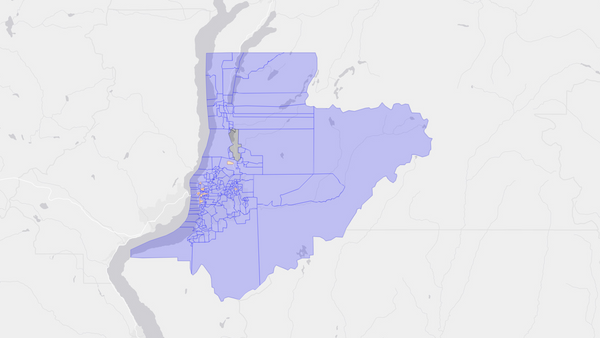
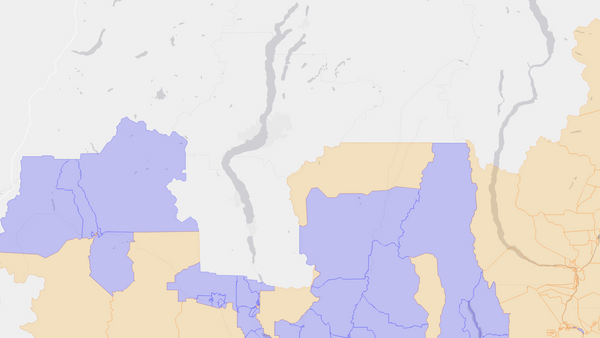
Kamloops—Thompson—Cariboo, BC — 2011 Federal Election Results Map
Kamloops—Thompson—Cariboo — 2011 Election Results
📌 The Canadian federal electoral district of Kamloops—Thompson—Cariboo was contested in the 2011 election.
🏆 Cathy McLeod, the Conservative candidate, won the riding with 29,682 votes (52.3% of the vote).
🥈 The runner-up was Michael David Crawford (NDP-New Democratic Party) with 20,983 votes (37.0%), defeated by a margin of 8,699 votes.
📊 Other notable candidates: Murray Todd (Liberal, 5%) and Donovan Michael Cavers (Green Party, 5%).
Riding information
Auto generated. Flag an issue.Kamloops—Thompson—Cariboo
Kamloops—Thompson—Cariboo is a vast federal riding in the interior of British Columbia, centred on the city of Kamloops at the confluence of the North and South Thompson rivers. The riding stretches south through the Thompson Valley and north into the Cariboo plateau, encompassing historic communities like 100 Mile House and 108 Mile Ranch—towns whose names trace back to their distance from Lillooet on the Old Cariboo Road during the gold rush era. The landscape is semi-arid, characterized by grasslands, ponderosa pine forests, and the dramatic river valleys of the rain shadow interior.
Candidates
-
Cathy McLeod (Conservative) — Born in 1957 in Kingston, Ontario, McLeod trained as a registered nurse at the University of Western Ontario in 1981 and later worked in healthcare administration. She served in municipal politics in Pemberton, British Columbia, first as a town councillor from 1993 to 1996 and then as mayor from 1996 to 1999, before relocating to Kamloops. She was first elected to Parliament in the 2008 federal election and was re-elected in 2011 with approximately 52% of the vote. On January 30, 2011, she was appointed Parliamentary Secretary to the Minister of National Revenue.
-
Michael David Crawford (NDP) — Crawford ran for the NDP in Kamloops—Thompson—Cariboo for the third consecutive election in 2011, having finished second in both 2006 and 2008. He was a familiar presence in the riding’s political landscape, and his persistence as a candidate gave him name recognition among voters, though he was unable to close the gap against the Conservative incumbent.
-
Murray Todd (Liberal) — Todd ran as the Liberal candidate in the riding, finishing in a distant third place amid the party’s national collapse. The Liberal brand had limited traction in the interior of British Columbia, where resource-sector workers and ranching communities leaned strongly Conservative.
-
Donovan Michael Cavers (Green Party) — Cavers ran as the Green Party candidate, drawing a small share of the vote in a riding where environmental issues intersected with the resource-based economy.
-
Christopher Kempling (CHP) — Kempling was a former high school teacher and counsellor from Quesnel who became nationally known for his legal battles with the British Columbia College of Teachers after being disciplined for writing letters critical of how homosexuality was presented in the school curriculum. He ran for the Christian Heritage Party and received a small share of the vote.
About the Riding
Kamloops—Thompson—Cariboo is a riding whose economy and identity are rooted in the natural resource industries that have sustained British Columbia’s interior for generations. About three-quarters of the riding’s population lives in Kamloops, a regional hub of approximately 90,000 people that serves as the commercial, healthcare, and educational centre for the Thompson and Cariboo regions. Thompson Rivers University, located in Kamloops, is the area’s major post-secondary institution and a significant employer. Beyond the city, the riding’s smaller communities depend heavily on cattle ranching, forestry, and mining, with copper and gold operations benefiting from the region’s rich mineral deposits.
The riding’s demographics are relatively homogeneous compared to the Lower Mainland. Less than 10% of residents are immigrants, with the largest immigrant populations originating from the United Kingdom and the United States. The median age is approximately 44, slightly older than the provincial average. First Nations communities, including the Tk’emlups te Secwepemc and other Secwepemc bands, have a significant historical and contemporary presence in the region, with reserves and cultural sites throughout the Thompson Valley.
By 2011, the riding was dealing with many of the same resource-sector challenges facing other interior ridings. The mountain pine beetle epidemic had devastated lodgepole pine forests across the Cariboo and Thompson regions, threatening sawmills and the communities that depended on them. Kamloops had benefited from federal infrastructure investments, including an airport expansion funded through the Mountain Pine Beetle Initiative. Ranching continued to be a way of life in the valley, though drought and water management were growing concerns in the semi-arid landscape.
Politically, the riding leaned strongly Conservative, and McLeod’s comfortable 2011 victory reflected the alignment between the party’s platform and the riding’s priorities—resource development, low taxes, and limited government intervention. The NDP’s national Orange Wave had little impact in the Thompson–Cariboo region, and the Liberal and Green candidates were marginal factors. McLeod would go on to serve the riding until her retirement in 2021, building a reputation as a reliable voice for interior British Columbia in Ottawa.