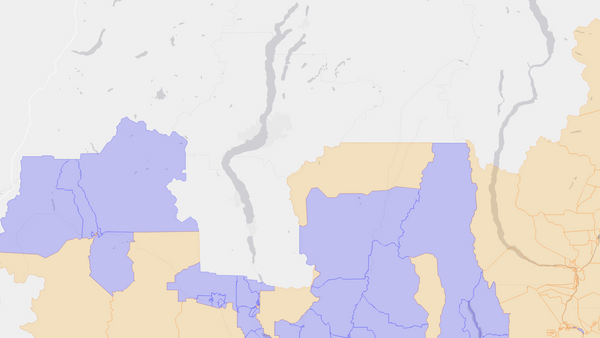
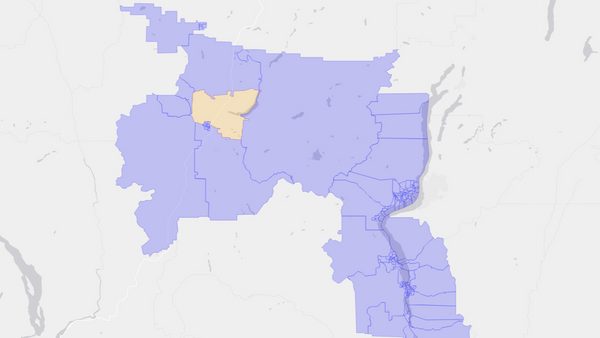
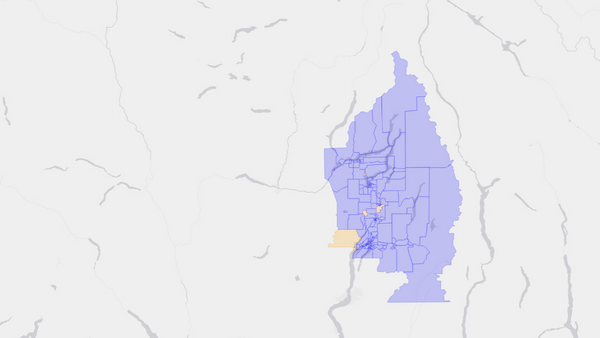
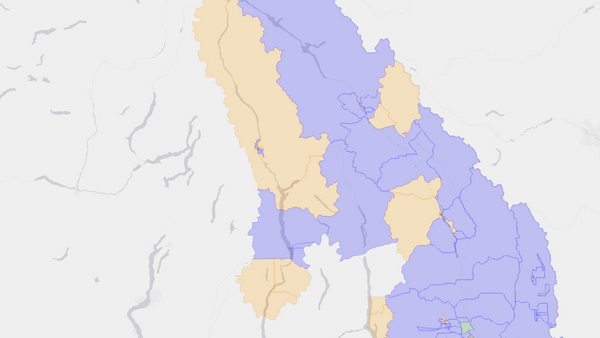
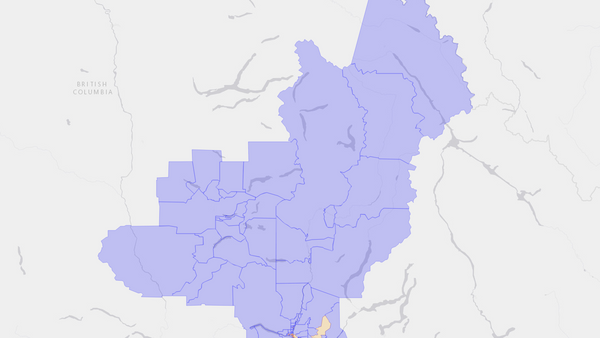
Kelowna—Lake Country, BC — 2011 Federal Election Results Map
Kelowna—Lake Country — 2011 Election Results
📌 The Canadian federal electoral district of Kelowna—Lake Country was contested in the 2011 election.
🏆 Ron Cannan, the Conservative candidate, won the riding with 34,566 votes (57.6% of the vote).
🥈 The runner-up was Tisha Kalmanovitch (NDP-New Democratic Party) with 13,322 votes (22.2%), defeated by a margin of 21,244 votes.
📊 Other notable candidates: Kris Stewart (Liberal, 11%) and Alice Hooper (Green Party, 9%).
Riding information
Auto generated. Flag an issue.Kelowna—Lake Country
Kelowna—Lake Country is a federal riding in the heart of British Columbia’s Okanagan Valley, centred on the city of Kelowna on the shores of Okanagan Lake and extending northward to encompass the fast-growing District of Lake Country. The riding occupies a landscape of stunning natural beauty—a semi-arid valley carved by glaciers, framed by mountains, and blessed with the warm climate that has made the Okanagan one of Canada’s premier wine regions and tourist destinations. Kelowna is the largest city in the valley and the province’s third-largest metropolitan area.
Candidates
-
Ron Cannan (Conservative) — Born in 1961 in Edmonton, Alberta, Cannan moved to Kelowna in 1990 and worked in marketing and advertising sales before entering politics. He was first elected to Kelowna City Council in 1996 and served three consecutive terms—nine years in total—before winning the Conservative Party nomination for Kelowna—Lake Country in 2005. He was elected to Parliament in 2006 with 49% of the vote and re-elected in 2008 and 2011, capturing approximately 58% of the vote in the latter contest. He served on the Treasury Board Sub-Committee on Government Administration and was appointed to the Queen’s Privy Council for Canada.
-
Tisha Kalmanovitch (NDP) — Kalmanovitch ran as the NDP candidate in Kelowna—Lake Country, finishing second with approximately 21% of the vote. Her result, while a distant second to Cannan, represented the NDP’s best showing in recent memory in a riding that had been heavily Conservative, benefiting from the national Orange Wave under Jack Layton.
-
Kris Stewart (Liberal) — Stewart ran as the Liberal candidate, finishing third with approximately 11% of the vote. The Liberal Party’s national collapse was felt sharply in the Okanagan, where the party had already been a minor force in recent elections.
-
Alice Hooper (Green Party) — Hooper was a first-time candidate who ran for the Green Party, receiving approximately 8% of the vote. She was an active campaigner who spoke out on environmental and democratic reform issues during the race.
About the Riding
Kelowna—Lake Country sits at the geographic and economic heart of the Okanagan Valley, one of British Columbia’s most desirable regions for both living and tourism. Kelowna’s economy has evolved far beyond its agricultural roots, with a service sector that dominates employment, complemented by robust construction, technology, and healthcare industries. The city’s tech sector, in particular, was emerging as a significant growth area by 2011, with startups and established firms drawn by the quality of life and relatively lower costs compared to Vancouver. Tourism had become a billion-dollar industry in the greater Kelowna area, driven by the valley’s world-renowned wineries—over 40 within a 20-minute drive of the city—along with golf courses, beaches, and ski resorts.
Agriculture remained a cornerstone of the local economy, particularly in Lake Country, where nearly half the land was within the Provincial Agricultural Land Reserve. The region’s orchards produced cherries, apples, pears, and peaches, while the vineyards that had transformed the landscape since the 1990s produced internationally recognized wines. Lake Country was one of British Columbia’s fastest-growing municipalities, attracting families and retirees drawn by the rural character, lakefront living, and proximity to Kelowna’s urban amenities.
Demographically, the riding was predominantly English-speaking and older than the provincial average, with a significant retiree population that had relocated from other parts of Canada to enjoy the Okanagan’s climate. Immigration levels were low compared to the Lower Mainland, with the largest immigrant populations originating from the United Kingdom and northern Europe. The riding’s population was growing steadily, driven by interprovincial migration and the attractiveness of the Okanagan lifestyle.
Politically, Kelowna—Lake Country was one of the safest Conservative ridings in British Columbia. The riding and its predecessors had been represented by right-of-centre MPs since the Reform Party wave of 1993, and the combination of an older, homeowning electorate, a business-friendly economic culture, and socially moderate-to-conservative values made the riding inhospitable territory for the NDP and Liberals alike. Cannan’s 58% share in 2011 was the kind of dominant performance that reflected both the strength of the Conservative brand in the Okanagan and the personal following he had built through nearly a decade on city council and six years as MP. The NDP’s Orange Wave barely registered, and the riding would remain firmly Conservative through the remainder of Cannan’s tenure.