Budget notes

From conversation with some friends in the PPG,
– while detained in budget lockup, someone yelled out regarding CBC Newsworld being shown on the tv: “what’s this s**t? Turn it to TSN!”. The budget document/executive summary was easily consumed in 20 minutes and there was an NHL trade deadline looming.

– budget lockup means no communication with the outside world, so reporters complained of not having Google to check facts, do background, and put together the finer details on a story. One wonders how reporting was done before 1993. But seriously, something could be done about this. Wikipedia, for example, can be downloaded to an iPod (or laptop). Not perfect, but it could help fill in some blanks in background understanding.

– One reporter said to me “I’ve never seen the Liberal government so willing to publicly commit suicide so frequently and willingly”

from conversation with conservatives,
– conservatives are generally happy that the Conservatives have passed their first “conservative budget”. Debt reduction and the new tax-exempt savings account are the headlining items for the movement.

– conservatives are unhappy about the spending increase projected for 3.4% this year. That totals 14.8% government growth under Flaherty (source: CTF). Why can’t we rein-in government growth?

– Guaranteed Income Supplement raised to $3500 should help patch things up with seniors whom have been upset about income trusts, according to Bob Fife and Craig Oliver of CTV. This budget item sounds like creeping socialism. (UPDATE: Oops, that was poorly interpreted. The GIS tax exemption has been raised, encouraging seniors to stay in the workforce.)

– taming the EI beast is a welcome change. Capping EI surpluses and moving towards better fiscal management (and proper allocation) of the fund is long overdue.

– effective communications line of the day was from Stephane Dion’s team which described the budget as “a mile wide and an inch deep”. The line was often repeated on newscasts and in print. It’s a perfect descriptor for Dion to achieve his objective: diminish the significance of the budget and and his subsequent approval of it. It’s also important to note that the Liberals have claimed this to be a “watered down Liberal budget”. Is Harper as Tom Flanagan would put it “triangulating” the Liberals out of relevance? This was first done with the Afghanistan mission, now the budget. Liberals essentially support the Conservatives in coalition without any leverage.

– the NDP is using the Liberal support of the budget to make the argument of Liberal bankruptcy from the left; they argue voters who don’t agree with Harper’s government can oppose it with the NDP. But this isn’t exactly news. What changes will the NDP have to make in order to more effectively challenge the Liberals from the left?

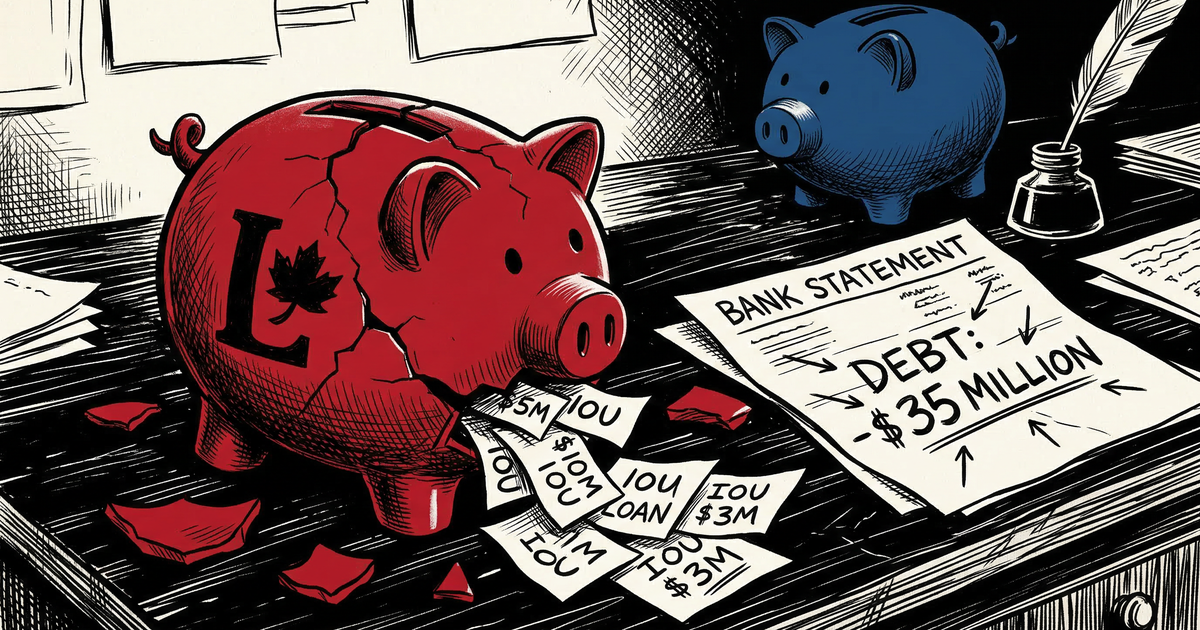
– the only thing sustaining the Liberals is their brand.

Predicting the future
– In the absence of Liberal opposition, will segmented conservative interests in the party and in the movement start leveraging for their own agenda? With slim majorities we see maverick government MPs potentially holding the balance of power subject to their agendas (PM Chretien government with MP Paul Martin). With large majorities we can see whole factions form and break off (as with Reform and the Bloc from the Mulroney government). Harper has the power of majority with the psychology of a minority; the PM can govern on the agenda he chooses because the the prize of a majority is still in sight and this will generally keep maverick MPs and the movement tightly following Harper’s lead so that their agendas can be realized in the future.

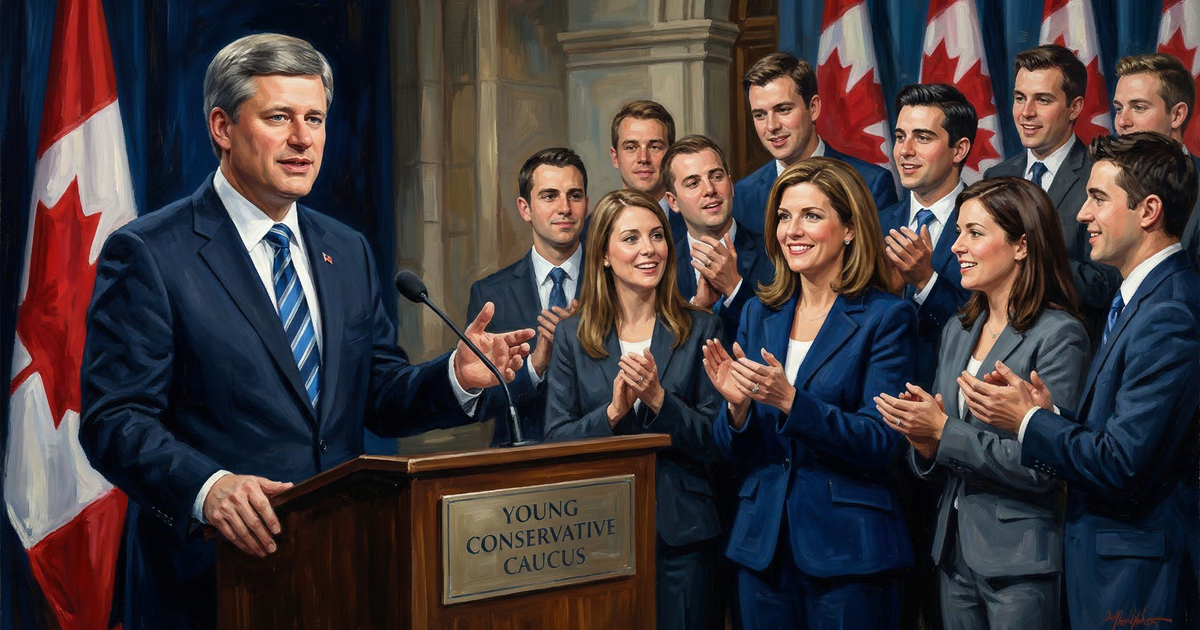
Harper’s now in the sweet spot of governance; he sits opposite a neutered opposition but holds the incentive of untapped potential for his government and its MPs. I’m certain that the Prime Minister would be very satisfied continuing his government under this balance until the fixed election date in fall 2009.

Government’s motion on Afghanistan will split Liberals

The following is text of the government’s motion on extending the mission in Afghanistan. My comments appear between segments of the motion. The key point of contention is Canada’s extended role in the southern Afghan province of Kandahar from 2009-2011.

That, whereas the House recognizes the important contribution and sacrifice of Canadian Forces and Canadian civilian personnel as part of the UN mandated, NATO-led mission deployed in Afghanistan at the request of the democratically elected government of Afghanistan;

This sets the scene and important in the emphasis of the internationalist, multilateral mandate that Canada operates under in Afghanistan. The mission operates with the blessing of the UN, an organization in which most Canadians believes strongly and with which Canada self-identifies when it comes to its foreign policy. The UN mandated mission should be something that Liberals can easily subscribe to, but it’s interesting to note that despite the UN’s acceptance of the mission, the NDP and Bloc take a strict isolationist approach.

whereas, as set out in the Speech from the Throne, the House does not believe that Canada should simply abandon the people of Afghanistan after February 2009; that Canada should build on its accomplishments and shift to accelerate the training of the Afghan army and police so that the government of Afghanistan can defend its own sovereignty and ensure that progress in Afghanistan is not lost and that our international commitments and reputation are upheld;

The Speech from the Throne of course is an important reference point. The government received a mandate from Parliament when the Throne Speech passed in the fall. The Liberals, forming the Official Opposition, passed on judging the government’s proposed mandate and abstained from the vote. The Throne Speech first outlined the government’s intention to extend the mission in Kandahar through 2011. So, what has changed since then?

whereas in February 2002, the government took a decision to deploy 850 troops to Kandahar, the Canadian Forces have served in various capacities and locations in Afghanistan since that time and, on May 17, 2006, the House adopted a motion to support a two year extension of Canada’s deployment in Afghanistan;

whereas the House welcomes the report of the Independent Panel on Canada’s Future Role in Afghanistan, chaired by John Manley, and recognizes the important contribution they have made;

What has changed is that John Manley has released his report. Manley expressed that Canada lost its voice on the international stage but has now regained it. Manley stated that when Canada speaks, the world listens. He cited the former Liberal PM Lester B. Pearson as a source for inspiration and for doing the right thing with respect to Canadian foreign policy.

whereas their Report establishes clearly that security is an essential condition of good governance and lasting development and that, for best effect, all three components of a comprehensive strategy military, diplomatic and development need to reinforce each other;

The report by the former Liberal Minister of Foreign Affairs has stressed the need for a mix of a number of Canadian efforts in Afghanistan (including military).

whereas the government accepts the analysis and recommendations of the Panel and is committed to taking action, including revamping Canada’s reconstruction and development efforts to give priority to direct, bilateral project assistance that addresses the immediate, practical
needs of the Afghan people, especially in Kandahar province, as well as effective multi-year aid commitments with concrete objectives and assessments, and, further, to assert strong Canadian leadership to promote better co-ordination of the overall effort in Afghanistan by the international community, and, Afghan authorities;

The government states, in its motion, that it is following the lead of Mr. Manley. Here the motion stresses aid development and international coordination. All of which should be found acceptable to a majority of Parliament.

whereas the results of progress in Afghanistan, including Canada’s military deployment, will be reviewed in 2011 (by which time the Afghanistan Compact will have concluded) and, in advance, the government will provide to the House an assessment and evaluation of progress, drawing on and consistent with the Panel’s recommendations regarding performance standards, results, benchmarks and timelines; and

Full reporting to Parliament on progress in Afghanistan.

whereas the ultimate aim of Canadian policy is to leave Afghanistan to Afghans, in a country that is better governed, more peaceful and more secure;

How could any MP disagree?

therefore, the House supports the continuation of Canada’s current responsibility for security in Kandahar beyond February 2009, to the end of 2011, in a manner fully consistent with the UN mandate on Afghanistan, but with increasing emphasis on training the Afghan National Security Forces expeditiously to take increasing responsibility for security in Kandahar and Afghanistan as a whole so that, as the Afghan National Security Forces gain capability, Canada’s combat role should be commensurately reduced, on condition that:

Stephane Dion has stated that he wishes Canada’s “combat role” in Kandahar to cease by February 2009. John Manley recommends against this. The House will essentially be voting on the recommendations, or at least within the guidelines of the Manley Report. This motion is not inconsistent with John Manley’s recommendations and the Liberal Party (many of whom have incredible respect for Mr. Manley) will find itself divided on this motion if allowed to vote freely. John Manley and Mr. Harper are framing Canada’s involvement in Afghanistan in a Pearsonian perspective; internationalist intervention in failed states is the right thing to do and consistent with values that Canadians cherish. Mr. Dion faces a tough choice. If he chooses to abstain from voting on this important motion, he loses his credibility on speaking on the most important issue facing Parliament today, Canada’s role in Afghanistan. If Dion whips his caucus into voting against, there will be an open revolt against his leadership. If Dion allows a free vote on the motion, internal divisions within the party will be counted as if a roll call and the public division will emphasize that the Liberal party is only a loose collective of membership card holders waiting for the next leadership review.

(a) Canada secure a partner that will provide a battle group of approximately 1,000 to arrive and be operational no later than February 2009, to expand International Security Assistance Force’s security coverage in Kandahar;

A move entirely consistent with a recommendation from the Manley Report. A realistic move to shift some of the weight to a partnering NATO country.

(b) to better ensure the safety and effectiveness of the Canadian contingent, the government secure medium helicopter lift capacity and high performance Unmanned Aerial Vehicles (UAVs) for intelligence, surveillance, and reconnaissance before February 2009.

This is important for Canada’s success in Afghanistan. UAVs are recommended for road surveillance especially during the night in order to spot and help neutralize Taliban fighters planting IEDs at the sides of roads used by the Canadian military and aid workers.

Layton gives Dion some oxygen

Jim Brown, THE CANADIAN PRESS

OTTAWA – NDP Leader Jack Layton is admitting there are divisions in party ranks about whether to support the next Conservative budget to ensure that $1 billion in promised economic aid flows to the provinces.

Layton has accused Prime Minister Stephen Harper of trying to “blackmail” opposition MPs into supporting the budget, expected next February, by tying it to the aid package.

And with that, the NDP leader signals to Dion that it may just be alright to vote on the budget rather than abstain.

By the way, since when is governance, continuing debate and prompting a party to vote for your policy called political “blackmail”? Is it the default position of the NDP to oppose all moves by the government?

The NDP chief hinted strongly Monday that he’s not willing to play the game, noting that “we have opposed (Harper’s) budgets up until this point because we think he’s taking the country in the wrong direction.”

Too late. Why tip your hand to the Liberals so early?

The Prime Minister is tying promised federal assistance ($) to the budget ($). Opposition parties have called this “political”.

Woo.

Hey, aren’t the U.S. primaries on?