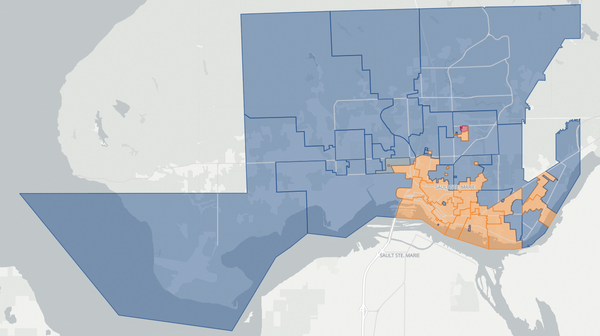
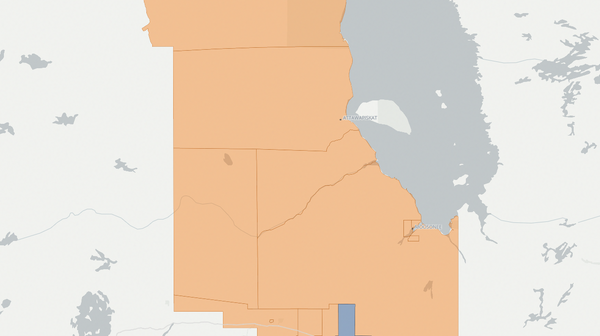
Kenora—Rainy River — 2025 Ontario Provincial Election Results Map
Kenora—Rainy River — 2025 Election Results
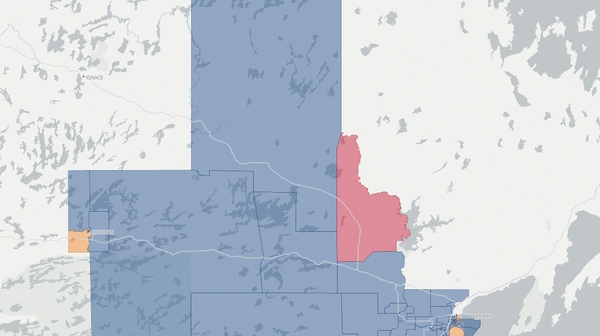
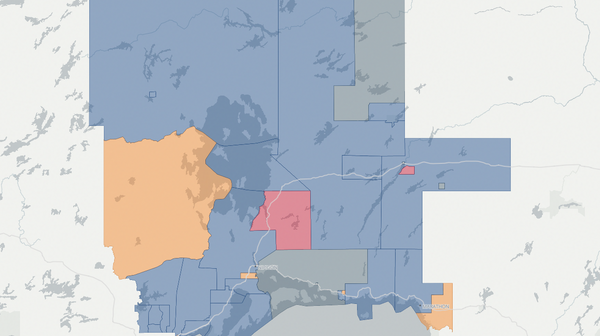
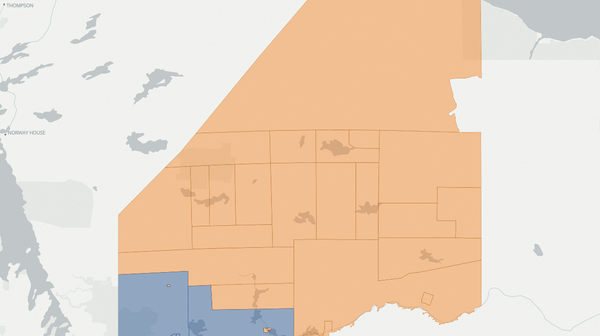
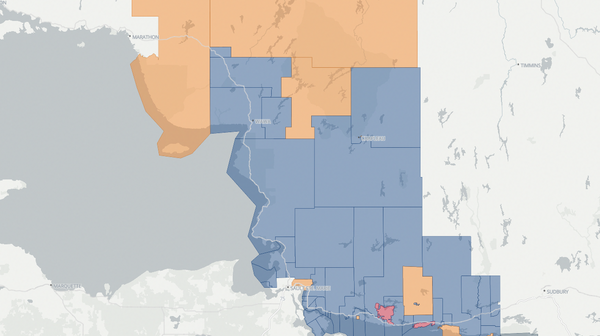
Poll-by-poll results for Kenora—Rainy River in the 2025 Ontario election. The Progressive Conservative candidate won this riding. Explore detailed voting data, candidate results, and turnout statistics at the poll level.
Riding information
Auto generated. Flag an issue.Kenora—Rainy River
Kenora—Rainy River covers approximately 45,000 square kilometres of northwestern Ontario, making it one of the province’s largest ridings by area. It stretches from the Manitoba border in the west to the Minnesota boundary in the south, encompassing the municipalities of Kenora, Dryden, Fort Frances, and Rainy River, along with dozens of First Nations communities. Progressive Conservative Greg Rickford had held the seat since 2018 after transitioning from federal politics, where he served as the Conservative MP for Kenora from 2008 to 2015 and held cabinet positions under Prime Minister Stephen Harper. During the 2022–2025 term, Rickford served as Minister of Northern Development and Minister of Indigenous Affairs, and in June 2024 his Indigenous Affairs portfolio was expanded to include First Nations Economic Reconciliation.
The riding’s vast geography and small, dispersed population created unique governance challenges. With roughly 17,000 votes cast across an area larger than many countries, the riding’s communities served as regional centres for surrounding First Nations whose residents often relied on them for services, healthcare, and employment.
Candidates
Greg Rickford (Progressive Conservative) — Before entering politics, Rickford worked as a nurse for nearly a decade in remote northern Indigenous communities, holding nursing credentials from Mohawk College and the University of Victoria. He later earned a law degree from McGill University and an MBA from Université Laval, practising Indigenous law. In the Ford government, he held multiple portfolios including Northern Development, Indigenous Affairs, and First Nations Economic Reconciliation.
Rudy Turtle (NDP) — The former chief of Grassy Narrows (Asubpeeschoseewagong) First Nation, Turtle served two non-consecutive terms as chief and ten years as a councillor, including as deputy chief. He previously ran for the federal NDP in Kenora in 2019. His campaign focused on healthcare access in rural and northern communities and affordability.
Anthony Leek (Liberal) — An educator who worked for Seven Generations Education Institute as its Bachelor of Arts coordinator, Leek earned degrees in history and Indigenous studies from the University of Manitoba and in education from Lakehead University. A former municipal councillor in Emo, this was his fourth provincial campaign in the riding, having previously run in 2011, 2014, and 2022.
John Redins ran for the Green Party and Randy Ricci for the New Blue Party.
Local Issues
Homelessness and addiction remained acute crises in the town of Kenora throughout the 2022–2025 term. A point-in-time count found nearly two hundred people experiencing homelessness in the community. Opioid-related deaths in northern Ontario ran well above the provincial average, and the Northwestern Health Unit recommended supervised consumption services for Kenora, Dryden, Fort Frances, and Sioux Lookout, though none had been established. Partners in Kenora were developing one of Ontario’s only Indigenous-led Homelessness and Addiction Recovery Treatment hubs, led by Kenora Chiefs Advisory in partnership with the Kenora District Services Board.
The legacy of mercury contamination at Grassy Narrows First Nation continued to define the riding’s relationship with environmental justice. Researchers reported that more than ninety per cent of residents in Grassy Narrows and the Wabaseemoong First Nation showed signs of mercury poisoning from industrial dumping decades earlier. Community members continued to call for fair compensation and an end to industrial threats on their territory. The broader question of Indigenous land rights and the Ring of Fire mining development in the James Bay lowlands added tension, with some First Nations opposing mineral exploration on their traditional lands.
Economic diversification was a perennial challenge. The forestry sector, which had sustained the regional economy for over a century, had contracted significantly. Communities like Dryden and Fort Frances were working to develop tourism, agriculture, and mining as alternative economic drivers, while the provincial government’s push for Ring of Fire development raised both hopes for economic opportunity and concerns about environmental protection and Indigenous consent.