Mushkegowuk—James Bay — 2025 Ontario Provincial Election Results Map
Mushkegowuk—James Bay — 2025 Election Results
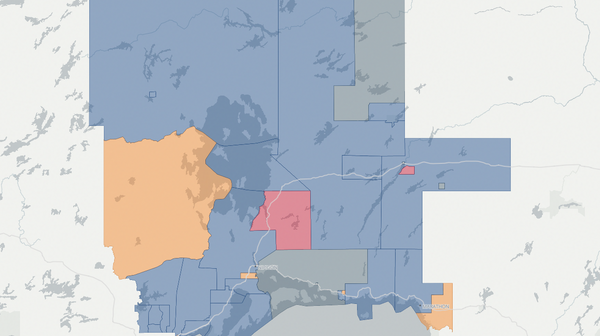
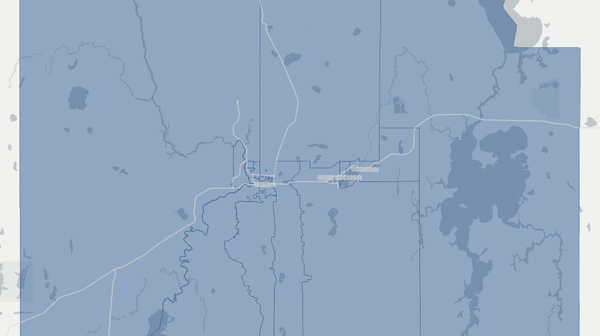
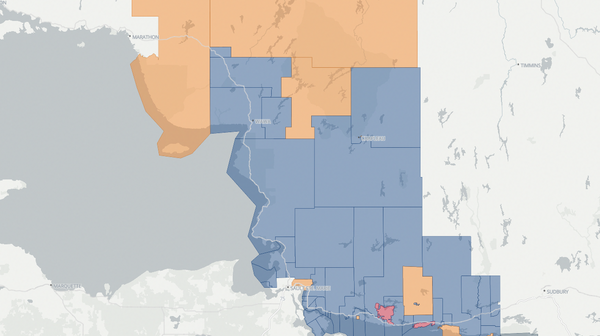
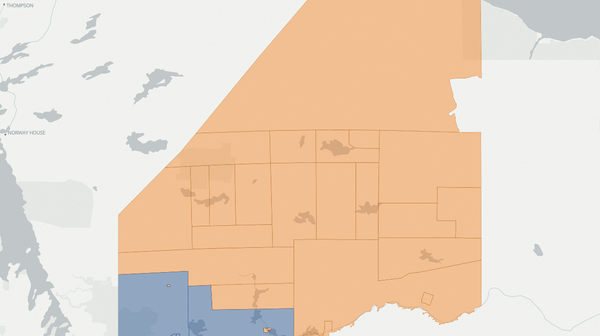
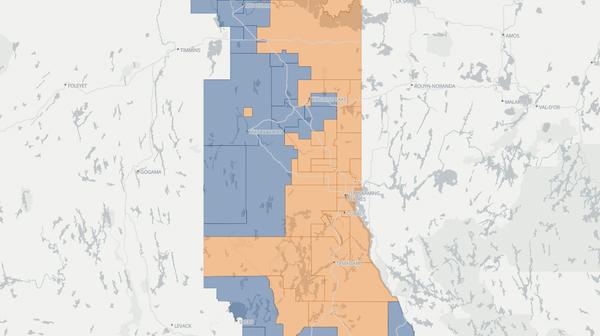
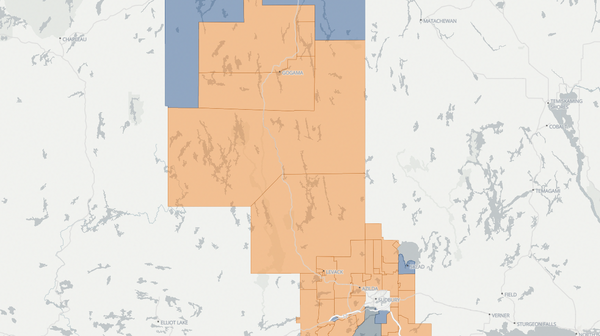
Poll-by-poll results for Mushkegowuk—James Bay in the 2025 Ontario election. The NDP candidate won this riding. Explore detailed voting data, candidate results, and turnout statistics at the poll level.
Riding information
Auto generated. Flag an issue.Mushkegowuk—James Bay
Mushkegowuk—James Bay is one of Ontario’s most geographically vast provincial ridings, spanning roughly 245,000 square kilometres across the northernmost reaches of northeastern Ontario. Created in 2017 from the northern portion of the former Timmins—James Bay riding, it extends from the Highway 11 corridor communities of Kapuskasing and Hearst northward to the James Bay coast, encompassing Moosonee, Moose Factory, and several Cree First Nations including Attawapiskat, Kashechewan, and Fort Albany. The riding is demographically distinct, with a large francophone population and a significant Indigenous community. Guy Bourgouin of the NDP had held the seat since its creation in 2018, drawing on deep roots in the region’s labour movement. During the 2022–2025 term, the riding’s forestry sector faced continued uncertainty, francophone services remained a point of contention, and the James Bay coast’s remote communities continued to struggle with annual flood evacuations.
Four candidates competed for the seat in what proved to be one of the closest contests in the province.
Candidates
Guy Bourgouin (NDP) — Born and raised in Dubreuilville, Ontario, Bourgouin is of Métis heritage and based in Kapuskasing. Before entering politics he spent over two decades with the United Steelworkers, serving as president of a local representing workers in forestry, health care, and social services across northern Ontario. As MPP he served as the NDP critic for Natural Resources and Forestry and for Francophone Affairs.
Dave Plourde (Progressive Conservative) — A lifelong Kapuskasing resident and owner of an upholstery business, Plourde had served in municipal politics since 1994, first as a town councillor and then as mayor of Kapuskasing from 2018. He had also served on the Ontario Northland Transportation Commission. His campaign emphasized forestry issues, including softwood lumber markets and biomass, as well as transportation infrastructure.
Kyle Allen (Liberal) — Allen was based in Kapuskasing and carried the Liberal banner in the riding.
Catherine Jones (Green Party) — Jones represented the Green Party in the contest.
Local Issues
The forestry industry, long the economic foundation of the Highway 11 corridor, continued to face structural challenges during the 2022–2025 term. Communities including Kapuskasing and Hearst had been built around pulp and paper operations, and the sector’s ongoing contraction weighed heavily on the region. Bourgouin, drawing on his union experience, argued that successive provincial governments had failed to develop a coherent long-term strategy for northern forestry. Mill curtailments and reduced operations in the broader northeast raised concerns about the loss of the integrated supply chain on which smaller sawmill communities depended. Residents called for provincial investment in value-added forestry and for a plan to support workers as the industry evolved.
Francophone services and education remained a central concern in this predominantly French-speaking riding. The 2021 insolvency of Laurentian University, which led to the elimination of numerous French-language programs, continued to reverberate across the northeast during the 2022–2025 term. The Ontario government rejected a funding proposal from the University of Sudbury to establish a standalone francophone university in 2023, prompting frustration in francophone communities. In 2024, the University of Sudbury announced a partnership with the University of Ottawa to offer bachelor’s-level programs in the region. Bourgouin had been a vocal advocate for restoring francophone post-secondary options and for ensuring the availability of French-language government services, health care, and schooling across the riding.
The annual spring flood cycle along the James Bay coast continued to force evacuations from communities including Kashechewan and Fort Albany. In both 2023 and 2024, hundreds of residents were evacuated or relocated to camps on the land during the Albany River’s ice breakup. The recurring evacuations underscored the absence of a permanent solution, and residents called for relocation of the most flood-prone communities to higher ground. Access to health care, food security, and basic services remained significant challenges for the coast’s remote communities, where the Ontario Northland Railway’s Polar Bear Express from Cochrane provided the only year-round surface transportation link.