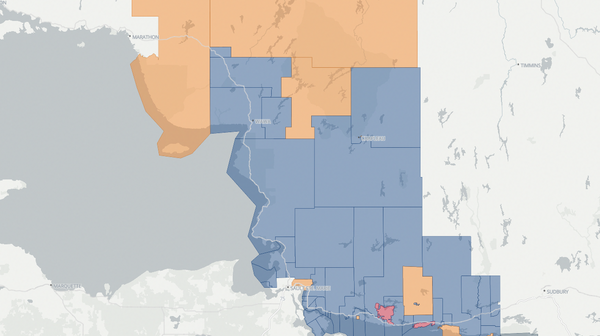
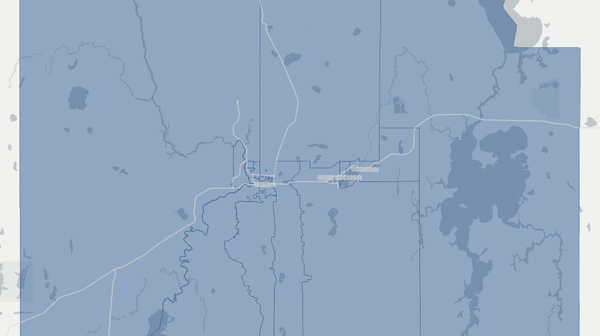
Kiiwetinoong — 2025 Ontario Provincial Election Results Map
Kiiwetinoong — 2025 Election Results
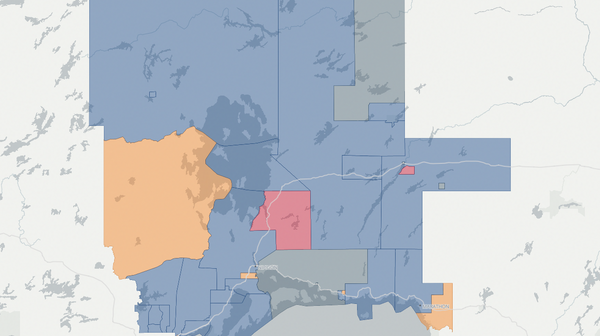
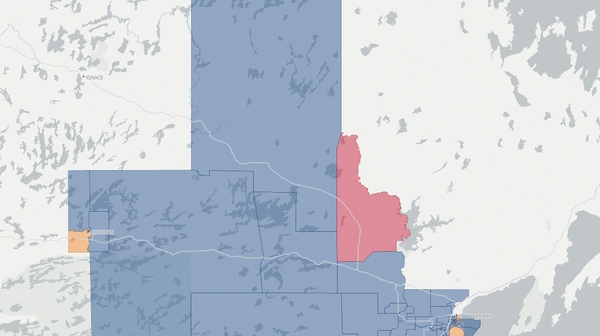
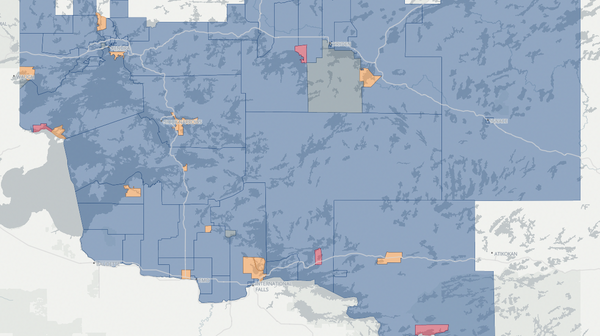
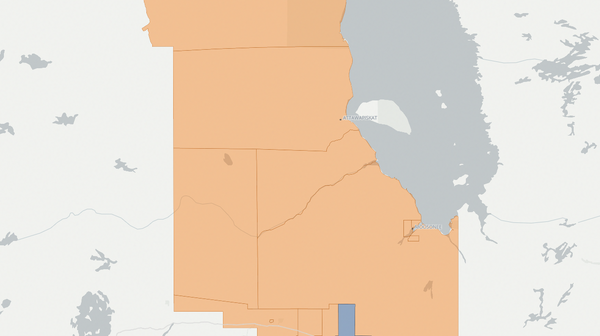
Poll-by-poll results for Kiiwetinoong in the 2025 Ontario election. The NDP candidate won this riding. Explore detailed voting data, candidate results, and turnout statistics at the poll level.
Riding information
Auto generated. Flag an issue.Kiiwetinoong
Kiiwetinoong, an Ojibway word meaning “north,” is Ontario’s largest provincial riding by land area and its only majority-Indigenous electoral district. Created in 2017 by the Far North Electoral Boundaries Commission, it covers approximately 294,000 square kilometres of northwestern Ontario, taking in the municipalities of Sioux Lookout, Red Lake, and Pickle Lake along with dozens of remote First Nations communities, most reachable year-round only by air. Sol Mamakwa of the NDP, a member of Kingfisher Lake First Nation, had represented the riding since its creation in 2018 and was elevated to the position of Deputy Leader of the Ontario NDP during the 2022–2025 term. In that role he continued to press the provincial government on drinking water, housing, and the pace of Ring of Fire mineral development, making him one of the most prominent voices on Indigenous issues at Queen’s Park.
Five candidates contested the seat, but the race was broadly expected to be a strong hold for Mamakwa, who had built deep support in the riding’s communities.
Candidates
Sol Mamakwa (NDP) — A member of Kingfisher Lake First Nation who grew up in the remote fly-in community and speaks Oji-Cree as his first language, Mamakwa attended residential school as a teenager. Before entering politics he worked for Nishnawbe Aski Nation and served as co-chair of the Sioux Lookout Meno Ya Win Health Centre. As MPP he served as Official Opposition critic for Indigenous and Treaty Relations and was named Deputy Leader of the Ontario NDP, the first First Nations person to hold that position in the party.
Waylon Scott (Progressive Conservative) — The chief of Wabaseemoong Independent Nations since 2019, Scott also served on the board of the Kenora Chiefs Advisory, an alliance of area First Nations providing health, education, and social services. He was involved in the purchase of land for Kenora’s All Nations Hospital project and had voiced support for the city’s Indigenous-led Homelessness and Addiction Recovery Treatment hub.
Manuela Michelizzi (Liberal) — An acting vice-principal with the Northwest Catholic District School Board in Sioux Lookout, Michelizzi had previously been a public school teacher for nearly fifteen years. Born in Thunder Bay, she holds a Bachelor of Arts and Bachelor of Education from Lakehead University. She also ran in Kiiwetinoong in 2022.
Carolyn Spicer (Green Party) — A Red Lake resident and artist, Spicer previously worked as a fish and wildlife technologist for the Ontario Ministry of Natural Resources. She joined the Green Party in 2018 and focused her campaign on health care access in the riding.
Theresa Leppich ran for the Northern Ontario Party.
Local Issues
The drinking water crisis remained the defining issue across the riding. At the time of the election, Neskantaga First Nation had been under a continuous boil water advisory since 1995, the longest in Canada. Although a retrofitted water treatment system was commissioned in December 2020, deficiencies persisted and the advisory remained in place entering 2025. In February 2024, the federal government and Neskantaga announced continued work on a twelve-point action plan and committed to supporting the design of a new treatment plant, but the community’s three-decade wait for clean tap water had become a symbol of government failure across the riding. Mamakwa continued to argue that the province bore responsibility for ensuring the same water quality standards on reserves as in other parts of Ontario.
The Ford government’s push to accelerate mineral development in the Ring of Fire, a vast chromite deposit located within the riding, generated tension between economic development aspirations and First Nations sovereignty. Ontario advanced environmental assessments and road-access planning for supply routes proposed by Marten Falls First Nation and Webequie First Nation, but the process drew opposition from other First Nations in the region. Several First Nations launched legal challenges, arguing that the fast-tracked environmental assessment process violated treaty rights and the duty to consult. Mamakwa questioned whether communities had given free, prior, and informed consent.
Housing conditions and health care access in remote First Nations continued to present severe challenges. Overcrowding remained common in communities where two or three families shared homes designed for one, and mould contamination rendered many dwellings unsafe. Medical evacuations by air to hospitals in Sioux Lookout or Thunder Bay remained a regular occurrence, placing a financial and emotional burden on families. Residents called for improved road maintenance, better winter road infrastructure, and greater investment in local health services to reduce the reliance on costly air transport for routine medical care.