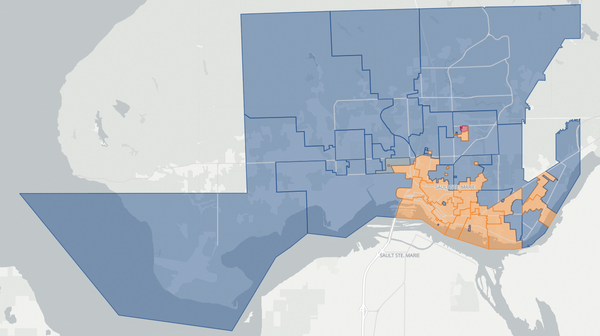
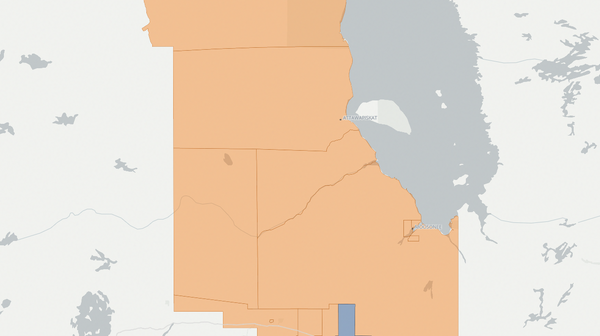
Thunder Bay—Atikokan — 2025 Ontario Provincial Election Results Map
Thunder Bay—Atikokan — 2025 Election Results
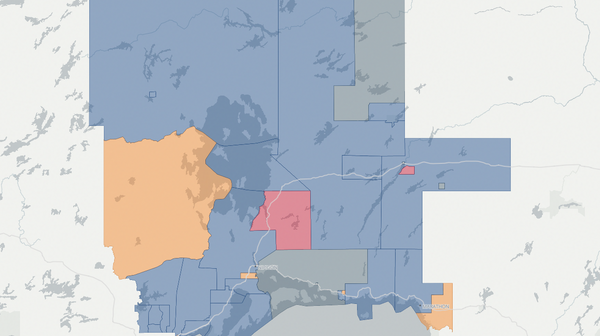
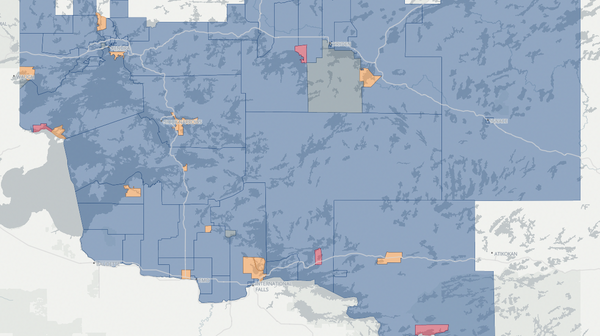
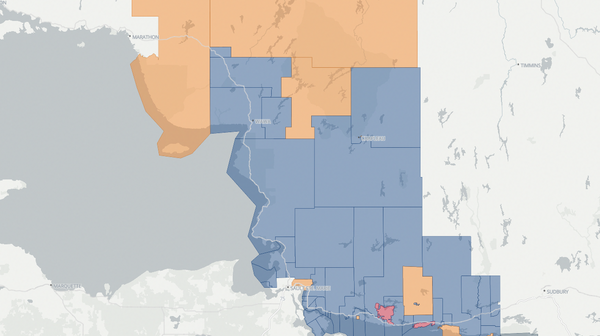
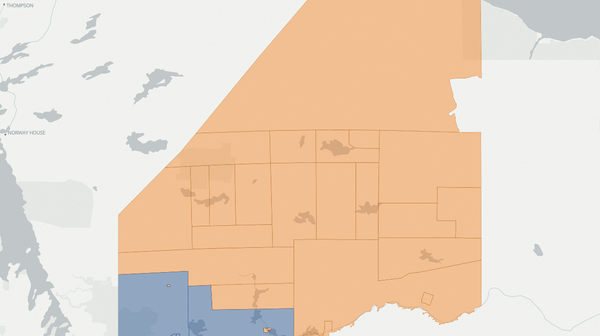
Poll-by-poll results for Thunder Bay—Atikokan in the 2025 Ontario election. The Progressive Conservative candidate won this riding. Explore detailed voting data, candidate results, and turnout statistics at the poll level.
Riding information
Auto generated. Flag an issue.Thunder Bay—Atikokan
Thunder Bay—Atikokan had been transformed politically in 2022 when Progressive Conservative Kevin Holland defeated one-term NDP incumbent Judith Monteith-Farrell, ending a stretch of non-PC representation that dated back to 1999. Holland, a long-serving municipal politician from the Township of Conmee, was subsequently appointed Parliamentary Assistant to the Minister of Municipal Affairs and Housing, and later held Parliamentary Assistant roles for several other ministries before being elevated to Associate Minister of Forestry and Forest Products in August 2024. His cabinet appointment gave the riding a direct voice in a provincial portfolio central to northern Ontario’s economy. The 2025 snap election, called by Premier Ford on the grounds that he needed a mandate to confront trade threats from the United States, set up a rematch between Holland and Monteith-Farrell, with the Liberals fielding a new candidate in a three-way race.
Candidates
Kevin Holland (Progressive Conservative) — Holland served as mayor of the Township of Conmee, west of Thunder Bay, for over three decades before winning the riding in 2022, having first been elected to council in 1991. He was the operations manager of Holland Enterprises, a family-owned business manufacturing custom emergency vehicles and commercial truck bodies. Appointed Associate Minister of Forestry and Forest Products in August 2024, he entered the campaign as a cabinet minister with direct responsibility for a key northern industry.
Judith Monteith-Farrell (NDP) — A lifelong Thunder Bay resident, Monteith-Farrell spent twenty-five years as a negotiator and representative for the Public Service Alliance of Canada before her first election in 2018. She served as MPP for one term and held critic portfolios including Natural Resources, Forestry and Mines before losing the seat in 2022. She sought to reclaim the riding for the NDP.
Stephen Margarit (Liberal) — Margarit held an Honours Bachelor of Arts in Political Science and History from Lakehead University and worked as the Foundation Coordinator for the George Jeffrey Children’s Foundation. He previously worked as a constituency assistant to former Liberal cabinet minister Michael Gravelle and chaired Thunder Bay’s Clean, Green & Beautiful Committee. He had run for Thunder Bay city council in both 2018 and 2022.
Martin Tempelman ran for the New Blue Party, Eric Arner for the Green Party, and K.C. Jones for the Northern Ontario Party.
Local Issues
The opioid crisis continued to devastate Thunder Bay during the 2022–2025 term. The Thunder Bay District Health Unit recorded 77 opioid-related deaths in 2023 and 80 in 2024, maintaining the region’s position as having the highest per-capita opioid mortality rate in Ontario. Fentanyl was present in the vast majority of overdose fatalities, and the city’s limited supply of detox beds remained insufficient to meet demand. The provincial government announced investments in mental health and addiction care for Thunder Bay in late 2024, but residents and service providers argued the response remained inadequate for the scale of the crisis.
The forestry sector, long central to the riding’s identity, was under pressure. Manufacturing tied to forestry had declined sharply over the preceding two decades, and layoffs at the Terrace Bay pulp mill underscored the vulnerability of resource-dependent communities. Holland’s appointment as Associate Minister of Forestry raised the profile of the issue but also drew scrutiny over whether provincial efforts were translating into concrete improvements for workers on the ground.
Healthcare access remained a persistent concern. Physician shortages affected communities across the riding, from Thunder Bay to Atikokan, and emergency room wait times were a source of frustration. The broader economic picture for the region was mixed: Thunder Bay’s economy was increasingly driven by healthcare and education employment rather than the natural resource jobs that had historically sustained the area.