Burnaby Centre — 2024 British Columbia Provincial Election Results Map
Burnaby Centre — 2024 Election Results
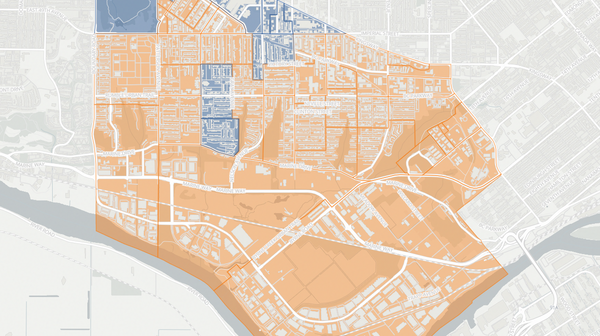
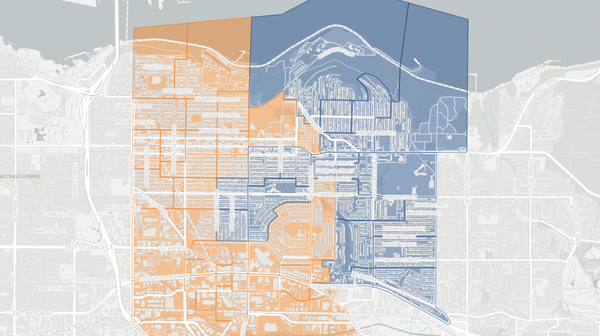
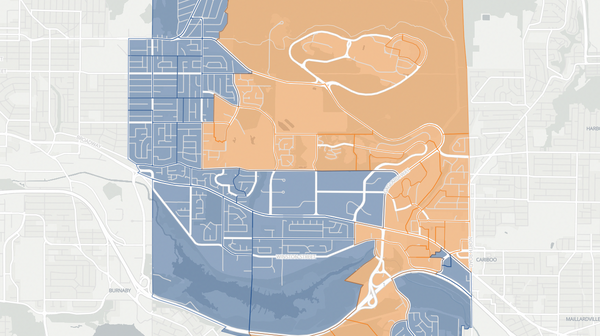
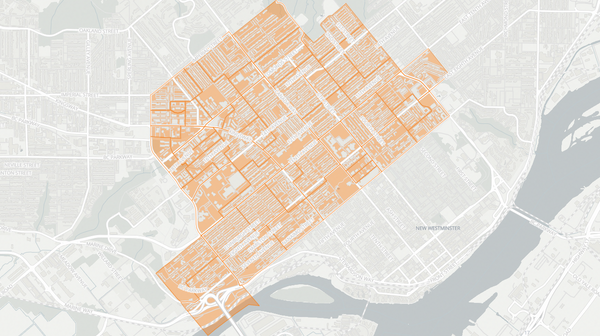
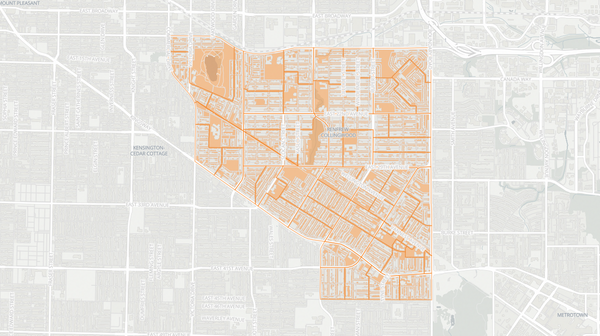
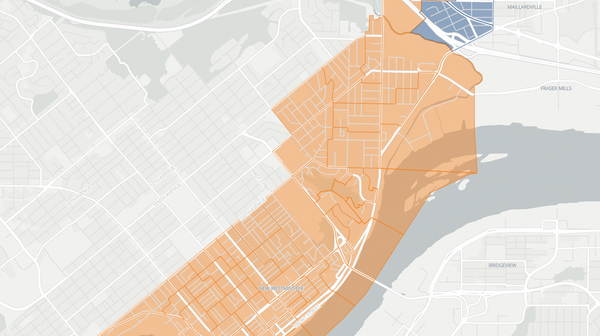
Poll-by-poll results for Burnaby Centre in the 2024 British Columbia election. The BC NDP candidate won this riding. Explore detailed voting data, candidate results, and turnout statistics at the poll level.
Riding information
Auto generated. Flag an issue.Burnaby Centre
Burnaby Centre sits at the geographic heart of British Columbia's third-largest city, a community of approximately 249,000 people located between Vancouver and the Tri-Cities in Metro Vancouver. The riding encompasses established residential neighbourhoods, the Deer Lake parklands, and portions of the Metrotown urban core that has become one of the region's densest mixed-use districts. SkyTrain's Expo and Millennium lines serve the city, and the Metrotown station is one of the busiest in the regional transit system. Burnaby's population is one of the most ethnically diverse in the province, with Chinese Canadians forming the largest ethnic group at roughly 33 per cent, followed by South Asian, Filipino, and European communities.
Anne Kang had represented the predecessor riding of Burnaby-Deer Lake since 2017, winning three consecutive elections. A cabinet minister who had held portfolios including Municipal Affairs, Post-Secondary Education, and Citizens' Services, she was one of the NDP's most prominent MLAs in the Metro Vancouver suburbs. The two-candidate race tested whether the Conservative surge that was reshaping politics across British Columbia could penetrate the NDP's urban strongholds.
Candidates
Anne Kang (BC NDP) — Kang immigrated to Canada from Taiwan as a child and has called Burnaby home since 1986. She trained as a music teacher, earning a Bachelor of Music, a Bachelor of Education, and a Diploma in Special Education from the University of British Columbia. She spent three terms on Burnaby city council before winning election to the legislature in 2017. She is among the first three Taiwanese-Canadians to serve in the BC legislature.
Dharam Kajal (Conservative Party) — Kajal immigrated to Canada approximately forty years ago and holds degrees in civil and structural engineering. He is the CEO of Westridge Engineering and Consulting Ltd., a civil engineering firm based in Surrey that serves the Lower Mainland.
Local Issues
Housing affordability and density were the most contentious issues in a riding that had become ground zero for Metro Vancouver's tower-building boom. The Metrotown area, which straddles Burnaby Centre and the adjacent riding, had seen a proliferation of high-rise residential towers that were transforming the neighbourhood's character. The NDP government's transit-oriented development legislation required municipalities to allow buildings of eight to twenty storeys within concentric rings around rapid transit stations, but Burnaby's city council resisted compliance, refusing to adopt the required zoning changes ahead of the provincial election. Tenants displaced by redevelopment — who were promised replacement rental units and interim housing assistance under city policy — faced uncertainty as older low-rise apartments gave way to condominiums.
Burnaby had become the second-most expensive city to rent in Canada by 2023, and housing costs dominated conversations among the riding's large immigrant communities. The provincial government's speculation and vacancy tax, short-term rental restrictions, and flipping tax were designed to cool the market, but rents continued to climb. The NDP pointed to the construction of new affordable housing projects, including a 59-unit below-market building near the Metrotown SkyTrain station on Telford Avenue, as evidence of progress. Critics argued the pace of construction lagged far behind demand in one of the fastest-growing urban centres in the province.
Public safety and the toxic drug crisis affected Burnaby's commercial corridors and parks. The province's drug decriminalization pilot, introduced in January 2023, drew public concern about visible drug use in public spaces. Premier Eby's April 2024 decision to seek recriminalization of drug use in parks, hospitals, and on transit reflected the political pressure that communities like Burnaby were placing on the government. Business improvement associations in the riding reported increased concerns about street-level disorder, and candidates debated competing approaches to addictions, enforcement, and social services.
Transit investment shaped the riding's future. The SkyTrain network that defined Burnaby's town-centre development model was expanding, with the Broadway Subway extension under construction to connect the Millennium Line to the region's growing eastside. Residents in Burnaby Centre, already well-served by rapid transit, watched the provincial and federal governments negotiate funding for further extensions and frequency improvements, knowing that transit access would determine the pace and pattern of the riding's continued densification.