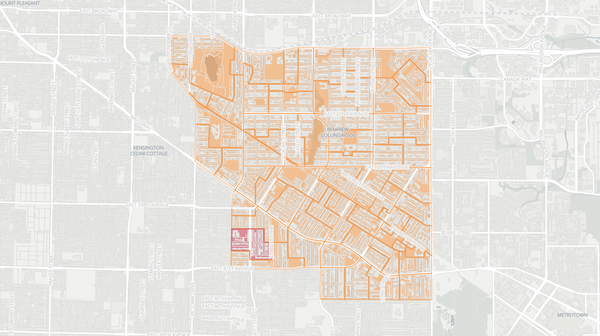
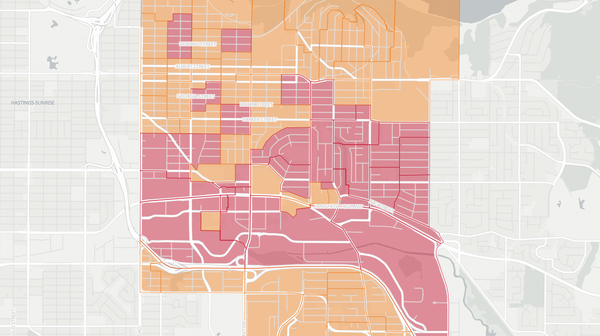
Burnaby-Edmonds — 2017 British Columbia Provincial Election Results Map
Burnaby-Edmonds — 2017 Election Results
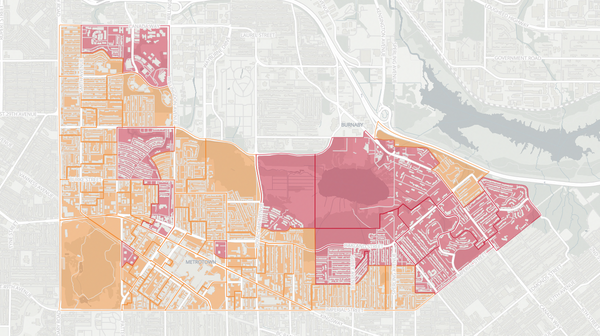
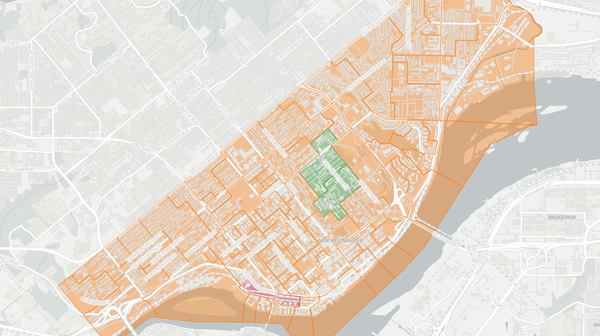
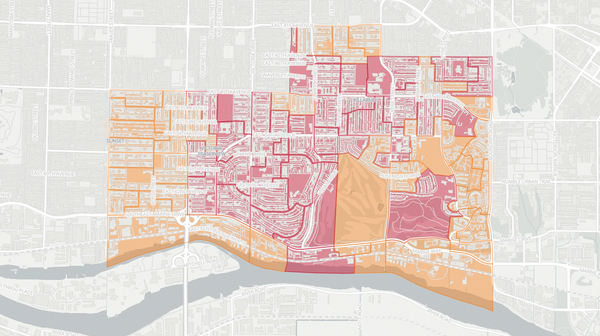
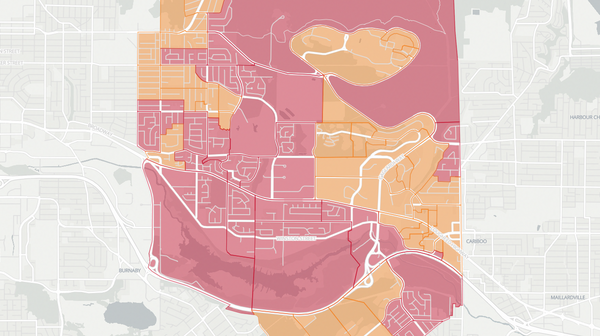
Poll-by-poll results for Burnaby-Edmonds in the 2017 British Columbia election. The BC NDP candidate won this riding. Explore detailed voting data, candidate results, and turnout statistics at the poll level.
Riding information
Auto generated. Flag an issue.Burnaby—Edmonds
Burnaby—Edmonds covers the southern portion of Burnaby, including the Edmonds Town Centre near the SkyTrain station, the Big Bend industrial area along the Fraser River, and established residential neighbourhoods in the Stride Avenue and Kingsway corridors. The riding had been held by the NDP’s Raj Chouhan since 2005, and he entered the 2017 campaign as a well-established incumbent. In 2013, Chouhan had won comfortably, taking his seat by a margin of more than 2,300 votes. The riding’s working-class character, diverse immigrant population, and concentration of rental housing made affordability a central concern.
Candidates
Raj Chouhan (BC NDP) — Chouhan was the incumbent MLA seeking a fourth term. Born in Ludhiana in the Indian state of Punjab, he immigrated to Canada in 1973 and settled in Burnaby. He is the founding president of the Canadian Farmworkers Union, an organization he established to advocate for the rights of immigrant agricultural workers. He also served as a director of the Hospital Employees’ Union. During the 2013–2017 term, Chouhan served as Assistant Deputy Speaker of the Legislative Assembly.
Garrison Duke (BC Liberal Party) — Duke was a director of employment services and owned a mentorship and career coaching company. He brought experience in social services and working with newcomers and job seekers to the campaign.
Valentine Wu (BC Green Party) — Wu was an IT consultant who had worked with BC Hydro, Bank of America, and Telus. Born in China, he had moved to Burnaby in 2001 as an international student and built a career in the technology sector.
Local Issues
Housing affordability and the protection of rental stock were paramount in Burnaby—Edmonds. The Edmonds Town Centre, one of Burnaby’s designated growth areas around its SkyTrain station, was seeing increasing development pressure. The neighbourhood had one of the lowest median incomes in Burnaby, and residents worried that new high-rise developments would replace older affordable rental buildings without adequate protections for displaced tenants. The provincial government’s role in strengthening the Residential Tenancy Act and funding affordable housing construction were debated.
The Trans Mountain pipeline expansion, proposed by Kinder Morgan, was a significant issue across Burnaby. The pipeline’s terminal is located in Burnaby, and the expansion would have increased tanker traffic through Burrard Inlet. In January 2017, Premier Christy Clark announced that BC had approved the expansion, saying it met the province’s five conditions. The NDP and Greens opposed the project, and protests in Burnaby drew large crowds. For residents of Burnaby—Edmonds, the pipeline raised concerns about environmental risk and the character of the waterfront industrial area.
MSP premium elimination was a kitchen-table issue. The monthly health premium was widely viewed as a regressive tax, and both the NDP and Greens promised to eliminate it. For working families in a riding with significant populations of lower-income earners and new immigrants, the prospect of saving hundreds of dollars per year in premiums was a tangible affordability measure.