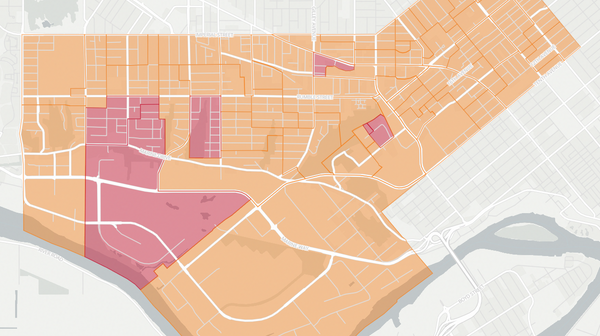
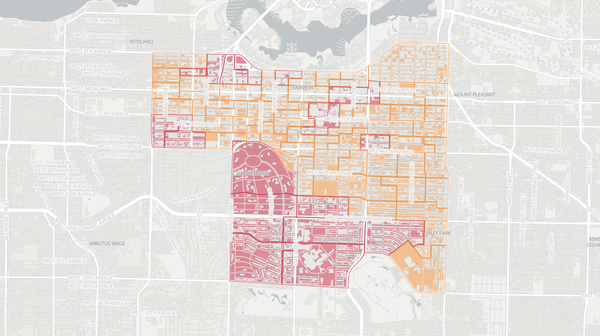
Vancouver-Fraserview — 2017 British Columbia Provincial Election Results Map
Vancouver-Fraserview — 2017 Election Results
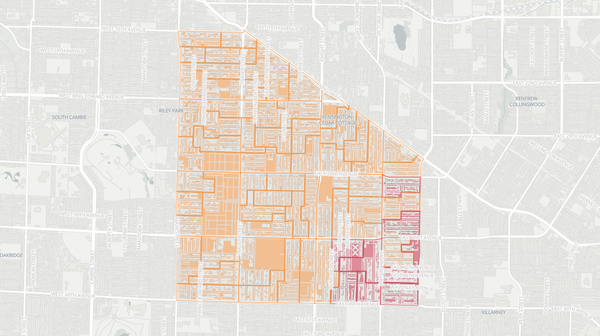
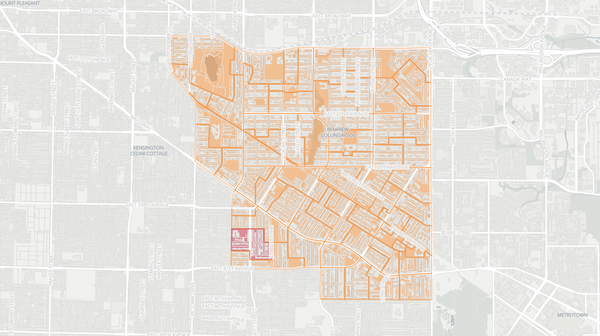
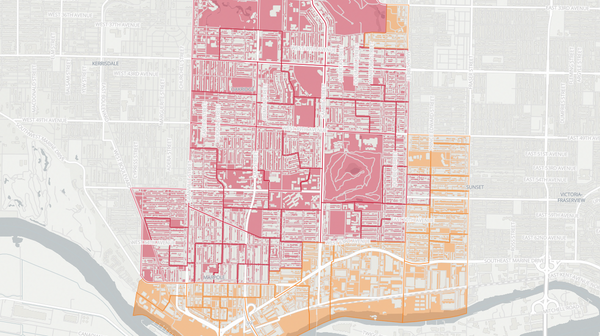
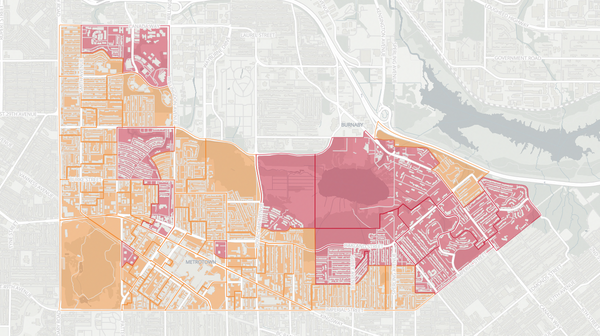
Poll-by-poll results for Vancouver-Fraserview in the 2017 British Columbia election. The BC NDP candidate won this riding. Explore detailed voting data, candidate results, and turnout statistics at the poll level.
Riding information
Auto generated. Flag an issue.Vancouver-Fraserview
Vancouver-Fraserview was one of the most competitive ridings in British Columbia. It had been decided by 1,200 votes or fewer in four of the last five elections, including a margin of just 470 votes in 2013 when BC Liberal Suzanne Anton narrowly won. Anton had served as attorney general for the entirety of her first term, making her defeat a potential cabinet-level upset. The riding covered a swath of southeast Vancouver from the Fraser River north toward Kingsway, encompassing the established residential neighbourhoods of Killarney, Champlain Heights, and Victoria-Fraserview, home to a diverse population with large Chinese, South Asian, and Filipino communities.
The NDP recruited George Chow, a former two-term Vancouver city councillor and retired BC Hydro engineer, to challenge Anton. Chow had deep roots in southeast Vancouver's communities, particularly in Chinatown and the broader Chinese-Canadian population, and his candidacy was seen as a direct threat to Anton's hold on the seat.
Candidates
George Chow (BC NDP) — Born in China, Chow emigrated from Hong Kong to Canada in 1965 at the age of 14, settling in Vancouver's Downtown Eastside where his father worked as a cook and his mother as a farm worker. He attended Britannia Secondary School and went on to earn a degree in mechanical engineering from the University of British Columbia in 1975. He spent more than 30 years at BC Hydro working in power generation and was a Fellow of Engineers Canada. Chow served two terms as a Vancouver city councillor with Vision Vancouver from 2005 to 2011. He had served on numerous community boards including the Vancouver Public Library Board, the Chinese Cultural Centre of Greater Vancouver, and S.U.C.C.E.S.S.
Suzanne Anton (BC Liberal Party) — Anton grew up in Duncan on Vancouver Island, attended Queen Margaret's School, and earned a Bachelor of Science in mathematics from the University of Victoria and a law degree from UBC. She had worked as a mathematics teacher in Portugal and Nigeria through CUSO, and as a lawyer and former prosecutor with the Criminal Justice Branch. She served on the Vancouver Park Board from 2002 to 2005 and on Vancouver City Council from 2005 to 2011. In 2011 she was the NPA's candidate for mayor, losing to Gregor Robertson. Elected to the Legislature in 2013, she was appointed attorney general and minister of justice.
Eric Kolotyluk (BC Green Party) — Kolotyluk held a master's degree in science and had worked for the U.S. Department of Defense and at UBC's Department of Astronomy. His professional expertise was in IT, software development, and communications.
Hiroshi Hyde ran for the Libertarian Party and Harpreet S. Bajwa for the Your Political Party of BC.
Local Issues
Education was a major concern in Vancouver-Fraserview. Several schools in the riding had been threatened with closure the year before the election. The spectre of school closures in a riding with a large family population was politically potent, and the NDP made the issue a central part of their campaign, promising to work collaboratively with teachers and invest in school infrastructure.
Housing affordability was acutely felt in Fraserview, where longstanding working-class and middle-class neighbourhoods were seeing home prices climb rapidly. The riding's proximity to the Fraser River and its relatively more affordable housing stock compared to Vancouver's west side made it attractive to buyers, but the influx of investment was driving up property values and rents. The BC Liberals' foreign buyers tax had cooled some speculative activity, but affordability remained a top concern.
The riding's diverse population also highlighted the importance of access to government services in multiple languages, settlement services for newcomers, and culturally appropriate health care. Seniors in the riding, particularly those in the Chinese and South Asian communities, faced challenges navigating the health care system, and the availability of long-term care beds was a persistent worry.