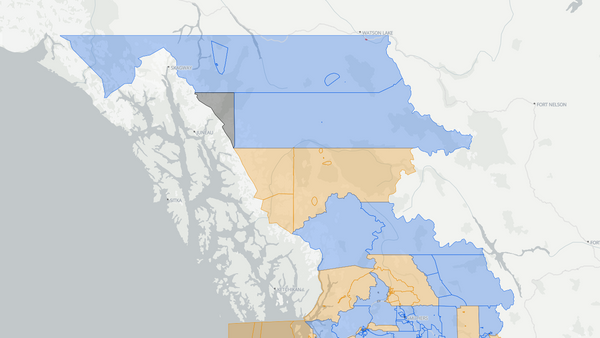
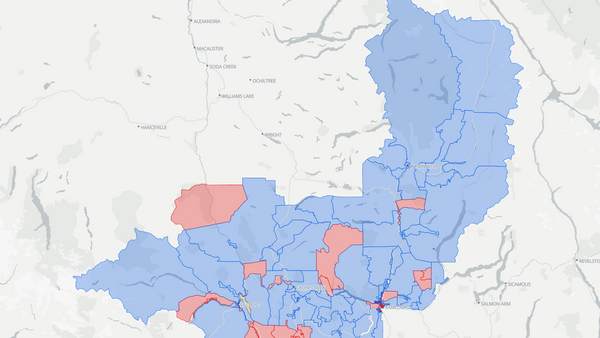
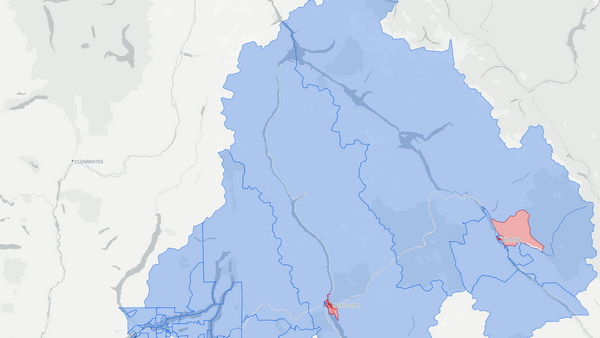
Prince George—Peace River—Northern Rockies, BC — 2025 Federal Election Results Map
Prince George—Peace River—Northern Rockies — 2025 Election Results
📌 The Canadian federal electoral district of Prince George—Peace River—Northern Rockies was contested in the 2025 election.
🏆 Bob Zimmer, the Conservative candidate, won the riding with 41,956 votes (71.1% of the vote).
🥈 The runner-up was Peter Njenga (Liberal) with 11,545 votes (19.6%), defeated by a margin of 30,411 votes.
📊 Other notable candidates: Cory Grizz Longley (NDP-New Democratic Party, 6%).
Riding information
Auto generated. Flag an issue.Prince George—Peace River—Northern Rockies
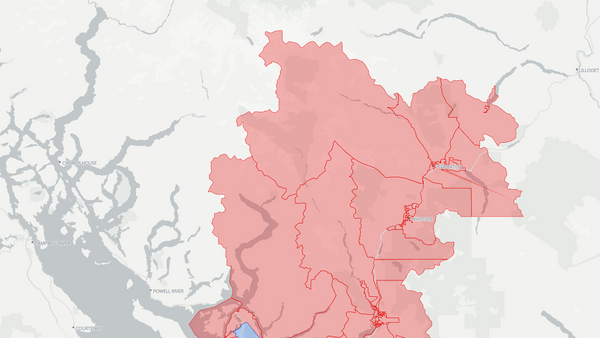
Prince George—Peace River—Northern Rockies is one of the largest federal ridings in Canada, covering approximately 243,000 square kilometres of northeastern British Columbia. The riding stretches from the Yukon and Northwest Territories borders in the north to the community of Valemount in the south, and from the Rocky Mountain continental divide in the east to the northern half of Prince George in the west. This vast territory encompasses boreal forest, the Rocky Mountain foothills, the Peace River agricultural region, and the northern reaches of the Fraser River system.
Candidates
Bob Zimmer (Conservative) has represented this riding and its predecessor since 2011. Born in Dawson Creek and raised in Fort St. John, Zimmer worked as a welder's assistant in the oil industry before training as a journeyman carpenter through Northern Lights College and operating a small construction business. He later attended Trinity Western University, where he coached varsity rugby and graduated with a degree in human kinetics. In Parliament, he has served in numerous roles including shadow cabinet positions and committee chairmanships.
Peter Njenga (Liberal) was born in Kenya and immigrated to Canada in 2006. He holds a PhD in finance, an MBA, a Bachelor of Commerce, and a CPA designation. Njenga has taught finance at post-secondary institutions in British Columbia and Alberta and runs a philanthropic organization that assists people experiencing homelessness in Canada and orphans in Kenya. He previously ran as the Liberal candidate in the Abbotsford riding in 2015.
Cory Grizz Longley (NDP) stood as the New Democratic Party candidate in the riding.
Mary Forbes (Green Party) ran as the Green Party candidate, and David Watson (People's Party) represented the People's Party of Canada.
About the Riding
Prince George—Peace River—Northern Rockies is defined by its resource economy. The Peace River region around Fort St. John and Dawson Creek is the centre of British Columbia's natural gas industry, with extensive drilling, fracking, and pipeline operations driving employment and municipal revenues. Fort Nelson, further north, anchors the province's largest wood products processing operations. Coal mining in Tumbler Ridge and forestry across the riding's vast boreal landscape round out the resource base.
Prince George, the riding's largest urban centre, serves as the economic and service hub of northern British Columbia. The portion of the city within the riding includes the downtown core, the University of Northern British Columbia, and the regional hospital. The city's economy is anchored by forestry, pulp and paper manufacturing, transportation, and healthcare.
Agriculture plays a significant role in the Peace River lowlands, where the relatively flat terrain and long summer daylight hours support grain and cattle operations. The region around Dawson Creek—Mile Zero of the Alaska Highway—functions as both an agricultural service centre and a gateway to the northern resource frontier.
In 2025, the riding's voters were focused on resource development, pipeline access, and the economic impact of US trade tensions on energy and forestry exports. Northern healthcare delivery—including physician shortages, hospital capacity, and the challenge of providing services across vast distances—remained a persistent concern. Highway infrastructure, particularly the condition of resource roads and the Alaska Highway corridor, and the cost of living in remote northern communities were also prominent local issues.