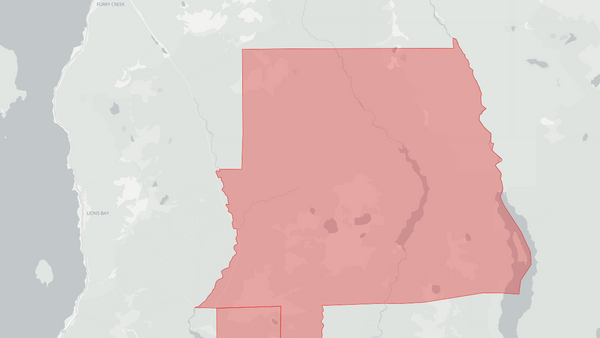
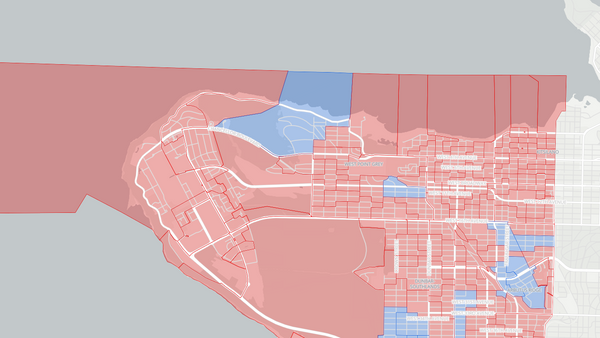
North Island—Powell River, BC — 2025 Federal Election Results Map
North Island—Powell River — 2025 Election Results
📌 The Canadian federal electoral district of North Island—Powell River was contested in the 2025 election.
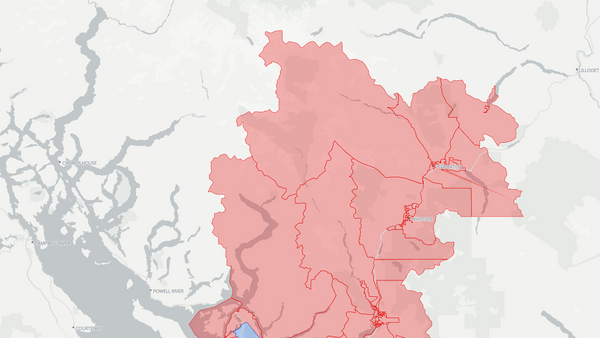
🏆 Aaron Gunn, the Conservative candidate, won the riding with 31,356 votes (38.7% of the vote).
🥈 The runner-up was Tanille Johnston (NDP-New Democratic Party) with 26,357 votes (32.6%), defeated by a margin of 4,999 votes.
📊 Other notable candidates: Jennifer Lash (Liberal, 26%).
Riding information
Auto generated. Flag an issue.North Island—Powell River
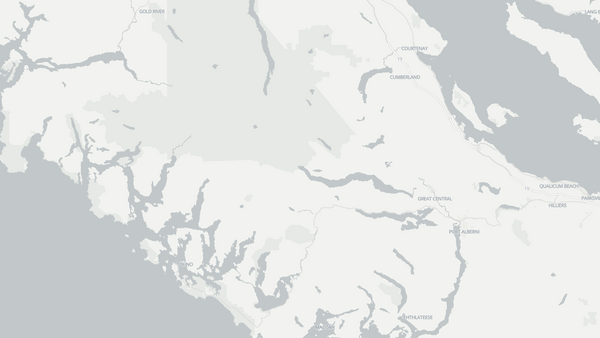
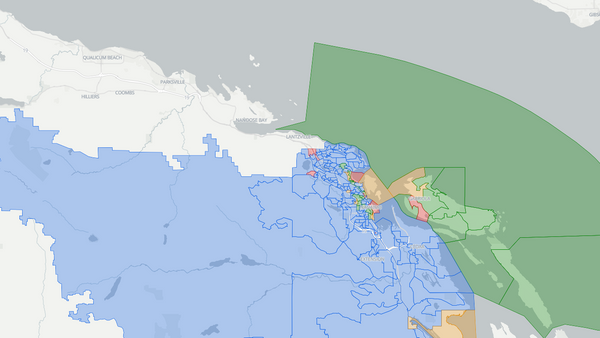
North Island—Powell River is the largest federal riding on Vancouver Island by land area, stretching from the Comox Valley and eastern Courtenay northward to Port Hardy at the island's tip, and crossing the Strait of Georgia to include Powell River, Texada Island, and a large section of British Columbia's Central Coast on the mainland. The riding's 126,000 residents are spread across communities including Campbell River, Comox, East Courtenay, Powell River, Port McNeill, and Port Hardy, connected by highways, BC Ferries routes, and floatplane services.
Candidates
Aaron Gunn (Conservative) is a documentary filmmaker and University of Victoria commerce graduate who grew up in Greater Victoria. He served in the 5th (British Columbia) Field Artillery Regiment of the Canadian Army Reserve. His documentaries on homelessness, crime, and drug policy drew millions of views on YouTube. His candidacy was marked by controversy over past social media comments regarding residential schools and Indigenous reconciliation.
Tanille Johnston (NDP) is a member of the WeWaiKai First Nation who was born and raised in Campbell River. She holds a master's degree in social work and works as a primary care manager on Vancouver Island. In 2022, she became the first Indigenous councillor elected to Campbell River City Council and also serves on her Nation's Lands Committee.
Jennifer Lash (Liberal) has lived on Malcolm Island in the community of Sointula for 27 years. She holds a master's degree in climate leadership and a BA in political science from the University of Toronto. She is the founder of the Living Oceans Society, a science-based marine conservation organization, and recently served as a senior advisor to the federal Minister of Environment and Climate Change.
Jessica Wegg (Green Party) is a lawyer called to the bar in British Columbia and Ontario, holding a law degree from Indiana University and a master's in clinical psychology. She has focused her legal practice on civil rights, representing incarcerated individuals, survivors of abuse, and families affected by police misconduct. She also ran for the Greens in the riding in 2021.
Paul Macknight (People's Party) and Glen Staples (Independent) also stood as candidates.
About the Riding
North Island—Powell River's economy is rooted in natural resources. Forestry and logging have sustained communities across the riding for generations, though mill closures and tenure restructuring have reduced employment in the sector. Commercial fishing—salmon, crab, prawn, and groundfish—remains vital, particularly in Campbell River, which bills itself as the Salmon Capital of the World. Aquaculture operations, including salmon farms in the Discovery Islands and Broughton Archipelago, are a significant employer but also a source of environmental controversy, particularly regarding their impact on wild salmon populations.
Powell River, accessible only by ferry or air, was built around a pulp and paper mill that has scaled back operations in recent decades. The community has sought to diversify into tourism, retirement living, and small-scale agriculture. The Central Coast portion of the riding is extremely remote, with small communities accessible primarily by boat or floatplane.
Health-care access was among the most pressing local issues in 2025. Rural hospitals and clinics across the riding struggled with physician and nurse shortages, and residents in remote communities faced long travel times to reach specialist care. Housing affordability, once considered a Vancouver problem, increasingly affected mid-island and coastal towns as population growth outpaced housing supply. The riding's large Indigenous population—including numerous First Nations with treaty and land-claim interests—made reconciliation and Indigenous self-governance ongoing themes in local politics.