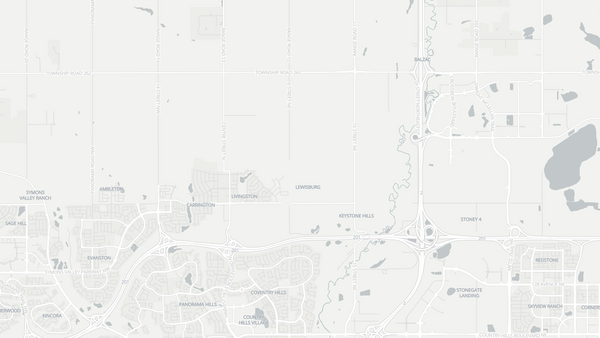
Ponoka—Didsbury, AB — 2025 Federal Election Results Map
Ponoka—Didsbury — 2025 Election Results
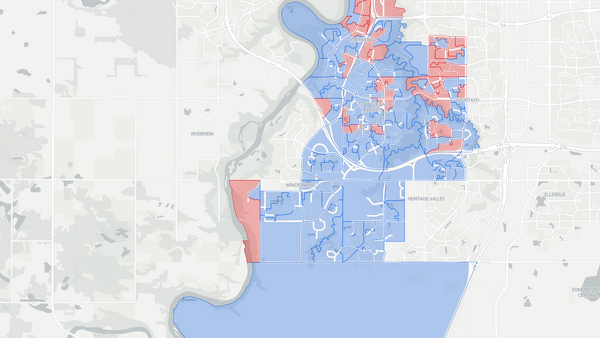
Poll-by-poll results for Ponoka—Didsbury in the 2025 Canadian federal election. The Conservative candidate won this riding. Explore detailed voting data, candidate results, and turnout statistics at the poll level.
Riding information
Auto generated. Flag an issue.Ponoka—Didsbury
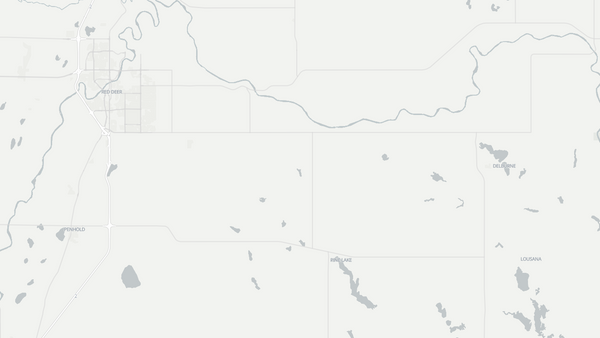
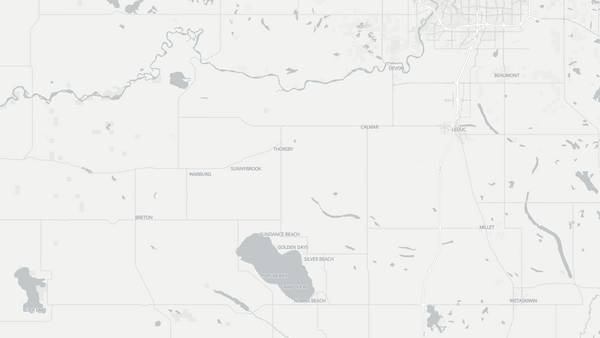
Ponoka—Didsbury is a new federal riding created by the 2022 redistribution from the rural portions of the former Red Deer—Lacombe and Red Deer—Mountain View ridings. Covering approximately 9,573 square kilometres of central Alberta, the riding stretches across some of the province's most productive agricultural land between the cities of Red Deer and Calgary. With a population of roughly 114,500, it is an entirely rural and small-town constituency with no large urban centre.
The riding encompasses Ponoka County, Lacombe County, the western half of Red Deer County, and the northeastern half of Mountain View County. Its communities include the city of Lacombe and the towns of Ponoka, Sylvan Lake, Innisfail, Olds, Didsbury, Bowden, Blackfalds, Rimbey, Eckville, and Bentley, along with numerous villages and summer villages clustered around the lakes and waterways of central Alberta.
Candidates
Blaine Calkins (Conservative) has been a Member of Parliament since 2006, first representing Wetaskiwin and then Red Deer—Lacombe before shifting to the newly drawn Ponoka—Didsbury. Born and raised near Lacombe, he holds a Bachelor of Science in zoology from the University of Alberta and was a tenured faculty member at Red Deer College before entering politics. He served on Lacombe Town Council prior to his federal career and has held several parliamentary roles including Chief Opposition Whip and chair of the Standing Committee on Access to Information, Privacy and Ethics.
Logan Hooley (NDP) is a resident of Bluffton who moved to the area from Cochrane as a child. He previously worked as a deli clerk at the Rimbey Co-op and as a farmhand. Inspired by the history of Medicare, he became the first person in his family to attend university, studying political science.
Grant Abraham (United Party of Canada) is the leader of the United Party of Canada and a lawyer, author, and humanitarian. He spent over 20 years leading international development and social investment projects in Asia, Africa, the Middle East, and Eastern Europe.
Zarnab Zafar (No Affiliation) ran as an independent candidate in the riding.
Larry Gratton (People's Party) ran as the People's Party of Canada candidate in the riding.
About the Riding
The economy of Ponoka—Didsbury is anchored by agriculture and energy. Cattle ranching and grain farming have sustained the region for generations, and the riding contains significant oil and gas infrastructure, particularly in Mountain View County and Lacombe County. The interplay between agriculture and energy extraction defines the economic character of the constituency, and pipeline access and market diversification for Alberta energy products have been persistent local concerns.
Sylvan Lake, nestled on the border of Red Deer County and Lacombe County, is one of central Alberta's premier recreational destinations, drawing roughly one million visitors annually for summer beach activities, fishing, and winter festivals. The town's rapid growth has brought both economic benefits and pressures on municipal infrastructure and housing.
The riding's communities vary considerably in character. Lacombe and Olds are regional service centres with growing populations, while Ponoka is known for its annual rodeo—the Ponoka Stampede—and its connections to the agricultural heartland. Smaller towns like Innisfail, Bowden, and Didsbury serve surrounding farming communities. Many residents commute to Red Deer or Calgary for employment, giving the riding a mixed rural and exurban identity.
Heading into the 2025 election, affordability, the cost of farm inputs, the impact of U.S. tariffs on agricultural exports, and the future of the oil and gas sector were central concerns for voters across the riding. Rural healthcare access, including the availability of family physicians in smaller communities, and broadband connectivity were also prominent local issues.