Red Deer, AB — 2025 Federal Election Results Map
Red Deer — 2025 Election Results
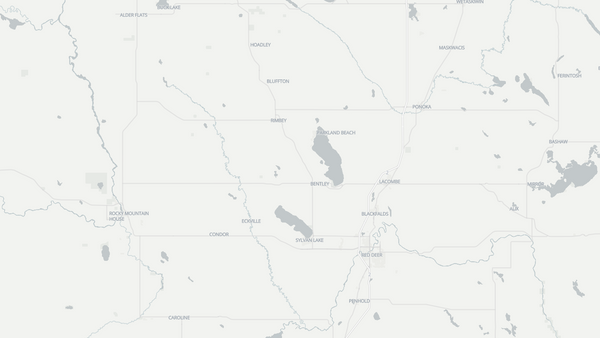
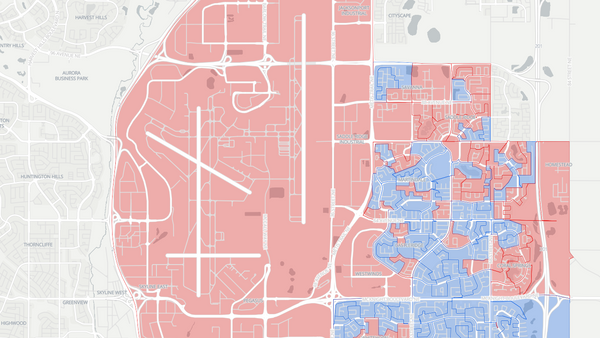
Poll-by-poll results for Red Deer in the 2025 Canadian federal election. The Conservative candidate won this riding. Explore detailed voting data, candidate results, and turnout statistics at the poll level.
Riding information
Auto generated. Flag an issue.Red Deer
Red Deer is a new federal riding created by the 2022 redistribution, carved out of the former Red Deer—Mountain View and Red Deer—Lacombe ridings to reflect the city's population growth. The riding is centred on the city of Red Deer, Alberta's third-largest city, situated roughly halfway between Calgary and Edmonton along the Queen Elizabeth II Highway. With a population of approximately 100,800, it is one of Alberta's most compact and urban-focused ridings outside the two major metropolitan areas.
Red Deer functions as the commercial and service hub for central Alberta, with a regional trading area that extends well beyond the city limits. The city is home to Red Deer Polytechnic, a growing post-secondary institution offering apprenticeships, certificates, and degree programs.
Candidates
Burton Bailey (Conservative) won the Conservative nomination in March 2025, defeating Penhold Mayor Mike Yargeau and Red Deer Public Schools Board Chair Nicole Buchanan. He brings 30 years of business experience as a construction business owner and is a fifth-generation funeral director. He previously served as executive assistant to Red Deer-North MLA Adriana LaGrange.
Ayaz Bangash (Liberal) has lived in Canada for 17 years and in Red Deer for the most recent of those. He holds two degrees in business and works as an insurance broker with 20 years of business experience. He has held leadership roles with the Canadian Red Cross in emergency preparedness and community outreach.
Elias Assefa (NDP) grew up in public housing and has advocated for policies aimed at reducing poverty. He has emphasized expanding supply management, providing living wages, and encouraging education and training to help workers transition to emerging industries.
Kyla Courte (People's Party) ran as the People's Party of Canada candidate in the riding.
Ashley MacDonald (Green Party) attended Red Deer College, studying political science and history. A former oil sands worker who left the industry in 2015, he works as a mental health worker with Red Deer's vulnerable population. He previously served as president of the Green Party of Alberta and ran provincially for the Greens in 2023.
Brandon Pringle (Christian Heritage Party) ran as the Christian Heritage Party candidate in the riding.
About the Riding
Red Deer's economy has historically revolved around servicing the oil and gas industry, with the city functioning as central Alberta's headquarters for oilfield production services. Metal fabrication, petrochemical supply, drilling equipment manufacturing, and transportation logistics are all significant employers. The surrounding region is a major centre for petrochemical refining, and many Red Deer residents work in energy-related businesses.
The city has been working to diversify its economic base beyond oil and gas dependence. Agriculture remains important to the broader regional economy, and Red Deer has sought to attract investment in healthcare, technology, and advanced manufacturing. The city offers a competitive business environment with no municipal business tax beyond property taxes and no payroll or machinery taxes.
As a mid-sized city, Red Deer faces a distinct set of challenges compared to both the major metropolitan centres and the surrounding rural areas. Housing affordability has tightened considerably, and the city has grappled with issues related to homelessness, mental health services, and substance abuse—issues that resonated in the 2025 campaign. The downtown core has seen revitalization efforts alongside ongoing concerns about vacancy rates and public safety.
The 2025 election in Red Deer was shaped by anxieties over U.S. tariffs and their potential impact on Alberta's energy and agricultural exports, as well as broader affordability concerns. Healthcare access, particularly wait times and the recruitment of family physicians, was also a prominent issue in the campaign.