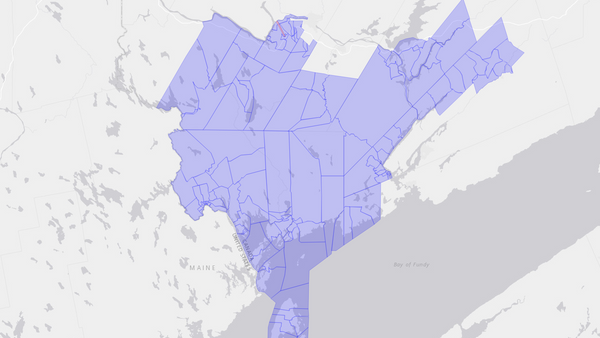
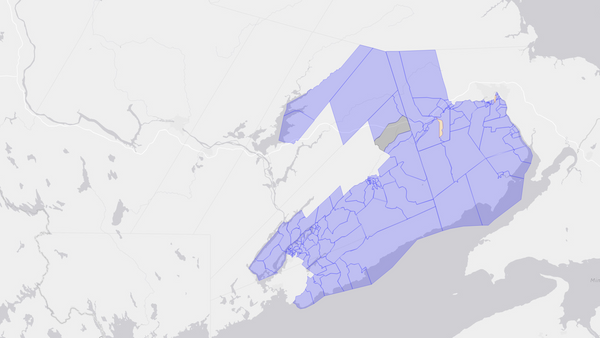
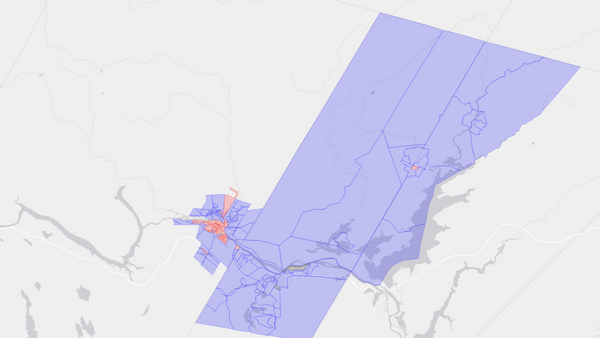
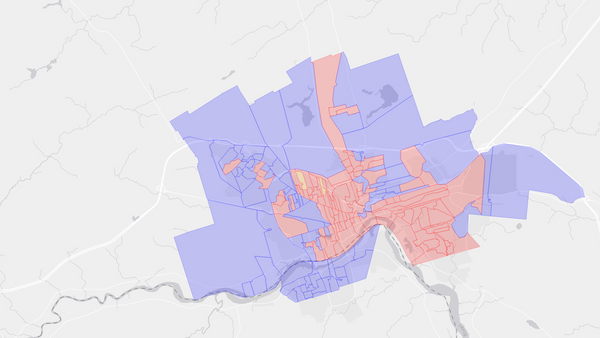
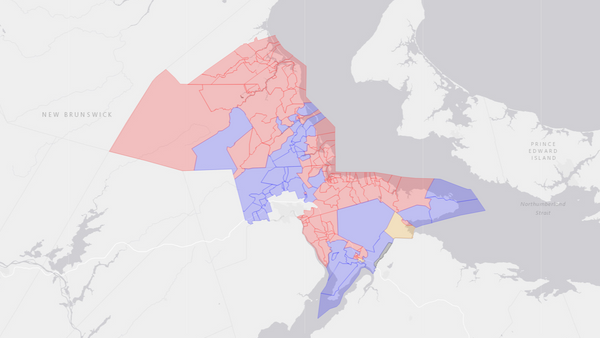
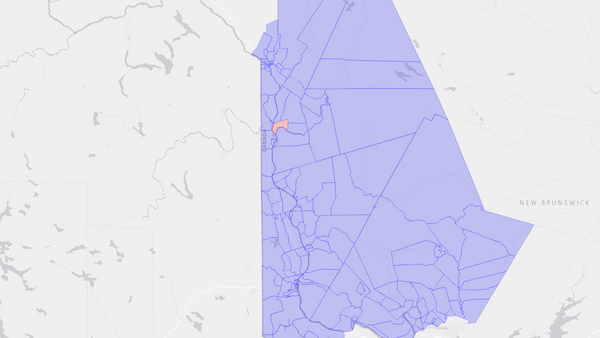
Saint John, NB — 2008 Federal Election Results Map
Saint John — 2008 Election Results
📌 The Canadian federal electoral district of Saint John was contested in the 2008 election.
🏆 Rodney Weston, the Conservative candidate, won the riding with 13,782 votes (39.6% of the vote).
🥈 The runner-up was Paul Zed (Liberal) with 13,285 votes (38.1%), defeated by a margin of 497 votes.
📊 Other notable candidates: Tony Mowery (NDP-New Democratic Party, 16%) and Mike Richardson (Green Party, 5%).
Riding information
Auto generated. Flag an issue.Saint John
Saint John is a refinery town, a port town and a hospital town. The riding covers the whole city, plus Rothesay and Gondola Point across the line in Kings County and the Loch Lomond country to the east — about 82,000 people, just over 68,000 of them inside the city limits at the 2006 census, a figure that had been slipping for years while the suburbs grew. Conservatives have dominated the seat in the modern era, winning it at every general election since 1953 except 1974, 1980, 2004 and 2006.
Candidates
Rodney Weston (Conservative) — Born in Saint John in March 1964 and educated at New Brunswick Community College, Weston ran a gas station and worked as a trucking contractor, served as chief of the St. Martins volunteer fire department and sat as the village's deputy mayor. He lost the provincial riding of Saint John—Fundy to Liberal Stuart Jamieson in 1995 and beat him there in 1999, serving as minister of agriculture, fisheries and aquaculture from 2001 to 2003 under Bernard Lord. Jamieson won the seat back in 2003, after which Weston became Lord's chief of staff.
Paul Zed (Liberal) — Zed was the incumbent, elected for Saint John in 2004 and re-elected in 2006, and had earlier represented Fundy—Royal from 1993 to 1997. Born in Toronto in December 1956 and raised in Saint John, he holds a bachelor's degree from Dalhousie, a law degree from the University of New Brunswick and a master of laws from the London School of Economics. He lectured in law at the University of Ottawa and UNB before becoming a senior partner at Clark Drummie. After returning to the Commons in 2004 he chaired the committee on public safety and national security and served as opposition critic for transport, infrastructure and communities. He was national co-chair of Michael Ignatieff's Liberal leadership campaign.
Tony Mowery (NDP) — Mowery, a substitute teacher, carried the New Democratic nomination.
Mike Richardson (Green Party) — Richardson, a network analyst, was the Green Party candidate.
Michael Moffat also appeared on the ballot, under the Radical Marijuana banner.
About the Riding
No account of the Saint John economy gets far without the Irving companies, headquartered in the city and running refining, forestry, transportation and media operations from it. The refinery on the east side processes more than 300,000 barrels a day, the largest in Canada, fed by crude landed at the Canaport marine terminal — commissioned in 1970 as the first deep-water crude terminal in the Western Hemisphere able to take supertankers. Two further projects made energy the dominant local subject in 2008. The Canaport LNG regasification terminal, three-quarters owned by Spain's Repsol and the rest by Irving Oil, had been under construction since September 2005 and was being commissioned that year. A proposed second refinery, announced in the autumn of 2006 under the name Eider Rock and sized at roughly another 300,000 barrels a day, was still in feasibility and engineering work with BP.
The port is the largest in Atlantic Canada by cargo volume. Shipbuilding was finished: the Courtney Bay yard that had built the navy's patrol frigates closed permanently in 2003 in return for $55 million in federal readjustment money, and a wallboard plant took over part of the site. Health care is the other pillar — the Saint John Regional Hospital is the province's largest tertiary-care facility and its referral centre for major trauma and cardiac work — and the University of New Brunswick's Saint John campus adds a smaller academic presence.
Against that industrial base sat a municipality with old housing stock, aging water and sewer systems and a shrinking population, which made federal infrastructure money the recurring civic ask of any government. The financial crisis of the final weeks put both the energy projects and Ottawa's capacity to spend in doubt.