The loophole that no democracy has closed
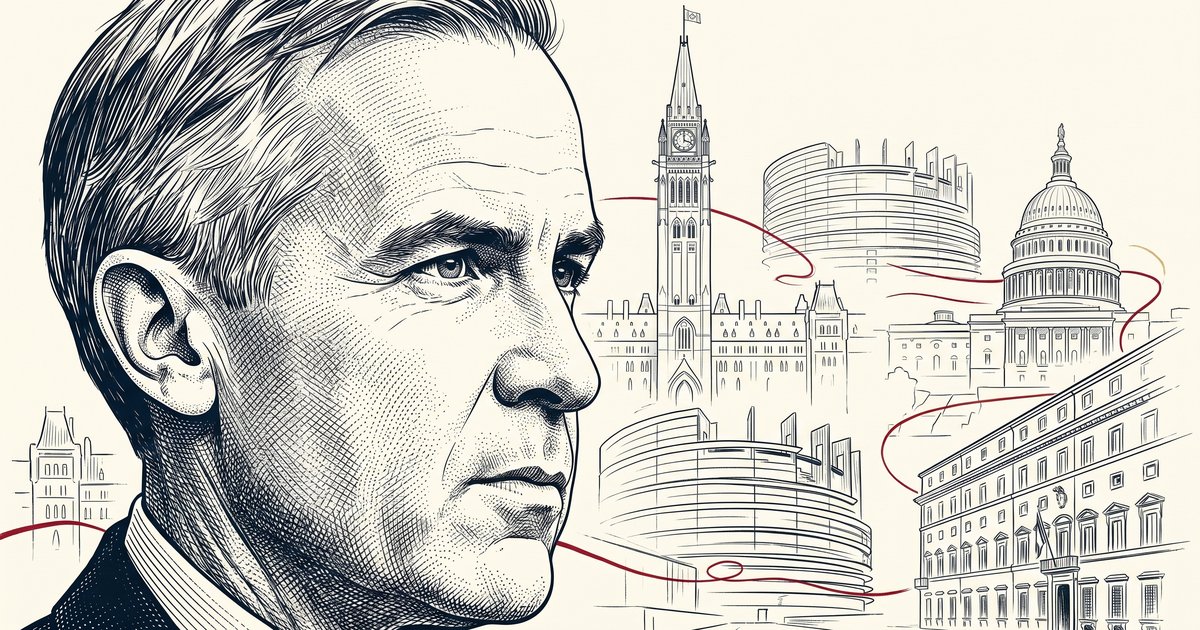
This is Part 4 of a five-part series on Prime Minister Mark Carney's conflict-of-interest arrangements. Part 1 examined the screen. Part 2 examined the lobbying data. Part 3 examined the policy matrix.
The general-application carveout in Mark Carney's ethics screen — the clause that permits him to participate in decisions affecting Brookfield "as a member of a broad class of persons" — was not invented for Carney. It was not even invented for his generation of politicians.
The doctrine traces back to a ruling made in 1995 by an unelected Ethics Counsellor, to protect a different Prime Minister, with a different set of corporate interests, under a code that no longer exists. That ruling was never tested in court, never reviewed by Parliament, and never challenged by the Commissioner who inherited it. It passed through a major legislative reform in 2006 and survived intact. Thirty years later, it is the legal foundation of Carney's ethics screen.
For deeper analysis and exclusive posts, subscribe to my Substack.
Canada is not the only democracy that has tried to manage conflicts of interest at the highest level of government. The European Union, Italy, the Czech Republic, the United States, the United Kingdom, Australia, and New Zealand have all faced versions of the same structural question: what do you do when the person running the government has financial interests that overlap with what the government does?
The record is not encouraging.
The Wilson Doctrine: how a 1995 ruling created Canada's conflict of interest loophole
In 1993, Paul Martin became Finance Minister of Canada. He owned Canada Steamship Lines, one of the country's largest shipping companies. The question of how to manage that conflict was handled not by Parliament, not by a court, but by Howard Wilson, the Ethics Counsellor — a position that reported directly to the Prime Minister.
Wilson's solution was a "blind management agreement," a compliance tool created under the 1994 Conflict of Interest and Post-Employment Code for Public Office Holders. The agreement was weaker than a blind trust. Under a blind trust, the trustee sells the original assets and reinvests without the owner's knowledge. Under a blind management agreement, the owner kept the assets. Day-to-day management passed to an arm's-length manager, but the owner could "personally intervene" in the event of "an extraordinary corporate event" — after consulting the Ethics Counsellor.
Martin signed his agreement on February 1, 1994, with Stuart Hyndman as trustee and Wilson as Ethics Counsellor. Over nine years as Finance Minister, Martin received roughly a dozen briefings from the manager and from CSL's president, Sam Hayes. One briefing concerned an Indonesia-linked contract worth over C$140 million that involved the Suharto family.
Wilson cleared all of it. His reasoning: the policy decisions Martin participated in were "of general application." Tax treaties, shipping regulations, international trade frameworks — these affected broad classes of persons, not CSL specifically. Therefore, Martin had no "private interest" within the meaning of the code, and no conflict existed.
In July 2003, with Martin about to become Prime Minister, Wilson wrote a six-page letter concluding that Martin's CSL interests "do not raise significant conflict of interest issues." In August 2003, Martin transferred CSL ownership to his three sons through a series of holding companies. In January 2004 — less than seven weeks after Martin became PM — Public Works disclosed that CSL-related companies had received approximately C$161 million in federal contracts, grants, and loans since 1993. An earlier government response in February 2003 had claimed the figure was C$137,000. Oops.
Wilson's ruling was never appealed. There was no appeals process. It became the working assumption of every Ethics Commissioner who followed.
The Federal Accountability Act: new law, same loophole
Stephen Harper's government came to power in 2006 promising to clean up federal ethics. The Federal Accountability Act — Bill C-2, the first major bill his government introduced — was a direct response to the Martin/CSL file.
The Act made real changes. It created an independent Conflict of Interest and Ethics Commissioner appointed by Parliament, not by the Prime Minister. It required public declarations of recusal under section 25(1). It gave the ethics rules statutory force for the first time.
And it abolished the blind management agreement. Section 27(3) of the new Conflict of Interest Act specifies that a reporting public office holder "may not divest" controlled assets by any measure other than an arm's-length sale or a blind trust, "including by placing them in a blind management agreement." The vehicle Martin used was legislated out of existence, precisely because the Martin experience had shown that "blindness" was a fiction when the owner knew what was in the agreement and could be briefed on extraordinary events.
But the definition of "private interest" in section 2(1) survived. The general-application exclusion — the same reasoning Wilson had used to clear Martin — was codified into the statute. The Act says that a "private interest" does not include "an interest in a decision or matter that is of general application" or "that affects a public office holder as one of a broad class of persons."
The architecture of the Act is Conservative. The doctrine inside it is Liberal. Harper's government built the framework. Wilson's 1995 reasoning lives inside it.
When Commissioner von Finckenstein approved Carney's screen in 2025, he was applying the same definition of "private interest" that Wilson had articulated thirty years earlier. The blind management agreement is gone. The doctrine that made it permissive is the law.
Andrej Babiš: when the EU ruled a blind trust was not enough
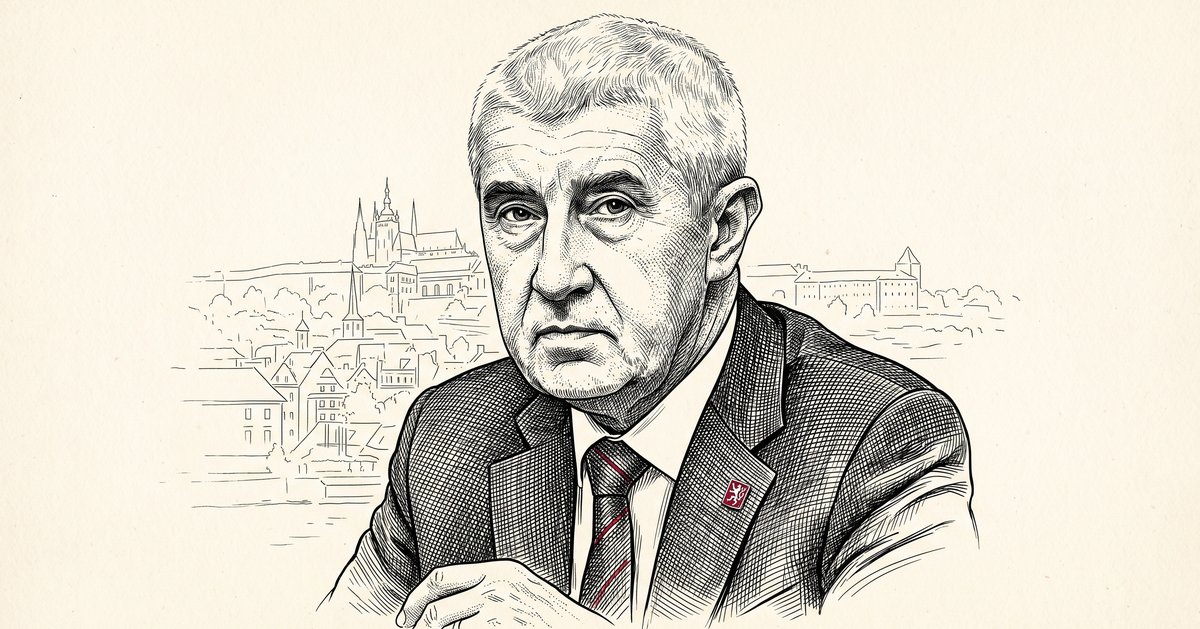 Andrej Babiš, former Prime Minister of the Czech Republic
Andrej Babiš was the owner of Agrofert, a Czech agribusiness and chemicals conglomerate that was one of the largest recipients of European Union agricultural subsidies. In 2017, as he prepared to become Prime Minister, a new Czech conflict-of-interest law — nicknamed "Lex Babiš" — required officeholders to separate from their business interests.
Babiš transferred 100% of his Agrofert shares into two newly created trust funds: AB Private Trust I and AB Private Trust II. He was the settlor. He was the sole beneficiary. The trustees were persons inside his personal circle. Under Czech civil law, a trust fund is not a separate legal person — the assets sit in a fiduciary structure, but the beneficial interest remains with the named beneficiary.
In September 2018, Transparency International Czech Republic filed a formal complaint with the European Commission. In January 2019, a coordinated audit mission by DG REGIO, DG EMPL, and DG AGRI examined whether Babiš's trust arrangement satisfied the conflict-of-interest requirements under Article 61 of the EU Financial Regulation.
The Commission's finding, formally communicated in April 2021: Babiš remained in a conflict of interest. The trust did not eliminate his "direct economic interest" in Agrofert's success, because he remained both settlor and sole beneficiary. The relevant question was not formal legal title but actual economic exposure. Putting a trust between the politician and the assets didn't change anything.
The European Parliament adopted a resolution in June 2021 by a vote of 505 to 30, endorsing the audit's conclusions and calling for suspension of further EU payments to Agrofert entities. The Commission applied a 100% financial correction — approximately EUR 11 million — to the affected regional development and social fund operations.
Babiš himself proved the Commission's point. In December 2024, he announced he would dissolve the trust fund entirely ahead of the 2025 Czech general election. A structure he had claimed resolved his conflict of interest turned out to be something he could unwind with an announcement. He won the election, returned to the premiership in December 2025, and the question of whether his new arrangement satisfies EU requirements remains unresolved.
Babiš is the closest international precedent to Carney — and the only case where a regulator actually ruled against a head of government's trust arrangement. The question it answered: when the legal owner is also the economic beneficiary, has anything actually been separated?
Carney's arrangement is different in form. He has a blind trust, not a self-settled Czech-law trust fund. His assets are managed by an independent trustee. But the underlying economic reality is similar: Carney retains deferred share units, stock options, and carried-interest eligibility in Brookfield. When those instruments mature — in 2032 and 2034 — he collects the proceeds. The blind trust manages the assets in the interim. It does not change the fact that Carney's financial future is, as Commissioner von Finckenstein himself told the ethics committee, "directly tied to Brookfield's success."
The EU's reasoning in Babiš was straightforward: putting assets into a trust does not eliminate a conflict of interest if the politician still profits when those assets do well. If a Canadian regulator applied the same test to Carney's blind trust and ethics screen, the conclusion would be uncomfortable, to say the least.
No Canadian regulator has applied that test. No Canadian court has been asked to.
Italy's Frattini Law: conflict of interest rules with no enforcement
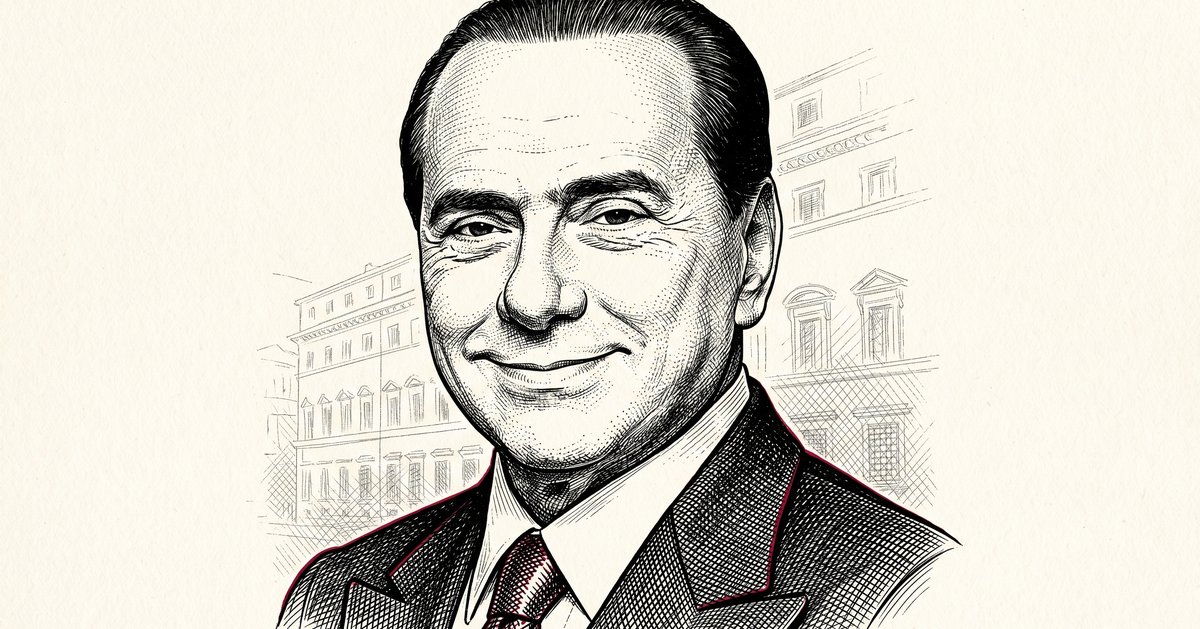 Silvio Berlusconi, former Prime Minister of Italy
Italy's Legge 215/2004 — the "Frattini Law" — was passed to address the most famous conflict of interest in European politics: Silvio Berlusconi's ownership of Mediaset, Italy's largest private broadcaster, while he served as Prime Minister.
The law nominally prohibited conflicts of interest for government officeholders. But the definition of a conflict was narrow. Under Article 3, an act by an officeholder constitutes a conflict only if it has an "incidenza specifica e preferenziale" — a specific and preferential impact — on the officeholder's assets or those of controlled companies, and causes "danno per l'interesse pubblico" — damage to the public interest.
Four cumulative elements had to be proven simultaneously: the officeholder took the act, the impact was specific (not a by-product of a general rule), the impact was preferential (more favourable to the officeholder than to others), and it damaged the public interest. As one Italian constitutional scholar observed in 2004, these conditions "will be difficult to demonstrate and prove" in any case where the government decision could be framed as general policy.
The highest-profile test came in 2006. Italy's antitrust authority, the AGCM, examined whether Berlusconi had violated Article 3 by approving digital-decoder subsidies that benefited his brother's distribution firm and, through it, Mediaset. The subsidies were formally available to all broadcasters using open digital terrestrial standards. The AGCM dismissed the case: the subsidy lacked the required "incidenza specifica e preferenziale" because it was available to a broad class.
That was the pattern for the next two decades. The AGCM published roughly 38 semi-annual reports to Parliament between 2005 and 2023. Across the governments of Berlusconi, Monti, Letta, Renzi, Gentiloni, Conte, Draghi, and Meloni, the cumulative enforcement record is:
- Zero Article 3 findings of conflict against a sitting officeholder
- Zero desistance orders issued to benefiting companies
- Zero pecuniary sanctions
The AGCM itself, in its December 2012 report to Parliament, conceded that the Article 3 mechanism is "del tutto inefficace" — entirely ineffective — on the enforcement side. The authority has repeatedly asked Parliament to strengthen the law. Twenty years of such requests have produced no reform. No government has acted on those requests.
The Council of Europe's Venice Commission evaluated the Frattini Law in 2005 and concluded that the "specifically directed" requirement "renders this provision difficult to apply in practice" and was "unlikely to have any meaningful impact."
Italy's Article 3 requires "specific and preferential impact." Canada's section 2(1) excludes decisions "of general application" from the definition of "private interest." The functional result is the same: any government decision that can be framed as applying broadly — a tax change, a subsidy program, a regulatory framework — passes through the exclusion regardless of how much it benefits the officeholder's private holdings.
The Italian and Canadian offices are doing the same thing in different languages — producing annual reports about why they cannot, in practice, do their nominal job.
US conflict of interest rules: divestment and its limits
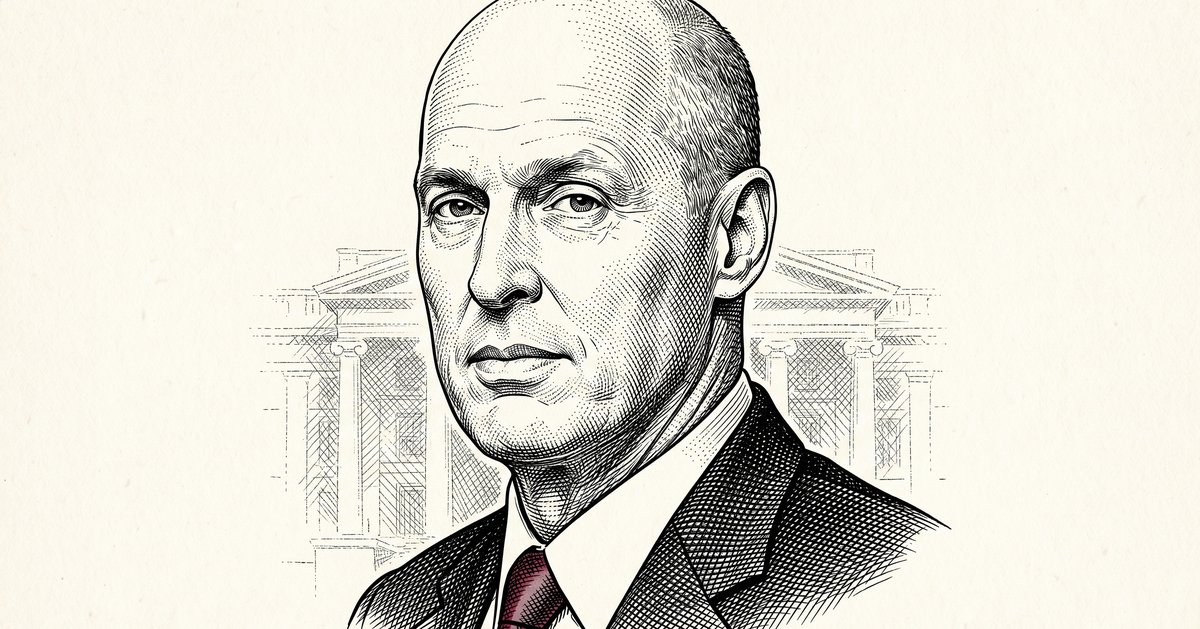 Henry Paulson, former US Treasury Secretary
The United States takes a different approach. Under 18 USC § 208, federal executive branch employees — including Cabinet secretaries — face criminal penalties for participating in decisions affecting their financial interests. The Office of Government Ethics administers a qualified blind trust program and issues Certificates of Divestiture that allow tax-deferred liquidation of holdings.
Henry Paulson, who left Goldman Sachs to become Treasury Secretary in 2006, divested approximately US$490.9 million in Goldman stock plus 43 fund interests using the OGE process. The divestiture was real: he sold everything and reinvested in unrelated assets. This is the modern American gold standard for managing a conflict between private finance and public office.
But the Paulson case also shows the limits of divestment. During the 2008 financial crisis, Treasury granted Paulson an ethics waiver on September 17, 2008 — the day after the AIG bailout announcement and after he had already spoken to Goldman CEO Lloyd Blankfein five times that day. Goldman received US$12.9 billion through the AIG counterparty payments. No charges were filed.
Even full divestment does not sever the relationship. The contacts, the market knowledge, the institutional memory — these persist after the stock is sold. Paulson sold every share of Goldman stock. He still called Lloyd Blankfein during the worst week of the crisis. The structural ties outlived the financial ones.
If full divestment did not prevent the appearance of a conflict for Paulson, an ethics screen and blind trust will not prevent it for Carney.
The American system is also the only G7 system that treats conflict-of-interest violations as criminal offences for executive branch officials below the level of president. The president and vice-president are expressly exempted from 18 USC § 208 — Congress carved them out in 1989. Canada's Prime Minister has no express statutory exemption, but the general-application carveout in section 2(1) functions the same way in practice: it makes it nearly impossible for a PM-level policy decision to trigger the Act.
Central bankers turned asset managers: a global pattern
Carney's career path — Goldman Sachs to the Bank of Canada to the Bank of England to Brookfield Asset Management to the Prime Minister's Office — is unusual. But the first four steps follow a well-worn track.
Alan Greenspan left the Federal Reserve and joined PIMCO, Deutsche Bank, and Paulson & Co. as a consultant. Ben Bernanke left the Fed and became a senior advisor to both PIMCO and Citadel. Janet Yellen left the Fed, collected millions in speaking fees from financial institutions, and returned to government as Treasury Secretary. Jerome Powell was a Carlyle Group partner before joining the Fed. Mario Draghi went from Goldman Sachs to the Bank of Italy to the European Central Bank to the Italian premiership.
The pipeline from central banking to private asset management is the most lightly regulated revolving door in advanced-economy finance. The cooling-off periods, the disclosure requirements, the recusal obligations — none of them were designed for someone who walked the full circuit and then became head of government.
Draghi is the closest precedent. He entered the Italian premiership in 2021 as a technocratic appointment, not through a general election. His Goldman Sachs years were a decade behind him. His ECB tenure provided a clean interlude. The Italian system did not treat his prior Goldman relationship as a live conflict because it was sufficiently distant in time.
Carney's relationship with Brookfield is not distant. He chaired the board of Brookfield Asset Management. He chaired the Brookfield Global Transition Fund. He retains financial entitlements that vest in 2032 and 2034. The conflict is live, current, and growing in value with every policy decision that benefits Brookfield's portfolio.
The revolving door between central banking and asset management is a structural feature of modern finance. Carney did not create it. But he is the first person to walk through every door in the circuit — from Goldman, to two central banks, to the world's second-largest alternative asset manager, to the prime ministership of a G7 nation — and the regulatory frameworks at each step were never designed to handle the cumulative result.
What international precedents mean for Carney's ethics arrangements
Three things stand out from the international record.
The "general application" escape hatch — whether Canadian, Italian, or some variation — consistently fails to catch conflicts where a government officeholder's private interests are broad enough to overlap with most government policy. The Italian experience is the longest-running evidence: twenty years of enforcement, zero findings. Canada's record is shorter but points the same direction.
Even the strongest separation mechanisms — full American-style divestment with OGE oversight — do not sever the relationship between a former financial executive and the industry they came from. The Paulson waiver during the 2008 crisis demonstrated that structural ties persist after the stock is sold.
And the only supranational body that has actually ruled against a head of government's trust arrangement is the European Commission in the Babiš case — and that required a supranational regulator with jurisdiction, political will, and financial enforcement power that no domestic Canadian institution possesses.
Canada's Conflict of Interest Act is, by international standards, on the stronger end of the spectrum. It is stronger than Japan's, Australia's, or pre-2013 France's. Canada's rules aren't weak. But they were never built for someone whose financial entitlements span an asset manager with exposure to virtually every sector of the economy — and the institution charged with enforcing them may not have the capacity to do so.
That is the subject of Part 5.
Next: Part 5 — The Watchdog That Cannot Bite
For extra details, subscribe to the Substack.
Related Posts
The watchdog that cannot bite
Fifty-three employees. A $7.7 million budget. Zero examination reports in its most recent year. Three findings against a sitting Prime Minister and his Finance…

Mark Carney's ethics screen has a huge hole
Most coverage of Mark Carney's conflict-of-interest arrangements is secondhand. This is what the actual document says — line by line — and what the law…
Airlines owe Brookfield's partners rent. The government just sent $150 million to keep them paying.
The fuel crisis has doubled jet fuel prices. Airlines are cutting routes and requesting lease deferrals from their lessors. Today the government announced $150…